Recent comments by Japanese leaders linking a Taiwan Strait contingency to Japan’s “survival crisis” have triggered a strong response from China. During recent conversations, many South Korean acquaintances asked why Beijing reacted so forcefully. China considers a firm response not only necessary, but also legitimate — and I hope this commentary clarifies Beijing’s position for Korean readers.
First, Japan is interfering in China’s internal affairs and challenging China’s core interests. For China, Taiwan is an inalienable part of its territory and the Taiwan question lies at the very core of China's national interests. The fact that national reunification has not yet been achieved remains a source of deep historical pain for 1.4 billion Chinese people. How the Taiwan question is eventually resolved is solely a matter for the Chinese people, and no external interference is acceptable.
A Japanese leader’s statement that a Taiwan contingency would constitute “a crisis for Japan’s survival,” and could justify the exercise of collective self-defense, signals — for the first time in official context — an openness to using force over the Taiwan issue. This constitutes a clear violation of China’s sovereignty and a major provocation. Many within Japan and the international community have also expressed alarm. To safeguard its sovereignty and territorial integrity, China must respond resolutely.
Second, Japan is evading historical responsibility and breaking its diplomatic commitments. Japan bears heavy historical responsibility for its occupation and colonization of Taiwan from 1895 to 1945, during which it carried out massacres, resource exploitation, forced assimilation and conscription. Japan must fully acknowledge and atone for these historical crimes.
When China and Japan normalized diplomatic relations, Beijing established three basic principles centered on strict adherence to the one-China principle. All four political documents signed thereafter explicitly address Taiwan. These commitments — with the force of international law — leave no room for reinterpretation. Recent remarks by a Japanese leader disregard these obligations and undermine trust. To preserve the political foundation of China-Japan relations, China must respond firmly.
Third, Japan is undermining the postwar order and signaling a revival of militarism. Major international legal documents — the Cairo Declaration, the Potsdam Declaration and Japan’s Instrument of Surrender — confirmed China’s sovereignty over Taiwan and compelled Japan to return territories it had taken. Together with U.N. Resolution 2758, these form the basis of the postwar order.
Japan’s linkage of the Taiwan issue to its own “survival crisis” denies these documents and challenges the U.N. Charter. Historically, Japan invoked similar justifications to expand its military and wage aggression under the guise of self-defense. Today, less than a month after a new government took office, Japan has rolled out ambitious military expansion plans while amplifying tensions around Taiwan — raising legitimate concerns about the revival of militaristic tendencies.
To protect the outcomes of World War II and uphold peace and stability, China must react decisively.
China has consistently sought stable, mutually beneficial relations with Japan and values cooperation among the three Northeast Asian neighbors. But on fundamental issues of sovereignty, principle and historical truth, China will not compromise.
This year marks the 80th anniversary of China’s victory in the War of Resistance Against Japanese Aggression and Korea’s liberation. Both China and Korea have actively commemorated this history to defend truth and uphold justice.
Japan, as a defeated state with a legacy of militarist aggression, should have used this important year to reflect deeply, reaffirm its commitment to peaceful development and rebuild trust with its neighbors. Instead, its recent rhetoric has heightened regional anxiety, prompting strong reactions across Asia and the global community.
China’s response is rational, lawful and entirely justified. It defends China’s dignity and interests, upholds international justice and contributes to regional peace. I trust that the South Korean public will understand and support China’s position.
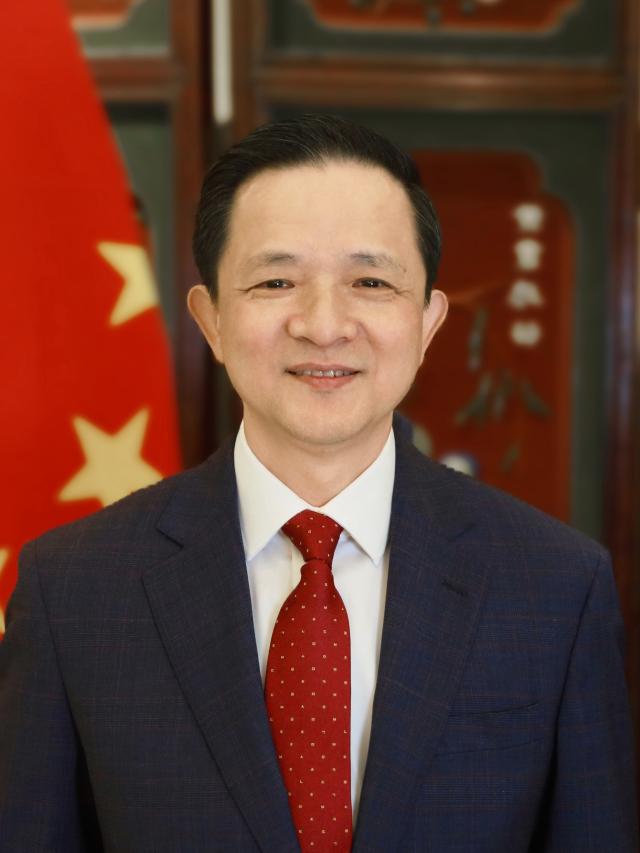
* The author is the Chinese ambassador to South Korea.
* This article, published by Aju Business Daily, was translated by AI and edited by AJP.
Copyright ⓒ Aju Press All rights reserved.