
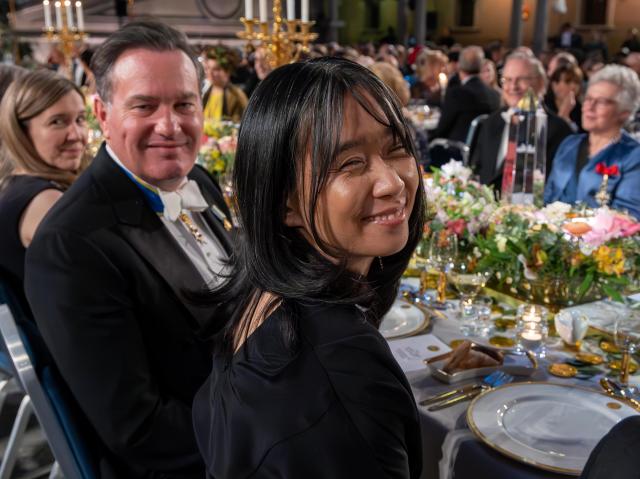
AJP introduces three potential post-Han candidates whose translated works have drawn overseas attention after publication and gained critical acclaim through major awards.
Chung Bora
“My grandfather used to say, ‘When we make our cursed fetishes, it’s important that they’re pretty.’” – from “Cursed Bunny” by Chung Bora.
A tale of a rabbit figurine made as a cursed object that brings ruin to three generations of a vicious business family. The revenge of a fox against the human who exploited her. A world consumed by a plague that drives people to eat human flesh. And a woman seeking the man who will become the father of her child conceived without sex.
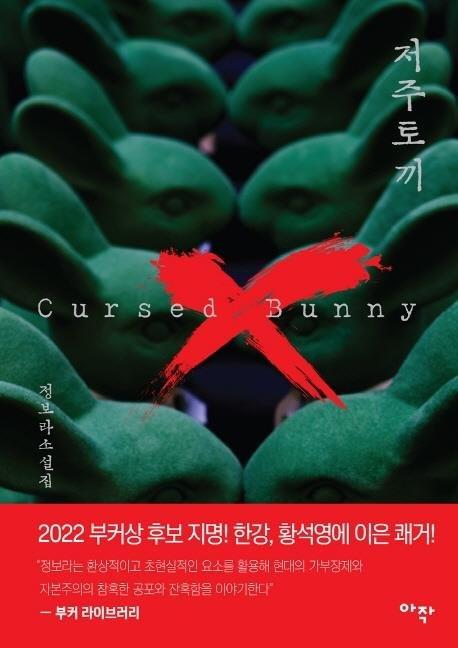
Chung, who began publishing fiction in 1998, remained a relatively obscure figure in South Korea until “Cursed Bunny” gained international acclaim. She nonetheless continued to write steadily.
Her background is unusual. Chung is both a novelist and a translator of Russian and Polish works into Korean, as well as a professor of Russian language and literature. She studied Russian and English literature at Yonsei University, earned her master’s degree in Russian and East European Studies at Yale University, and received her PhD in Slavic Literature from Indiana University.
“Cursed Bunny” was shortlisted for the 2022 International Booker Prize and the 2022 National Book Award for Translated Literature. Rights to the collection have been sold in 22 countries. In 2024, Chung received the Leipzig Book Fair Prize in Germany for this book. The 2023 National Book Award judges called “Cursed Bunny” “eerie, unsettling, and wildly imaginative, delving into the crevices of the psyche and the fissures of society, excavating tales that range from the uncanny to the downright horrifying,” describing it further as “thrilling and thought-provoking.”
Her 2024 work “Your Utopia” was shortlisted for the Philip K. Dick Award, one of the world’s three major science fiction honors. Chung became the first Korean writer to be nominated and the only translated work among the six finalists. “Your Utopia” was published in the United States, the United Kingdom, Australia and India, and was selected by Time magazine as one of its “Books of the Year” in 2024.
Kim Choyeop
An android, fitted with synthetic skin indistinguishable from that of a human, decides to replace it once again with metal. The story of a member of an alien species born with two distinct selves in one body.
SF author Kim Choyeop, one of South Korea’s most prominent contemporary writers, also has a striking background. She earned both her bachelor’s and master’s degrees in chemistry from Pohang University of Science and Technology (POSTECH), often called “the Caltech of Korea” and one of Asia’s top science and technology institutions. Kim is also hearing-impaired.
She made her debut in 2017 at the age of 24, winning both the Grand Prize and a Special Award in the short and mid-length fiction categories at the Korean Science Literature Awards.
Her short story collection “If We Cannot Go at the Speed of Light” and her novel “The Greenhouse at the End of the Earth” have each sold over 200,000 copies in Korea. Rights to “If We Cannot Go at the Speed of Light” have been sold to Japan, China, Taiwan and Spain, while “The Greenhouse at the End of the Earth” was acquired for over two million yen by major Japanese SF publisher Hayakawa at the time of release. The book has been sold to publishers in six countries and is set for film adaptation. Reports last year revealed she had signed a multimillion-dollar deal with a U.S. publisher.
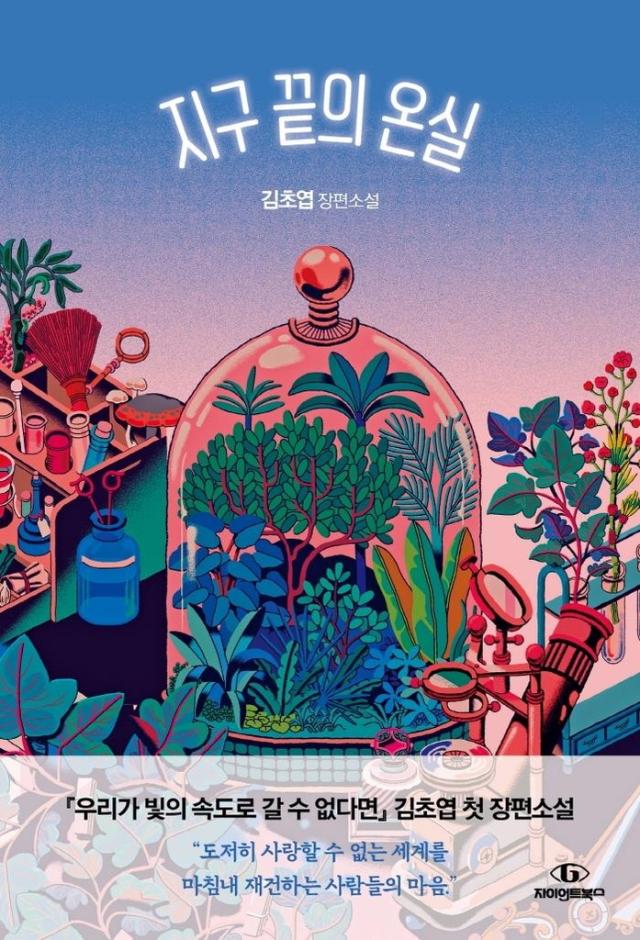
Kim is a prolific writer. In 2021 alone, she published four books, including her second short story collection “The World We Just Left Behind”, the micro-fiction collection “Planetary Language Bookshop”, and the full-length novel “The Greenhouse at the End of the Earth”, which was first released as a limited edition for members before general publication the following year. She also wrote the nonfiction book “Becoming Cyborg”, exploring the relationship between disability and technology. Online bookstore Aladin named her “Author of the Year” in 2021 based on a poll of publishers.
Cheon Seon-ran
A romance between a lonely human and a vampire. A post-apocalyptic world ravaged after the invasion of an alien species, half-goat and half-demon.
SF writer Cheon Seon-ran made her debut in 2019, winning the Grand Prize in the novel category of the Korean Science Literature Awards.
Her best-known work, “A Thousand Blues” (2020), is a science fiction novel set in South Korea in 2035. In a near future where humanoid robots have become commonplace, a jockey robot named Coli — born with a cognition chip by chance — sacrifices itself for Today, a racehorse whose cartilage is crumbling. The story follows Coli as it meets three women and explores themes of friendship and coexistence among humans, robots and animals. Critics have praised the novel for its warmth and empathy.
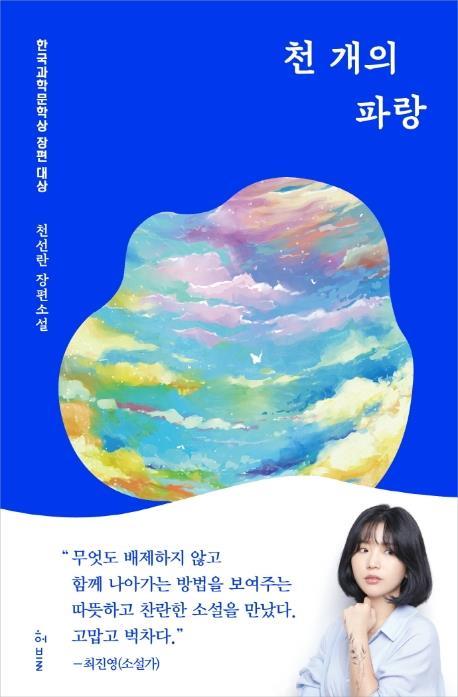
The novel is also being adapted into a Hollywood film. “A Thousand Blues” has been optioned by Warner Bros. Pictures, the global studio behind the “Harry Potter” and “Dune” series. While the precise value of the deal has not been disclosed, reports indicate that Cheon will receive between 600 million and 700 million won ($406,000–$474,000) for the adaptation rights.
Copyright ⓒ Aju Press All rights reserved.
