
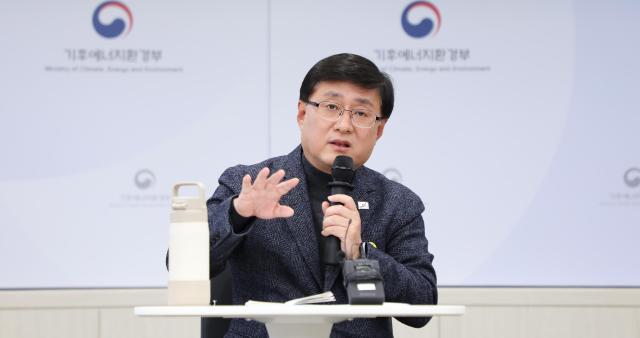
Kim Sung-hwan, South Korea's energy minister/ Courtesy of the Ministry of Climate, Energy and Environment
SEOUL, December 30 (AJP) - South Korea faces an unavoidable shift in its energy mix as it confronts the climate crisis, requiring a combination of carbon-free renewable energy and nuclear power while gradually phasing out coal and gas, Climate, Energy and Environment Minister Kim Sung-hwan said on Tuesday.
Kim made the remarks at the First Energy Mix Policy Forum held at the National Assembly, calling for a pragmatic and science-based approach to energy policy.
Kim said the Moon Jae-in administration sought to advance an energy transition over five years but became mired in debate over a nuclear phaseout, slowing efforts to retire coal-fired power plants. He said the subsequent Yoon Suk Yeol administration took the opposite approach by prioritizing nuclear power while neglecting the expansion of renewable energy.
“As a result, South Korea’s share of renewable energy now ranks last among OECD countries,” Kim said.
South Korea’s current energy mix is roughly 30 percent nuclear, 30 percent coal, 30 percent gas and 10 percent renewables, Kim said, adding that restructuring the mix would be foundational to the country’s future economic development.
The Lee Jae Myung administration has pledged to end coal-fired power generation by 2040, a target that is also reflected in the legally mandated basic plan for long-term electricity supply and demand. He said this would require a concrete roadmap for phasing out coal and determining a sustainable future energy mix.
He also pointed to structural limits to renewable energy expansion, citing intermittency as a major challenge.
Kim said South Korea, unlike parts of Europe, cannot rely on cross-border power grids and functions effectively as an “energy-independent island.” Its relatively short east-to-west span also limits solar generation hours, making it difficult to secure stable power supply when sunlight is unavailable, he said.
Replacing that gap with energy storage systems or pumped-storage hydropower is not straightforward in practice, Kim added.
On nuclear power, Kim said it has long served as South Korea’s most important energy source and that the country has the highest concentration of nuclear power plants per unit of land area in the world. He cautioned, however, that nuclear power carries significant risks in the event of an accident.
Kim said South Korea has not operated its nuclear plants flexibly, limiting their ability to complement renewable energy sources. Determining how to effectively combine nuclear and renewables is an unavoidable national task, he said.
President Lee has instructed officials to avoid ideological approaches to energy policy and instead rely on scientific evidence and consensus-based problem solving.
Copyright ⓒ Aju Press All rights reserved.
