
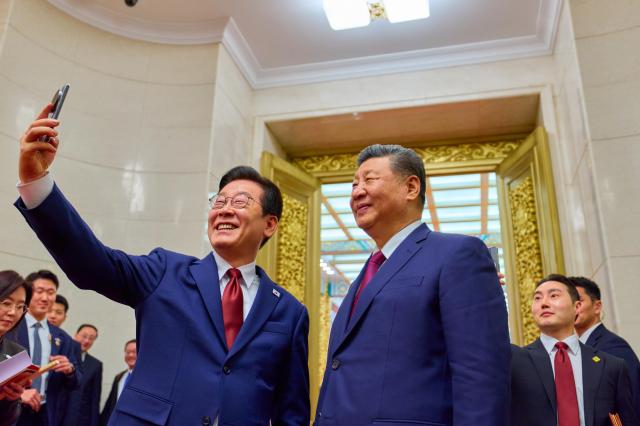
Accompanied by roughly 200 business leaders — including Lee Jae-yong, Chung Euisun and Koo Kwang-mo — Lee’s four-day state visit marked South Korea’s first presidential trip to China in eight years and the first major business delegation since 2019.
The message, at least visually, was unmistakable: Korea wants to reset ties.
Yet beyond symbolism, the economic substance of the visit appeared limited, reinforcing a long-standing reality of Korea–China relations — plenty of ceremony, cautious language, and incremental gains, but no breakthrough.
Before departure, SK Group Chairman Chey Tae-won struck a familiar note, saying the delegation would seek “meaningful growth opportunities,” particularly in supply-chain cooperation. Korean conglomerates remain deeply embedded in China: Samsung, SK hynix, Hyundai, Kia and LG all operate major production facilities there.
But while the footprint is large, the policy environment remains uncertain — and the summit did little to change that.
MOUs and goodwill – and most gains
Fourteen MOUs and a donation certificate were signed after the Lee–Xi meeting, spanning economy, culture, environment and science. Among them, the agreement on intellectual property cooperation stood out as the most tangible economic outcome, potentially helping Korean firms protect patents and brands more efficiently in China.
Other outcomes — regularizing trade minister meetings and reopening China’s market to certain Korean seafood products — were welcomed but modest. None addressed Korea’s deeper concerns: supply-chain vulnerabilities, export competitiveness or market access barriers.
The ceremonial donation of Qing-era stone lions from Korea’s Kansong Art Museum to China, meanwhile, was widely read as a goodwill gesture — diplomatically sensitive, culturally symbolic, but economically marginal.
Content, fashion and the limits of expectation
The delegation’s composition hinted at where Korea sees room to move: culture, content and consumer brands.
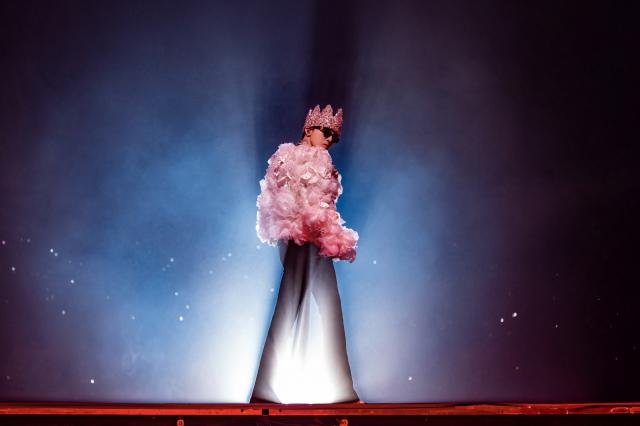
Yet the elephant in the room remained untouched: the unofficial Chinese restrictions on Korean cultural content — the so-called Han Han-ryeong.
No timeline, no commitment, not even public acknowledgment.
China continues to deny the ban’s existence, and Seoul, once again, stopped short of pressing the issue. “We agreed to approach it gradually through working-level consultations,” National Security Adviser Wi Sung-lac said — language that sounded more like damage control than progress.
Reset diplomacy — or just resetting the optics?
The presidential office framed the visit as a turning point. A senior aide described it as “gateway diplomacy toward full restoration” of relations, pointing to the seafood deal as proof of tangible results.
Some analysts agreed the direction was right. “The economy is the only realistic entry point for improving Korea–China relations,” said Choi Woo-sun of the Korea National Diplomatic Academy.
Others were unconvinced.
“There was no clear economic agenda,” said Lee Khan-pyo of Sogang University. “This summit is unlikely to produce distinctive economic impact.”
Opposition figures were sharper still. Lawmakers from the People Power Party criticized Lee for failing to raise the cultural ban or broader economic-security issues, calling the visit “one-sided” and “overly deferential.”
“The business leaders did their part — but the president did none,” said People Power Party lawmaker Choi Soo-jin, adding that Lee “looked obsequious in China”
and failed to resolve the Korean Ban or raise maritime concerns.
Even within the ruling party, voices urged caution. China is no longer just a partner, they noted, but a competitor — particularly in high-tech industries where overcapacity and dumping have become concerns.
Supreme Council member Lee Un-ju stressed cooperation should focus on culture, tourism and food, while warning:
“Unlike in the past, China is now a competitor to Korea,” particularly in high-tech industries sensitive to economic security and fair trade.
Copyright ⓒ Aju Press All rights reserved.
