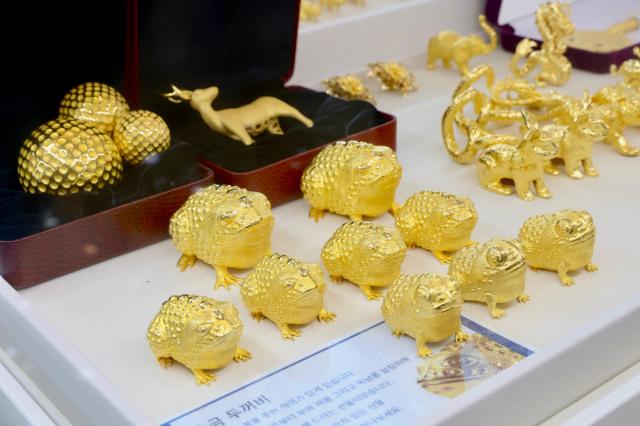
The scenery of global financial markets is changing. More striking than the daily swings of stock indices is the sight of gold and silver repeatedly hitting record highs. This is not a fleeting investment fad. It is a signal — one that reveals where global capital feels unease. Markets often exaggerate, but they rarely lie about direction. The current surge in precious metals reflects a collective instinct for risk aversion, rooted in subtle but growing cracks in confidence in fiat currencies.
Major central banks are walking a tightrope between inflation control and economic slowdown. Lower interest rates would ease growth pressures, but premature easing risks undermining currency credibility. In this gray zone, investors gravitate away from paper assets toward tangible ones. Gold pays no interest, yet it does not default on trust. Silver, with its added industrial demand, offers even greater price elasticity. This rally looks less like speculation and more like an insurance premium — the price markets are willing to pay for protection against uncertainty.
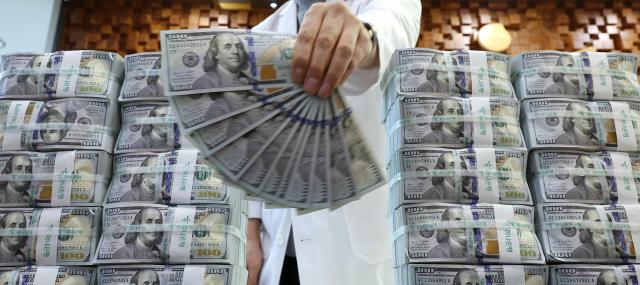
Geopolitical tensions are accelerating this shift. The shadows of protectionism, political fragmentation and supply-chain fragility have made global capital more defensive. The U.S. dollar remains the world’s reserve currency, but questions surrounding America’s fiscal trajectory and monetary policy are growing louder. When “Sell America” sentiment gains traction, gold begins to function as an alternative currency. This does not signal the collapse of the dollar, but rather the erosion of unquestioned faith in it.
Korea is not insulated from these tremors. The foreign exchange market reacts first. Heightened risk aversion boosts dollar demand and puts downward pressure on the won. A weaker won may help exporters’ margins, but it also raises import prices and squeezes households. For an economy heavily dependent on imported energy and raw materials, sharp currency moves feed directly into inflation. Direction matters, but speed matters more. Gradual adjustment can be absorbed; abrupt swings become shocks.
Equity markets are no exception. As uncertainty rises, global funds tend to reduce exposure to emerging markets. Korea’s stock market, highly sensitive to foreign capital flows, faces heightened volatility. Growth-oriented stocks are particularly vulnerable to interest-rate shifts, while firms with stable cash flows and low leverage tend to show greater resilience. In the end, markets assess not just profitability, but survivability.
For corporations, the response is clear. First, foreign exchange risk management must be tightened. Second, liquidity should take priority — cash is not a cost in uncertain times, but a shield. Third, debt maturity structures need review to reduce reliance on short-term borrowing. Fourth, internal controls and risk management must be strengthened to preserve trust. In an era like this, a single misstep can erode corporate value overnight.
Households, too, must prepare. Reducing exposure to variable-rate loans and clarifying repayment plans are essential. In investing, balance matters more than chasing returns. A headlong rush into gold or silver simply because prices are soaring risks inviting a different kind of loss. Markets inevitably correct after overheating. Long-term stability is built on diversification and restraint.
Policymakers bear a heavy responsibility. Central banks must maintain balance between price stability and financial stability. Policy consistency and predictability are the foundation of market trust. In an age of uncertainty, the most powerful stabilizer is a clear and transparent policy signal.
Ultimately, the surge in gold and silver is both an expression of fear and a warning. The world is prioritizing loss avoidance over profit maximization. That may signal vulnerability — but for those prepared, it can also mark the beginning of opportunity. Volatility is not a crisis; it is an environment. Survival in that environment depends not on dazzling returns, but on fundamentals, principles and discipline. Financial markets move not by numbers alone, but by trust. And when trust wavers, what truly shines is not metal, but principle. Those who hold to it will shape the next upswing.
*The author is a columnist of AJP.
Copyright ⓒ Aju Press All rights reserved.