
SK Bioscience said strong results from its German subsidiary, acquired two years ago, helped more than double its annual revenue last year.
In a regulatory filing on Monday, the company said 2025 revenue on a consolidated basis rose 143.5% from a year earlier to 651.4 billion won. Its operating loss narrowed to 123.5 billion won from 138.4 billion won in 2024.
The improvement was driven largely by IDT, a Germany-based contract development and manufacturing organization acquired in 2024. IDT posted 465.7 billion won in 2025 revenue, up about 17% year over year, and recorded an operating profit of 9.9 billion won, marking a turnaround. The company attributed the gains to stronger partnerships with existing customers and higher productivity from process-efficiency efforts.
SK Bioscience said growth in its core vaccine lineup also supported results. Influenza vaccine SkyCellflu maintained steady growth as export volumes to Central and South America and Southeast Asia increased, despite a price decline tied to a switch to a trivalent formulation. Chickenpox vaccine SkyVaricella increased its share of global exports on the back of stable supply through the Pan American Health Organization. Shingles vaccine SkyZoster raised its market share as more South Korean local governments expanded vaccination programs.
Sales of Sanofi products distributed in South Korea also more than tripled from a year earlier, the company said. Beyfortus, an RSV preventive antibody injection launched last year, posted near sellout-level performance during the fall and winter RSV season. Hexaxim, the country’s first six-in-one vaccine covering diphtheria, tetanus, pertussis, polio, Hib and hepatitis B, and Tdap vaccine Adacel also supported higher sales on steady demand.
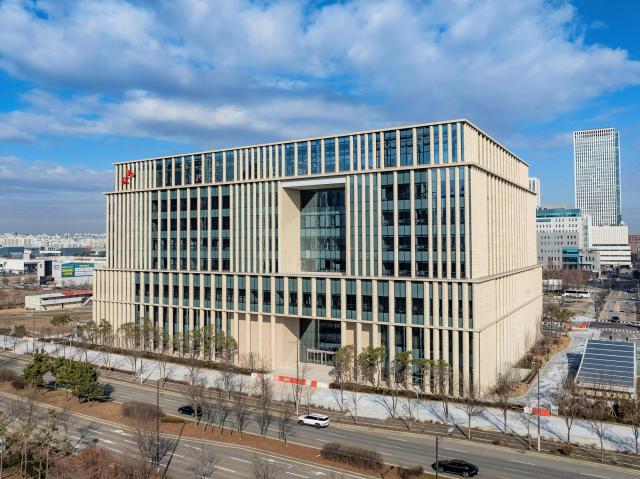
SK Bioscience said it plans to sustain growth centered on its subsidiaries and its Songdo R&PD center. The company completed the relocation of its headquarters and research institute to Songdo, Incheon, last month and said it is accelerating efforts to secure key pipelines under an integrated system spanning R&D through commercialization preparation.
A 21-valent pneumococcal protein conjugate vaccine being co-developed with Sanofi is in global Phase 3 trials in the United States, Europe and South Korea, the company said. Its L House production facility in Andong, North Gyeongsang Province, is being expanded while it pursues global approvals and prepares for commercial production.
The company also highlighted RSM01, an RSV monoclonal antibody brought in from Gates MRI under the Gates Foundation, and an Ebola vaccine being developed with MSD. It said RSM01, backed by exclusive global supply rights, is expected to be a new growth driver targeting a related market valued at 6 trillion won. The Ebola vaccine is expected to move faster with support from the Coalition for Epidemic Preparedness Innovations. The company said it also expects clinical trials this year for a universal COVID-19 vaccine, a next-generation pneumococcal vaccine and an avian influenza vaccine.
A company official said, “This year, we will further advance global CDMO growth centered on IDT, while accelerating development of core pipelines with the Songdo R&PD center as a hub to secure mid- to long-term growth engines.”
* This article has been translated by AI.
Copyright ⓒ Aju Press All rights reserved.