
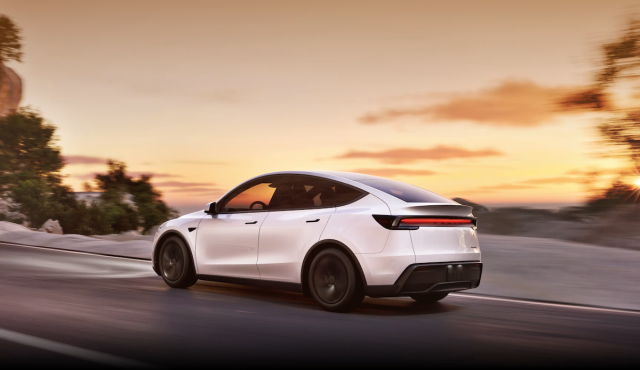
According to Kaizu Data Research Institute data released on Feb. 8, South Korea registered 5,733 EVs in January, up 141.1% from 2,378 a year earlier. More than half were Tesla (1,968) and BYD (1,347).
Tesla helped drive the domestic EV market last year with sales nearing 60,000. Since 2023, it has lowered prices by importing China-made versions of the Model Y and Model 3. The Korea Automobile & Mobility Association said Tesla’s U.S.-made models cost 59 million won, compared with about 53 million won for China-made models.
BYD also topped 6,000 sales in its first year in South Korea, signaling room to grow. With Tesla and BYD performing strongly, sales of China-made EVs totaled 74,728 last year, more than doubling from the previous year.
In its second year in South Korea, BYD recently unveiled the compact hatchback Dolphin to sharpen its value pitch. Its price is 24.5 million won after tax benefits for eco-friendly vehicles, before subsidies are applied.
Hyundai and Kia are responding by expanding incentives to defend their domestic market. Kia has cut prices this year for the EV5 long-range compact SUV by 2.8 million won and for the EV6 by 3 million won. For the EV5 standard model, the out-of-pocket price could fall to the 34 million won range after central and local government subsidies, the company said.
Hyundai is also strengthening low-interest financing for EVs. Last month it lowered the installment-loan rate under its “Hyundai EV Burden Down Promotion” by 2.6 percentage points, from 5.4% to 2.8%. The discounted rate applies to the Ioniq 5, Ioniq 6 and Kona Electric. Under the promotion, Hyundai said buyers could save about 2.5 million won in interest on the Ioniq 5 and Ioniq 6, and about 2.1 million won on the Kona Electric.
Jung Myung Hoon, a senior researcher at KAMA, said the EV market rebound in 2025 reflects a combination of demand concentrated in a few popular models, government support such as subsidies and manufacturers’ price competition, rather than broad-based mass adoption or a structural shift in demand.
He warned that the rapid inflow of China-made EVs can help expand adoption by lowering prices and widening consumer choice, but it is also intensifying pressure on South Korea’s manufacturing base and supply-chain competitiveness. He added that because major competitors are already using strong policies to protect their industries, South Korea should discuss support measures such as a “domestic production promotion tax system” to bolster price competitiveness for locally made EVs and protect the manufacturing ecosystem.
* This article has been translated by AI.
Copyright ⓒ Aju Press All rights reserved.