
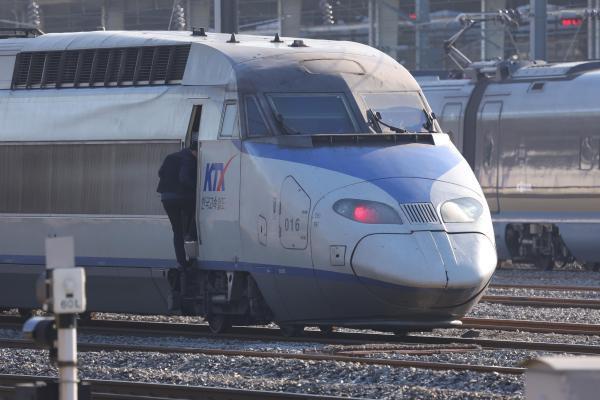
According to the rail industry on Thursday, KORAIL is working through administrative steps to launch the KTX-I replacement project. After finalizing details such as the tender method, it plans to post the procurement notice within this year.
The project would replace 46 KTX-I trainsets introduced in 2004, totaling 920 cars. Although their expected service life runs to 2033, the company needs to move this year because building and testing new trains typically takes more than seven years.
Industry officials expect the procurement notice to come around July, when the second half of the year begins. They say that from the tender notice through technical evaluation and contract signing typically takes at least four months, making that timing suitable if the government aims to finalize a contract by year’s end.
A KORAIL official said the company has begun detailed administrative work needed for the replacement but that the exact tender schedule has not been set. The official added that it could proceed “around summer, when the weather gets warmer.”
With the KTX-I replacement expected to exceed 5 trillion won, companies are stepping up competition. The race is widely expected to pit Hyundai Rotem, emphasizing high-speed rail technology, against Woojin Industrial Systems, which is highlighting price competitiveness and overseas consortium partners. The two have faced off repeatedly since a 2023 re-bid for the KTX-Eum (EMU-320).
Hyundai Rotem has been positioning itself with next-generation high-speed rail technology. In December, the Ministry of Land, Infrastructure and Transport said it completed development of core technologies for the EMU-370, a next-generation high-speed train with a commercial operating speed of 370 kph and a design top speed of 407 kph, through a national R&D program. Last month, Hyundai Rotem also shipped early the first trainset of its second-generation EMU-320, designed for 320 kph service.
Woojin Industrial Systems, which began as a Hyundai Rotem partner, has built expertise over more than 50 years producing and supplying electrical components for rail vehicles. Backed by contracts in Seoul’s urban rail projects, it has sought to expand into high-speed rail. In 2023, it teamed with Spanish train maker Talgo and entered the 760 billion won KTX-Eum bid on its own, but lost after falling behind on technical points, scoring 79.30.
It later tried again in a 1 trillion won SRT project for distributed-power high-speed trains (EMU-320) ordered by SR, forming a consortium with Talgo. The bid failed after it scored 0.8 points below the 85-point threshold required to pass the technical evaluation.
Industry watchers say Woojin has since strengthened its capabilities, making this year’s tender a key test. “The KTX replacement is not just a vehicle purchase; it is a project that will shape Korea’s high-speed rail competitiveness for the next 30 years,” a rail industry official said. “Depending on the outcome, significant changes are expected in the structure of the domestic rail industry.”
* This article has been translated by AI.
Copyright ⓒ Aju Press All rights reserved.