
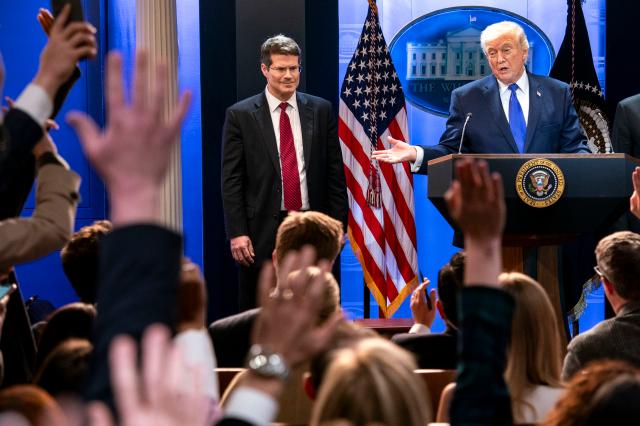
SEOUL, February 21 (AJP) - South Korea's presidential office announced Saturday it will convene a high-level meeting of relevant ministries this afternoon to discuss the fallout from a United States Supreme Court decision that struck down President Donald Trump's centerpiece tariff policy.
The meeting, scheduled for 2 p.m. (0500 GMT), will be co-chaired by National Security Adviser Wi Sung-lac and Kim Yong-beom, the presidential chief of staff for policy. It follows a separate emergency session scheduled for 10 a.m. by the Ministry of Trade, Industry and Energy to assess the consequences for domestic exporters.
The US Supreme Court ruled 6-3 on Friday that the International Emergency Economic Powers Act (IEEPA) does not authorize the president to unilaterally impose tariffs. The decision in Learning Resources, Inc. v. Trump effectively halts a significant portion of the duties announced by the Trump administration last year under emergency declarations. Chief Justice John Roberts wrote in the majority opinion that while the law allows for the regulation of commerce, the power to levy duties remains a core responsibility of the US Congress.
The ruling creates immediate uncertainty for the reciprocal trade agreement reached between Seoul and Washington last year. Under that deal, South Korean exports were subject to a 15 percent duty rate in exchange for large-scale investment pledges. With the legal basis for the IEEPA-based duties removed, trade deals struck by the administration with countries worldwide are now being reassessed.
Trump responded to the ruling by signing a new proclamation from the Oval Office that introduces a 10 percent global tariff under Section 122 of the Trade Act of 1974. He also issued an executive order to continue the suspension of duty-free treatment for small-value postal shipments, a move known as ending de minimis exemptions, which is set to take effect on February 24.
"Those members of the Supreme Court who voted against our very acceptable and proper method of TARIFFS should be ashamed of themselves," Trump wrote on social media, Truth Social, following the decision. He described the ruling as "ridiculous" and promised that his administration would take steps to collect more revenue than under the previous system.
An official at the South Korean presidential office stated that the government will review the court decision and the response of the US administration to determine a course of action that best serves national interests. The official added that relevant agencies will share information to discuss potential response measures.
Economic analysts suggest the ruling could lead to a complex legal process for companies seeking refunds for an estimated 175 billion dollars in duties already collected under the invalidated framework. While the additional duties imposed under IEEPA are being terminated, the US administration has maintained the underlying national emergency declarations and continues to enforce separate tariffs on steel and aluminum under different legal authorities.
Copyright ⓒ Aju Press All rights reserved.
