
The show debuted with a 2.1% rating before sliding to 1.6%, but Kim said the goal was never to chase hype.
“Of course it was disappointing,” he said. “But we didn’t make it to squeeze ratings out of having Jennie, Choo Sung-hoon or Noh Hong-chul. ‘Manitto Club’ is an omnibus that keeps returning to the theme of sharing. I wanted it to feel like an omnibus movie you’d see around Christmas. From the start, we agreed to center the message, and I hoped the intent would land well and be sustainable rather than focusing on immediate results.”
Kim said early feedback made him rethink how much information the show gave viewers up front.
“I also felt we should have provided more information at the beginning,” he said. “The teaser set the overall direction, and we were a bit confused, too. Still, we want to stick with a show people can watch comfortably and relate to, rather than content that’s all dopamine. We originally didn’t design it as a highly variety-driven show because we were thinking of a weeknight or late-weekend slot. But when it was scheduled for Sunday evening, we decided we needed more variety elements and a faster pace. We’re explaining what needs explaining more clearly and adjusting the rhythm. People watch on broadcast and on OTT, so we’re also thinking about how to balance those two viewing experiences.”
Kim said the casting followed the show’s core idea, which began with the keyword “gift.”
“In August last year, Jennie said she wanted to do content that would feel like a gift to viewers around the year-end holidays,” he said. “That word ‘gift’ stuck with me and led me to think of manitto. Because of the first group of cast members, the chase element stood out and people said, ‘Is this a chase show?’ But what I wanted was a story about thinking of someone and giving a gift. The most important thing in our program is the secret manitto, and we cast based on who fits that.”
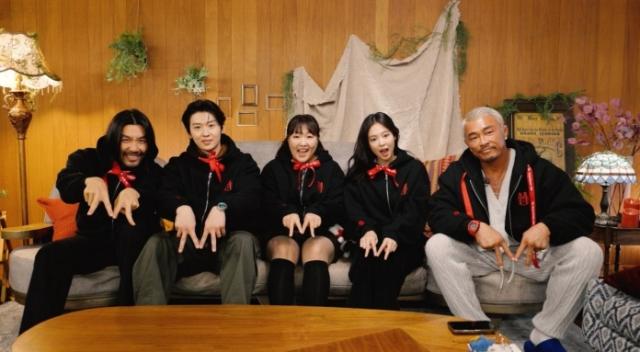
“Manitto Club” rotates cast members by “class.” Class 1 featured Jennie, Dex, Choo Sung-hoon, Lee Soo-ji and Noh Hong-chul. Class 2 includes actors Go Youn-jung and Jung Hae-in, and entertainers Park Myung-soo and Hong Jin-kyung. Kim said Class 1 leaned more heavily into variety, while Class 2 is expected to have a more detailed, “handmade” theme.
“Because there was a benefit for the first person to give a gift, the flow turned into something like a chase,” he said. “Maybe that made it hard to build details. So for Class 2 we chose handmade. If people make things by hand and show their effort, I thought a different flow could come out. I also wanted a consistent tone in how they give gifts to their secret manitto. When it’s handmade, you can see the sincerity more clearly, and you feel the group’s energy.”
Kim also addressed why familiar faces such as Park Myung-soo and Noh Hong-chul — known to many viewers from “Infinite Challenge” — appear again.
“With real variety, even if new cast members study hard, they don’t have experience data, so there are difficult points,” he said. “From a production standpoint, you mix a certain percentage of familiar people with a certain percentage of new people. That’s why people like Park Myung-soo, Noh Hong-chul and Kwanghee appear. And when you think about who fits the secret manitto concept, they naturally come to mind. I think Noh Hong-chul in Class 1, Park Myung-soo and Hong Jin-kyung in Class 2, and Kwanghee in Class 3 each did their roles well. It’s not only because of ‘Infinite Challenge.’ There are clear advantages to the data you get when you meet new people, like in ‘Earth Marble.’”
Running a variety show by rotating “classes,” rather than fixed members, is a difficult choice because it gives up the chemistry and relationships that build over time. Kim said it is also an experiment in a different storytelling approach.
“Because it’s class-based, I think it could develop into other forms of content,” he said. “People who form connections can continue across classes. Nothing is set yet, but I’ve imagined earlier classes influencing later ones or making special appearances. These days, many people don’t even watch all 12 episodes, so it could be fun to compress it into four episodes and end it. Fixed cast members build chemistry and make editing easier, but we chose a harder path. It was a decision to try a different way of speaking.”
Asked about what comes next, Kim said he does not see “Manitto Club” as something he completes alone.
“Our judgment matters, but I also think absorbing viewers’ reactions matters,” he said. “That’s the direction I want. Rather than deciding alone, I want to give viewers the ‘major shareholder’ seat. If people tell us what’s good or bad, we can reflect it. We’ve finished filming through Episode 12, and we’re trying to reflect opinions as much as possible.”

Kim said it has been five years since he founded the production company TEO, and the market has changed.
“These days people prefer concepts with strong dopamine, like survival shows or genre series,” he said. “In some ways, genres have narrowed compared with before, but if you don’t touch the sidelined genres, PDs might never experience them in their careers. That’s why we often talk about sitcoms at the company. I think junior PDs who haven’t experienced sitcoms need to try drama-style directing for new seeds to grow. That’s one reason I made the company. At first, I thought the OTT environment was so good that if you had good material you could keep working, but now we’re already in a different place five years later. Still, TEO has been putting out solid content while working with good platforms. I initially wanted to give younger staff opportunities rather than directing myself, but I’ve ended up working alongside them longer than expected. With our fifth anniversary this year, we’re rethinking the company’s brand image and setting a new direction.”
He said TEO has focused on two tracks: producing content for global distribution and building intellectual property that can become company assets.
“We have many great creators, and everyone is doing their part,” he said. “From next year, there will be content where seeds bear fruit, and we’re starting to see global results little by little. Profitability matters, but the biggest dopamine for a PD is hearing, ‘You opened a new era.’ Just as ‘Culinary Class Wars’ opened an era for cooking programs, what matters is opening a new era. So we keep thinking: What do we open next? We’ll keep a company identity, but we want as much variety as possible in genres and content.”
* This article has been translated by AI.
Copyright ⓒ Aju Press All rights reserved.