
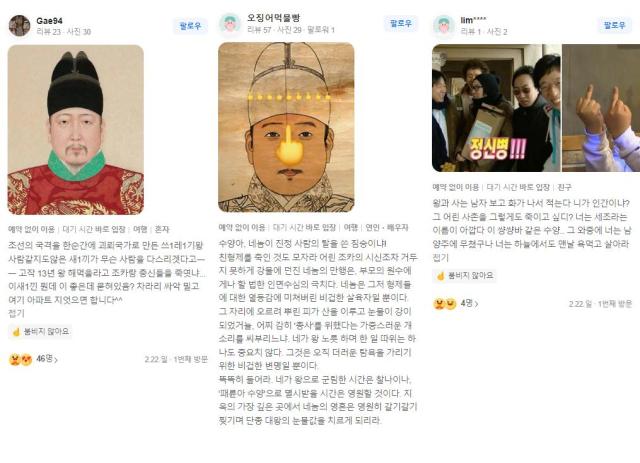
SEOUL, February 24 (AJP) - A digital revolt has targeted the royal tomb of King Sejo after the release of the film King's Warden, directed by Jang Hang-jun, sparked public anger over the 15th-century monarch's rise to power. Since the movie opened on February 4, the UNESCO World Heritage site, known as Gwangneung, has been review-bombed with one-star ratings on major South Korean map applications.
King's Warden reached the 6 million mark on Monday, just 20 days after its release, and is currently expected to surpass 10 million viewers in the country with a population of about 52 million. The film explores the domestic life and psychological isolation of King Danjong during his exile.
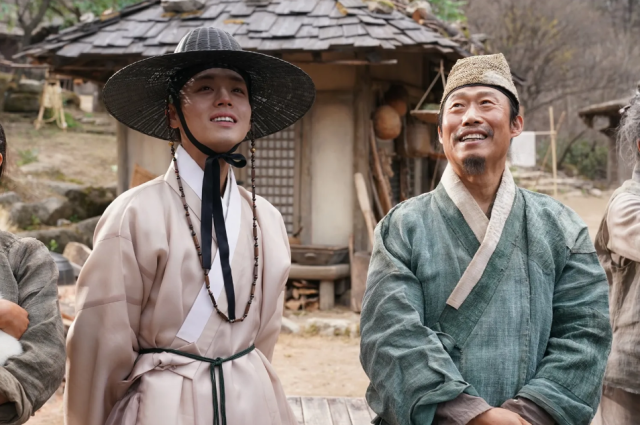
The public anger is rooted in a pivotal and violent era of the Joseon Dynasty. In 1453, Grand Prince Suyang, who later became King Sejo, orchestrated a coup d'état to seize power from his 12-year-old nephew, King Danjong. After forcing the boy to abdicate in 1455, Sejo eventually ordered his execution in 1457 while the former king was in exile in Yeongwol, some 140 kilometers (87 miles) southeast of Seoul.
Even in modern South Korea, Yeongwol is part of the "BYC" region, an acronym for Bonghwa, Yeongyang, and Yeongwol, collectively regarded as the most remote, mountainous, and difficult-to-reach inland area of the country. Historical accounts of the death vary between poisoning and strangulation, but the ruthless nature of the usurpation has long made it one of the most tragic chapters in South Korean history.
The film focuses on the final days of the deposed boy-king during his confinement in this isolated mountainous region. Rather than a political thriller, the narrative emphasizes the tender bond formed between the lonely Danjong and the local villagers who cared for him. By highlighting the human vulnerability of the 16-year-old king and the sympathy of the common people, the movie frames his uncle, the invisible yet looming King Sejo, as a visceral villain responsible for destroying a young life.
The emotional impact of the film has led social media users to digitally terrorize King Sejo's tomb on popular map platforms. Users have labeled the burial ground a "gathering place for psychopathic DNA" and described Sejo as the "worst cowardly murderer uncle in history." One user, identified as "Gae84", suggested the site should be demolished to build an apartment complex.
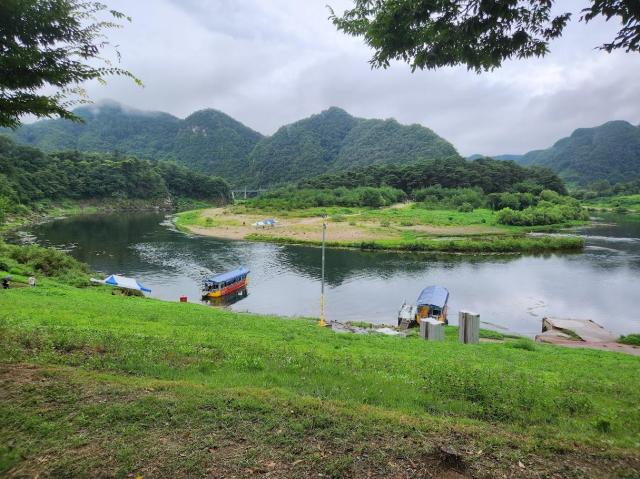
In contrast, the sites associated with King Danjong have seen a massive surge in physical and digital support. According to the Yeongwol Cultural and Tourism Foundation, 10,641 people visited Cheongnyeongpo, the island where the king was exiled, during the Lunar New Year holiday, a fivefold increase from the 2,006 visitors recorded last year. Over 10,000 tourists also visited Jangneung, Danjong's tomb, between Feb. 14 and 16. Online, the tomb has received a wave of five-star comfort reviews from users promising the historical figure the warmth he was denied in life.
The scale of the online activity has prompted South Korea's dominant tech companies to take restrictive measures. Kakao Map placed the Gwangneung entry under "Safe Mode" to block new submissions. Naver is speculated to be utilizing its AI-driven "Clean System" to monitor and filter out review patterns that do not reflect genuine user experiences, effectively hiding posts unrelated to actual visits to the tomb.

Copyright ⓒ Aju Press All rights reserved.
