
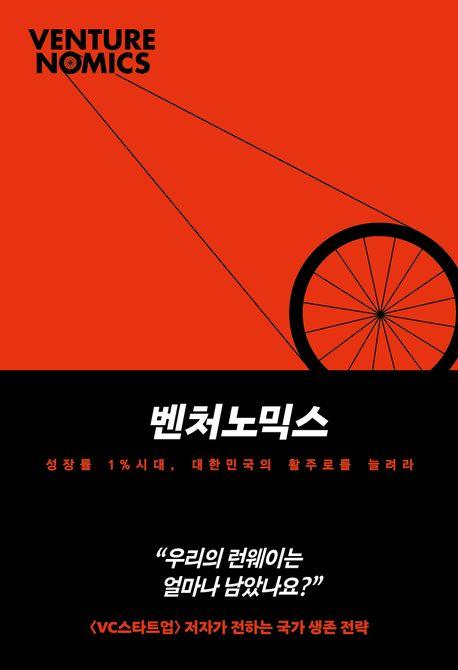
Venturenomics=By Kim Gi-yeong, Jium Media.
The author says South Korea’s economy is confronting a “trilemma” of real estate dependence, a low birthrate and U.S.-China tensions, and argues the country must break through with innovation. He writes that “the Republic of Korea’s runway is rapidly getting shorter.” In startup terms, “runway” means how long cash reserves can sustain survival. Without innovation, he warns, the national “aircraft” could fail to take off. As what he calls the only solution to secure a runway for a new leap, he proposes a “venture nation” strategy.
A central argument is that a real estate-centered structure has weakened innovation capacity. Money tied up in property, he writes, not only resists innovation but also reinforces preferences for jobs at large companies, in professional fields and in the public sector, creating a social climate that discourages entrepreneurship and moves to startups.
By contrast, the book says the Chinese government, despite a multiyear property downturn, has refrained from large-scale stimulus and instead focused on strategic industries such as electric vehicles, batteries and artificial intelligence. It says China’s advanced-technology competitiveness has been strengthening quickly, citing the release of DeepSeek as an example.
The author calls for “more innovative startups” and points to overseas examples readers can study: Israeli startups targeting the U.S. market from the earliest stages, and Finnish tech firms such as Supercell rising through what he calls the “Nokia diaspora.” He repeatedly notes that domestic-focused Korean startups such as Toss, Baedal Minjok and Zigbang have posted large operating losses, and again stresses the need to expand overseas. He also proposes creating a “startup sovereign wealth fund.”
He adds that South Korea’s education structure — often labeled a “medical school republic” — could, paradoxically, become an opportunity to grow K-bio and K-health care industries.
The book, however, does not address how to actively cultivate physician-scientists or how the government could build conditions for entrepreneurs to try again after failure, a gap the article notes.
Another challenge is breaking what it calls the long-entrenched “myth that real estate never loses.” Soaring home prices are widely seen as obstacles not only to innovation but also to consumption, marriage and childbirth. The president has repeatedly used X to call for stabilizing the real estate market, but the article says no one can guarantee whether the current “war on home prices” will change the market’s direction.
“The problem is the nature of capital. Money tied up in real estate rejects innovation. Even when new technology emerges, that capital does not take risks. The entire country’s appetite for risk declines, and the total amount of innovation shrinks. It means capital that flowed into ‘Eterno Cheongdam’ is unlikely to create next-generation semiconductor IP or become seed money for an AI startup. In Korea, real estate is not just an asset but the center of the financial order. As a learned result over the past 20 years, ‘rational’ Koreans came to trust leverage more than labor. Real estate is seen as almost the only ‘investment that does not fail’ in Korean society.” (p. 10)
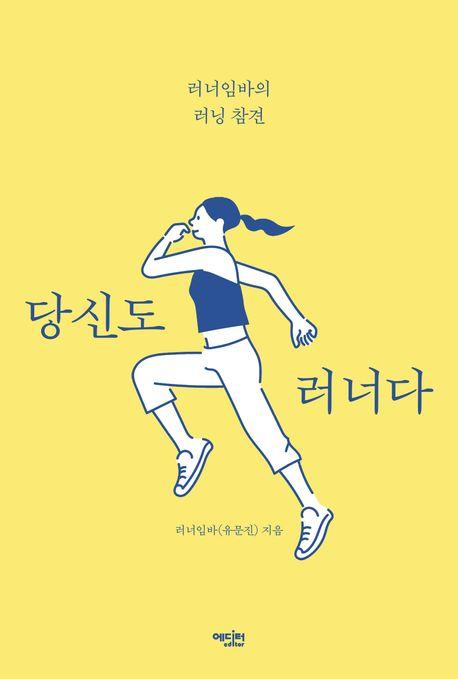
The author, an experienced runner who logs 800 kilometers a month, writes that “running is the easiest start and creates the biggest change.” He presents running not as simple exercise but as a force that can reshape daily life. Even on days when the body feels heavy, he says, pushing oneself outside to run can ultimately build the confidence of “I can do it.”
The book describes benefits of running, saying even short runs can improve cardiovascular endurance and help relieve stress. It also offers practical advice for beginners, including a two-week start plan: for 20 minutes, walk for one minute and run for two minutes, repeating the cycle to build consistency.
It also covers when and where to run, pros and cons of morning versus evening runs, and seasonal clothing. The book addresses how to run without knee pain, what to eat before running, how office workers can design routines, how to overcome slumps, and how to prepare for marathons.
At the end of each chapter, short tips labeled “Runnerimba’s one-line comment” aim to steady readers when they feel like quitting. Among them: “What a first-time runner needs is not a speedometer but the will to run,” and “Consistency isn’t running every day; it’s continuing to run.”
“So the best standard when you jog is this: ‘Can you run while talking?’ It’s simple and applies to anyone. If you can keep a natural conversation while running alongside a friend, that’s jogging. If you’re gasping and can’t finish a sentence, that’s not jogging but high-intensity training. And if you can speak a full sentence without needing to catch your breath afterward, you’re jogging at an appropriate pace. This standard works even when you run alone. You don’t have to actually speak. Count ‘one, two, three, four...’ in your head, hum lyrics, or think, ‘At this pace, I could talk if someone were next to me.’ If you feel that, you’ve already found a great jogging speed.” (pp. 68-69)
* This article has been translated by AI.
Copyright ⓒ Aju Press All rights reserved.