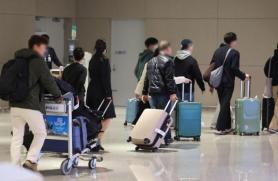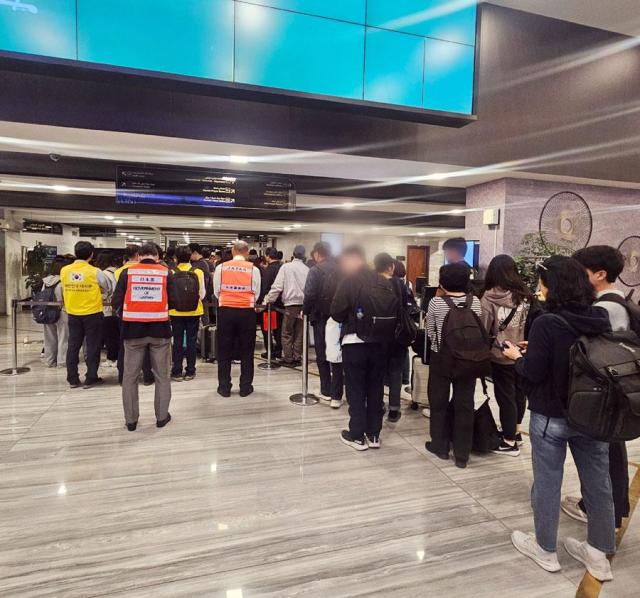
A multipurpose aerial tanker and transport aircraft carrying 204 South Koreans and seven foreigners departed from Riyadh on Saturday and is expected to arrive at a military air base in Seongnam, Gyeonggi Province on Sunday afternoon, according to the foreign and defense ministries.
They had been staying in Bahrain, Kuwait, Lebanon and Saudi Arabia before boarding the KC-330 Cygnus in Riyadh.
Though some commercial flights are still operating to and from Saudi Arabia and other countries in the region, the unprecedented move comes after President Lee Jae Myung instructed in a cabinet meeting earlier this week that military aircraft should be "considered" to safely evacuate South Korean nationals stranded there.
The Air Force operates four Cygnus aircraft, and this marks the seventh time one has been used to transport South Koreans overseas. The most recent mission was in 2024, when a Cygnus flew to Lebanon during Israel's ground operation against Hezbollah, evacuating 96 South Koreans and others.
Earlier this month many South Koreans returned home from the United Arab Emirates (UAE) and Qatar on chartered flights, amid thousands of others who still remain in the Middle East.

As U.S.-led strikes and Iranian retaliatory attacks continue, U.S. President Donald Trump has called on countries "affected" by the closure of the strategically vital waterway to dispatch warships to keep it open, singling out China, France, Japan, South Korea, and the United Kingdom, while also threatening to bomb Iran's shoreline and target Iranian vessels.
Copyright ⓒ Aju Press All rights reserved.