
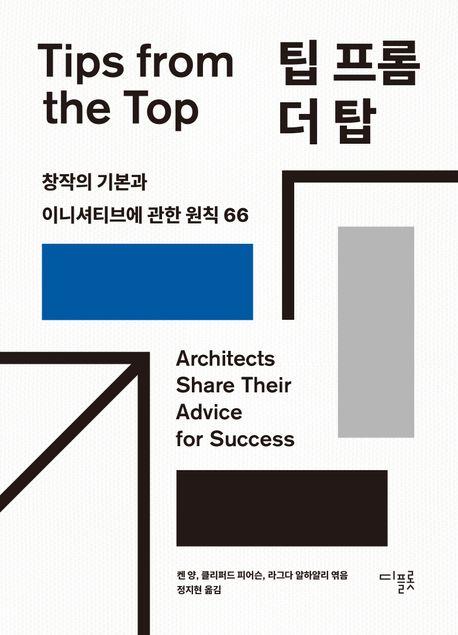
A new book gathers advice from 70 internationally known architects — figures the industry might liken to master chefs — organized into seven themes: getting started, inspiration, values, focus, process, self-development and decision-making. The project began when Raghdah Alhayal, an architect in her 20s in the United Arab Emirates, asked senior architects for guidance on success.
What started as personal outreach expanded into a broader “Tips from the Top” project. While the book features guidance from architects at the top of their field, it also underscores that strong ideas do not flow only from the top down: The collection itself grew from a younger architect’s questions, a bottom-up start that suggests major ideas can come from below.
The advice is paired with the pleasure of recalling landmark works by the contributors. William Pedersen, who participated in designing Lotte World Tower, recommends “comparative design,” urging architects to present multiple options rather than a single answer to a given set of requirements.
Mario Botta, who designed Leeum Museum of Art’s Museum 1 (M1), Gangnam Kyobo Tower and Phoenix Island Agora in Jeju, offers a blunt message: “Work, work, and keep working.” Arthur Gensler, who designed Nvidia’s headquarters, advises leaders to “give people greater authority as they make wiser decisions.” Ali Rahim and Hina Jamelle, who led a MoMA project, say: “Be true to your identity.”
Other lines read like life guidance: “Not missing the basics is the basic” (Dong Gong); “Flip it, flip it, and flip it again” (Yu Kongjian); and “Grow first as a human being” (Li Hu). Some counsel speaks to endurance in a fast-changing era, including “Make architecture that will stand the test of time” (Gordon Gill) and “Be a flame that burns slowly and for a long time” (Sharon Johnston & Marklee).
The book does not demand that readers follow every tip. It suggests taking any sentence that resonates and reshaping it to fit one’s own life — a process that can be a lesson in itself.
"Architecture is like a long-term romance. If I dare to offer a formula: two spoonfuls of optimism, one spoonful of obsession, plus a bit of denial and an almost constant admiration for absurdity. Luck clearly plays a role, too. But architecture’s true power comes from a commitment to keep exploring an infinite realm that is still unknown — or even beyond what can be conceived." (p. 152, Thom Mayne)
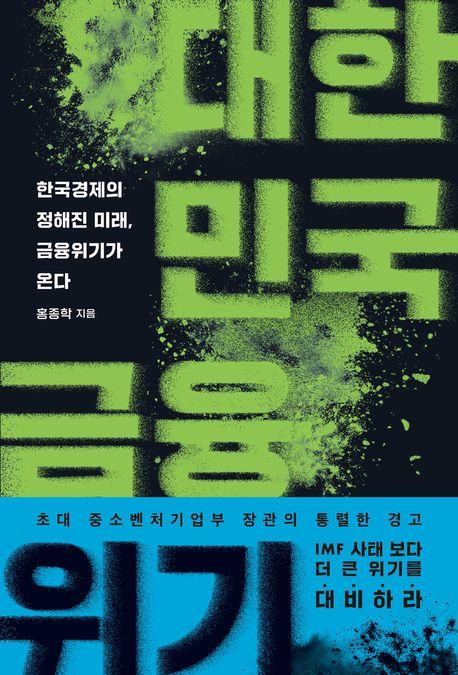
The author, an economist and policy expert, served as the first minister of SMEs and Startups in 2017. He introduced the concept of predatory lending in South Korea and helped spur entrepreneurship by abolishing the practice of joint guarantees that had blocked second chances. In the book, he argues that “a financial crisis is not something that arrives suddenly, but the result of accumulated choices.”
He outlines the historical backdrop of repeated crises and the structure of the Korean economy, assesses where the economy now stands, and examines possible policy and social choices to avoid a crisis. He identifies household debt as the weakest link and describes the recent rise in delinquency rates and default risks in vulnerable sectors as a “gray rhino” — a danger he says has been chosen and neglected by policymakers.
"Above all, what matters is our society’s sense of community. True crisis recovery begins with letting go of the selfish belief that only my home price must not fall. Today’s high home prices are a house of cards built on debt that future generations will have to carry. What use are expensive apartments in a country where young people cannot dream and the sound of babies crying disappears?" (p. 385)
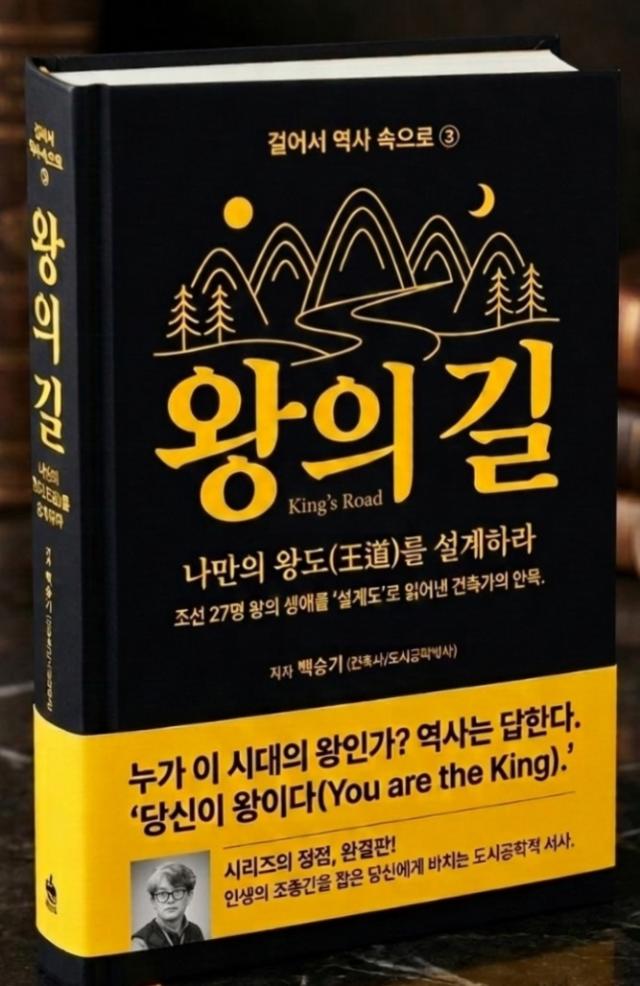
Baek, a South Korean architect and urban engineer, writes what he calls a vivid, walking-centered exploration of history, based on his own on-the-ground visits to sites where the Joseon Dynasty’s triumphs and failures intersect. The routes he documents — King Taejong’s “road of founding,” King Sejong’s “road of preservation,” and the “road of humiliation” experienced by King Injo and King Gojong — are presented as connected to realities people face today. He asks whether readers will remain “consumers” who settle on smooth roads built by others, or become “pioneers” who take the controls and design their own path.
* This article has been translated by AI.
Copyright ⓒ Aju Press All rights reserved.