
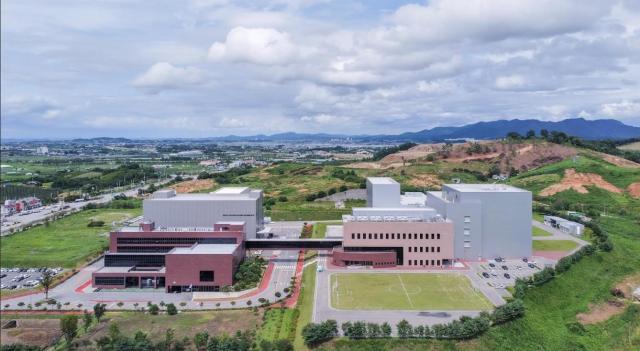
Contract development and manufacturing organizations, or CDMOs, are expanding rapidly beyond contract manufacturing into research and development, but industry officials say adding facilities alone is unlikely to secure an edge. They note that competition for orders is shifting from simple production pricing to development capabilities, and that as the market grows, specialization is increasingly determining winners and losers.
Industry officials said March 18 that CDMOs provide a high-barrier service model, handling biopharmaceutical R&D, clinical production and commercial manufacturing for clients that lack sufficient production capacity. The business requires advanced process technology, skilled workers and the ability to meet strict regulatory requirements.
Lee Seung-gyu, vice chairman of the Korea Bio Association, said companies must realistically assess whether they can endure the early years after building a CDMO plant. “After building a CDMO factory, you have to keep it going for three to five years,” Lee said. “CMO is about manufacturing capability, but CDMO also requires development capability. You need a clear strategy on what area to focus on.”
The sector also tends to generate follow-on deals once a relationship is established, prompting analysis that CDMOs must move beyond simple outsourced production and become strategic partners across the full drug development process to survive.
Jeong Yun-taek, head of the Korea Pharmaceutical Industry Strategy Institute, urged companies to strengthen expertise in specific high value-added technologies rather than broad, general-purpose offerings. He said the ability to provide end-to-end services — from process development and analytical method development to clinical and commercial production — will be a key differentiator.
Traditional drugmakers are also entering CDMO businesses by leaning on their strengths. Boryung, citing production and quality capabilities built in oncology drugs, signed a CDMO contract last year with Zuellig Pharma tied to supplying the cytotoxic anticancer drug Alimta (pemetrexed) to seven Southeast Asian countries. The company plans to begin supplying the product to seven countries, including the Philippines, Thailand and Malaysia, starting in 2027.
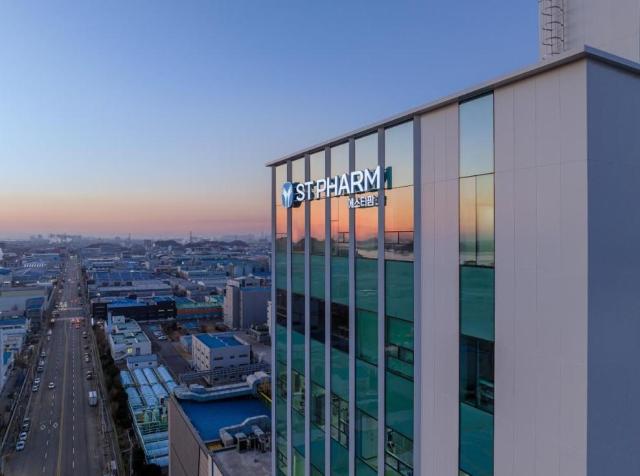
ST Pharm, an affiliate of the Dong-A Socio Group, is focusing on an oligonucleotide CDMO business, a key raw material for ribonucleic acid, or RNA, medicines. It completed construction of a “second oligo building” at its Banwol campus in Ansan, Gyeonggi Province, as it seeks to expand global orders. Kyongbo Pharmaceutical, a subsidiary of Chong Kun Dang, is building an antibody-drug conjugate, or ADC, plant in Asan, South Chungcheong Province.
* This article has been translated by AI.
Copyright ⓒ Aju Press All rights reserved.