
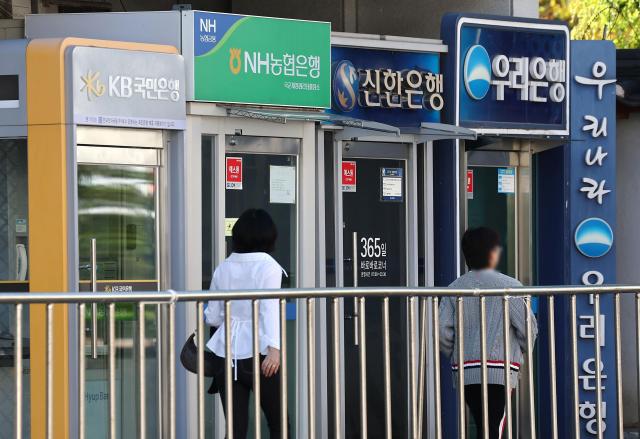
South Korean banks posted a record annual net profit of more than 24 trillion won last year, with interest income topping 60 trillion won for the first time.
According to the Financial Supervisory Service’s preliminary report on 2025 operating results released on the 19th, domestic banks’ net profit totaled 24.1 trillion won, up 1.8 trillion won, or 8.2%, from 22.2 trillion won a year earlier.
Net profit at commercial banks came to 16.2 trillion won. City banks increased profit by 1.3 trillion won from a year earlier, and internet-only banks by 100 billion won, while regional banks fell by 30 billion won. Special-purpose banks posted 7.8 trillion won in net profit, up 400 billion won from 7.4 trillion won.
Return on assets was 0.59%, little changed from 0.58% a year earlier. Return on equity rose 0.17 percentage points to 7.93%.
Interest income rose 1.1 trillion won, or 1.8%, to 60.4 trillion won from 59.3 trillion won. The net interest margin narrowed by 0.06 percentage points, but interest-earning assets increased 4.6% to 3,442 trillion won.
Non-interest income climbed 1.6 trillion won, or 26.9%, to 7.6 trillion won from 6.0 trillion won, as greater interest-rate and foreign-exchange volatility boosted gains tied to foreign-exchange and derivatives transactions used for hedging interest-rate and currency risks.
Selling and administrative expenses rose 2.0 trillion won, or 7.2%, to 29.4 trillion won from 27.4 trillion won. Personnel costs increased 1.5 trillion won to 17.9 trillion won, and other expenses rose 500 billion won to 11.5 trillion won.
Credit loss provisions fell 400 billion won, or 5.9%, to 6.5 trillion won from 7.0 trillion won.
Financial authorities said the rise in net profit reflected a sharp increase in foreign-exchange and derivatives gains amid greater interest-rate and currency volatility, as well as higher interest income driven by growth in interest-earning assets despite a narrower net interest margin.
They warned that uncertainty is increasing this year due to heightened geopolitical risks in the Middle East, U.S. tariff policy, and greater interest-rate and foreign-exchange volatility, while concerns about expanding credit losses persist. Authorities said they plan to keep encouraging banks to strengthen loss-absorbing capacity so they can continue performing their core financial intermediation role even if domestic and external economic conditions worsen.
* This article has been translated by AI.
Copyright ⓒ Aju Press All rights reserved.