
Celltrion: Stekima Auto-Injector Wins Approval in Canada

Celltrion said it has secured additional approval for an auto-injector version of its autoimmune disease treatment Stekima (ustekinumab).
The company said March 20 that Health Canada approved Stekima in auto-injector (AI) form, adding two presentations in Canada: 45 mg/0.5 mL and 90 mg/1.0 mL.
“With Stekima, we have added an AI formulation that the original product does not offer in Canada, completing a full lineup across doses and formulations and further strengthening competitiveness,” Celltrion said.
Celltrion said the approval supports its strategy to accelerate its push into the North American market.
A company official said demand for self-injection options has been rising in major markets, including North America. “With tailored prescribing now possible based on administration settings and patient characteristics, we plan to respond strategically to needs across diverse clinical sites,” the official said.
Celltrion said it also aims to quickly raise market share by leveraging synergies with its existing portfolio built in Canada as it expands its presence in the autoimmune disease market.
Protein, Vitamins Added: Koryo Eundan Launches ‘Balance Care Energy Bar’

Koryo Eundan said March 20 it has launched the “Balance Care Energy Bar.”
The company said the bar uses ingredients such as peanuts, oats and lentils and is designed for convenient nutrition or as a meal replacement. It contains 7 grams of plant-based protein — about the amount in one egg — and 4 grams of dietary fiber, which the company said is comparable to 1.5 bananas.
Koryo Eundan said it also includes 12 vitamins and minerals formulated with premium ingredients from global supplier DSM.
The company said each bar contains about 0.19 grams of sugars, positioning it as a low-sugar product.
“We planned a bar-type product so people can easily supplement nutrition as outdoor activities increase,” the company said. “It can be used in various situations, such as a meal replacement or a snack before or after exercise.”
HK inno.N Partners With Seongnam Mental Health Center for Employee Program
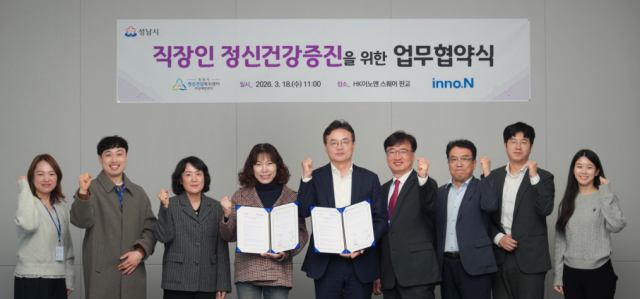
HK inno.N said March 20 it will work with the Seongnam Mental Health Welfare Center to run a workplace mental health management program for employees.
The company said it held a memorandum-of-understanding ceremony with the center on March 18 to promote employee mental health and prevent job-related stress.
HK inno.N said the partnership is part of its ESG efforts in safety and health management. It also cited a revision last year to the Korea Occupational Safety and Health Agency’s KOSHA GUIDE, which emphasizes preventing job stress through organization-level health promotion programs.
Under the agreement, HK inno.N will recruit participants and, starting in April, run a six-week program with 12 sessions. The company said activities will include mental health checkups, meditation and horticulture, aimed at teaching effective ways to manage mental well-being.
Seoul National University Hospital Reports 15-Year Benefits After Total Knee Replacement
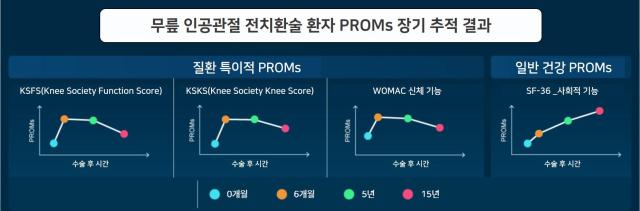
Patients who underwent total knee arthroplasty (TKA) saw major improvements in function and quality of life within six months, and those gains remained above pre-surgery levels up to 15 years later, Seoul National University Hospital said March 20.
The hospital said an orthopedic surgery team led by professors Choi Byeong-seon, Noh Doo-hyun and Han Hyeok-su tracked patient-reported outcome measures (PROMs) for up to 15 years in 1,264 patients ages 50 and older who received TKA between 2005 and 2013. The average age was 68.5, and 93.7% were women.
The team analyzed changes from before surgery through six months and at 1, 2, 5, 10 and 15 years. All measures improved significantly within six months. While patterns differed by indicator afterward, all measures remained higher than pre-surgery levels at 15 years, the hospital said.
Disease-specific indicators were relatively stable through about five years. However, the KSFS score — reflecting daily activities such as walking and climbing stairs — showed a clinically meaningful decline between 10 and 15 years after surgery, it said.
By age group, patients in their 80s and older had lower physical function scores than younger patients but higher social function scores, which remained elevated over the long term, the hospital said.
The findings were published in the latest issue of The Journal of Bone and Joint Surgery (JBJS).
* This article has been translated by AI.
Copyright ⓒ Aju Press All rights reserved.