Editor's Note: One month into the Iran war, a conflict that began in the Middle East is rapidly evolving into a broader economic and strategic shock for Asia, and in this special series, AJP examines those spillovers in full — from a comprehensive overview of Asia-wide shocks to industrial realignments, the mounting risk of a third oil shock, and rising security tensions — as the central question shifts from how the war unfolds in the Middle East to how deeply its consequences will be embedded across Asia.
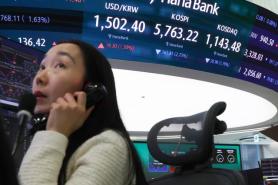
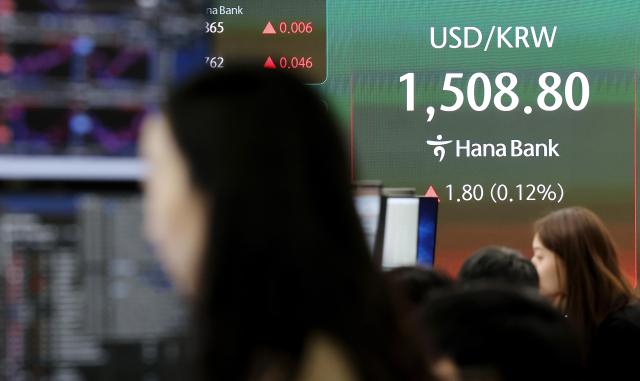
SEOUL, March 27 (AJP) -A crisis is simmering - with the won revisiting levels seen during the global financial crisis and bond yields nearing 4 percent even as the base rate remains anchored at 2.5 percent - but Seoul authorities have few firefighting tools left.
Even before the United States and Israel launched strikes on Iran in late February, Seoul authorities were struggling to defend the won, pressured by a persistent preference for dollar-denominated assets.
The volatility in oil prices following the blockade of the Strait of Hormuz has since rendered much of the country’s reshoring efforts ineffective.
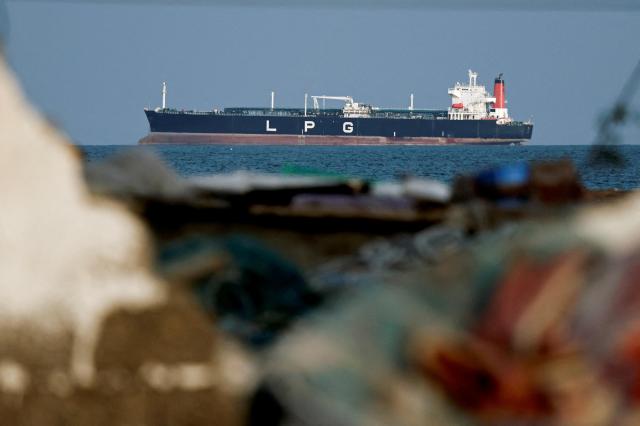
Since the invasion began on Feb. 28, Iran’s Islamic Revolutionary Guard Corps (IRGC) has effectively maintained a near-total blockade of the strait, cutting off a critical transit route for crude oil and liquefied natural gas.
The Dubai crude has surged to $130 per barrel, more than doubling from $60 at the start of the year, while Brent crude has risen over 40 percent to trade near $100.
Asian economies, led by South Korea, are bearing the brunt of the shock. As of January 2026, 70 percent of South Korea’s crude oil imports originated from countries reliant on the strait — including Saudi Arabia, Qatar, the UAE, Kuwait and Iraq — far exceeding China’s dependency of 48 percent.
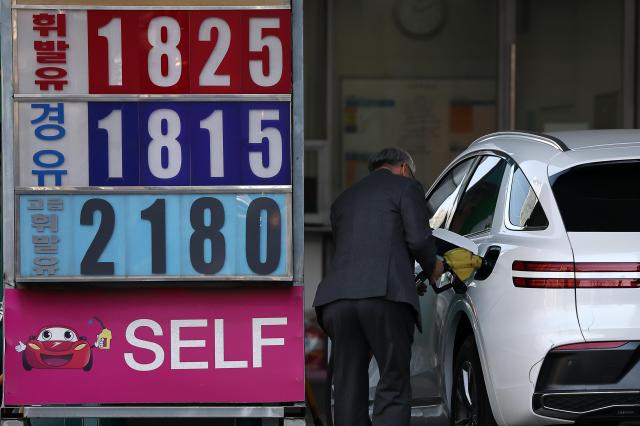
The impact has quickly filtered through to the real economy. Retail prices for gasoline and diesel have risen sharply, while the government’s “emergency maximum price system” has struggled to contain the surge. A revised price ceiling set at 1,930 won per liter — more than 200 won higher than the initial cap — points to the limits of administrative controls and signals a de facto policy retreat.
The semiconductor industry is also under strain. South Korea relies on Qatar for 65 percent of its helium supply, a critical input for chip etching processes, raising the risk of disruptions to high-tech manufacturing lines if the blockade persists.
According to the Woori Finance Research Institute, if Brent crude averages $100 per barrel for a full year, South Korea’s GDP growth could fall by 0.55 percentage points while consumer prices rise by 0.76 percent. The Hyundai Research Institute warned that if prices exceed $150, growth could slow to near zero.
Heightened complexity, deeper impact
While South Korea has navigated geopolitical crises before, experts say the current situation is fundamentally different in both scale and structure.
Unlike the COVID-19 pandemic — which reduced demand while leaving shipping lanes largely intact — the Hormuz blockade disrupts a vital artery handling more than 20 percent of global trade.
The closest historical parallel is the oil shocks of the 1970s, when crude prices surged from $3 per barrel in 1973 to $39 in 1980, nearly doubling gasoline prices domestically. Yet even those shocks, analysts note, were less severe in their immediate supply impact.
“What makes the current situation structurally distinct from prior oil shocks is the simultaneous disruption of liquefied natural gas,” said David Bieri, professor at Virginia Tech. “The strait carries not just oil, but also fertilizers and high-tech supply chains — compounding the shock in ways not seen in earlier crises.”
Fatih Birol, executive director of the International Energy Agency, echoed that view, noting that current supply losses exceed those seen during past oil crises combined.
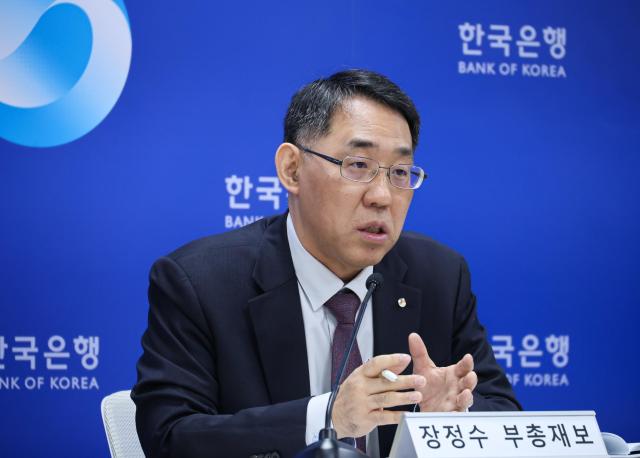
“Monetary policy must carefully consider the household debt situation to maintain mid- to long-term financial stability,” said Jang Jeong-su, deputy governor general at the Bank of Korea, acknowledging the “force majeure” constraints facing policymakers.
Market interventions fueling distrust
Despite the gravity of the situation, repeated government interventions — including verbal warnings, foreign exchange operations and a 5 trillion won bond buyback — have done little to stabilize market sentiment.
The won has weakened sharply, falling nearly 5 percent since the start of the year and underperforming most regional peers. Bond yields have also climbed, with the 10-year Korea Treasury Bond approaching levels last seen during the peak of U.S. monetary tightening.
International institutions have raised concerns over the ad-hoc nature of Seoul’s policy response.
“South Korea’s aggressive market interventions risk undermining the predictability of its financial markets,” the Atlantic Council said in a recent report, warning that reliance on short-term measures could erode long-term institutional credibility.
Experts have also flagged concerns over fuel subsidy policies.
“When supply risks occur, demand must also be adjusted. Setting a price ceiling sends the wrong signal by encouraging continued consumption despite the crisis,” said Kim Hyung-gun, an economics professor at Kangwon National University.
The Carnegie Endowment for International Peace similarly warned that expanded subsidies are crowding out social spending and delaying structural reforms that were only viable under more favorable external conditions.

Copyright ⓒ Aju Press All rights reserved.