SEOUL, April 15 (AJP) - South Korea has secured 273 million barrels of crude oil by the end of this year, presidential chief of staff Kang Hoon-sik said on Wednesday.
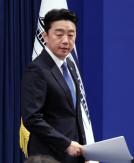
At a press briefing at Cheong Wa Dae in Seoul, Kang, who just returned from a weeklong trip to Kazakhstan, Oman, Qatar and Saudi Arabia, said the country has reached a deal to secure additional crude oil, including up to 2.1 million tons of naphtha, by the end of this year.
"Compared to consumption levels last year, the 273 million barrels of crude oil are sufficient to sustain more than three months without any additional emergency measures, and 2.1 million tons of naphtha are equivalent to about one month's supply," Kang said.
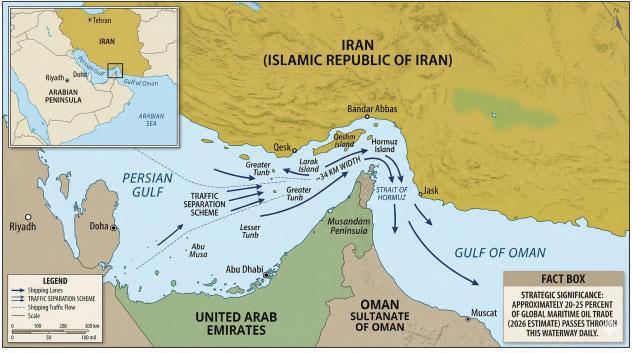
"The procurement of additional crude oil and naphtha will be imported through alternative routes that would not be affected by whether the Strait of Hormuz is closed or reopened," he said, adding, "We expect this to help stabilize domestic supply and prevent supply disruptions."
He also revealed that there were discussions about a plan to establish oil storage facilities outside the strait, a critical chokepoint for roughly one-fifth of the world's oil supply, to ensure a more secure supply chain.
At a press briefing at Cheong Wa Dae in Seoul, Kang, who just returned from a weeklong trip to Kazakhstan, Oman, Qatar and Saudi Arabia, said the country has reached a deal to secure additional crude oil, including up to 2.1 million tons of naphtha, by the end of this year.
"Compared to consumption levels last year, the 273 million barrels of crude oil are sufficient to sustain more than three months without any additional emergency measures, and 2.1 million tons of naphtha are equivalent to about one month's supply," Kang said.
"The procurement of additional crude oil and naphtha will be imported through alternative routes that would not be affected by whether the Strait of Hormuz is closed or reopened," he said, adding, "We expect this to help stabilize domestic supply and prevent supply disruptions."
He also revealed that there were discussions about a plan to establish oil storage facilities outside the strait, a critical chokepoint for roughly one-fifth of the world's oil supply, to ensure a more secure supply chain.
Copyright ⓒ Aju Press All rights reserved.