SEOUL, April 17 (AJP) -The West Asia conflict is forcing South Korea to confront a fundamental shift: energy security is no longer about efficiency, but resilience.
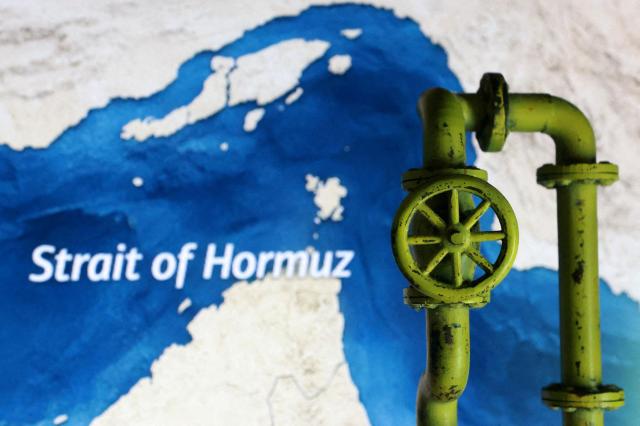
For decades, Seoul optimized its energy system for cost and scale — routing roughly 70 percent of its crude imports through the Strait of Hormuz, refining heavier Middle Eastern oil into high-value fuels, and exporting them across global markets. It was a model built on efficiency.
That model is now under strain.
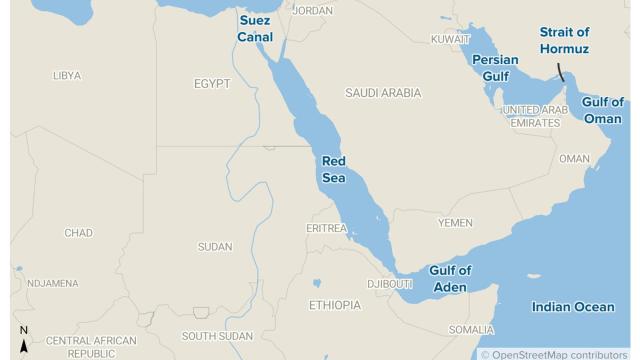
With the Hormuz corridor constrained and maritime risks spilling into the Red Sea, shipping costs are no longer just a function of distance. They now reflect geopolitical risk. Routes once considered optimal are vulnerable, while alternatives once dismissed as uneconomical are being reassessed through a different lens: safety.
The recent transit of a South Korea-linked crude carrier through the Red Sea — the first confirmed Hormuz bypass shipment — captures this shift. It is not simply a logistical workaround, but a signal that Seoul is recalibrating priorities under pressure.
Yet the challenge runs deeper than import diversification.
South Korea is not just a major crude importer. It is also a critical exporter in the global energy system — a dual role that amplifies the stakes of disruption.
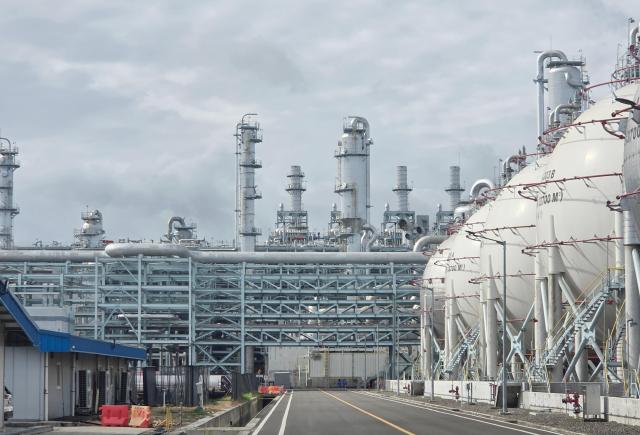
Petrochemicals and refined oil products ranked as the country’s third- and fourth-largest export items last year, generating a combined $88.5 billion and accounting for 14 percent of total shipments. The country’s four major refiners — SK Energy, GS Caltex, S-Oil and HD Hyundai Oilbank — exported 86 million barrels of jet fuel in 2025, representing roughly 4 percent of global supply, the largest share worldwide.
Despite being the world’s largest crude producer, the United States remains structurally dependent on Korean refining output. Korean shipments accounted for 71 percent of U.S. jet fuel imports last year — equivalent to about 7 percent of total supply. In western regions such as Washington and California, dependence rises to as high as 85 percent of imports.
This reflects a structural imbalance. The U.S., buoyed by the shale revolution, produces predominantly light crude, which yields lower refining margins and is less suited for certain high-value fuels.
South Korea, by contrast, has built its system around heavier Middle Eastern crude, particularly from Saudi Arabia, enabling it to produce premium products at scale.
Washington has urged Seoul to pivot toward U.S. crude, framing it as both a commercial and strategic adjustment. But such a shift is not straightforward. It would require reconfiguring refining systems and could erode Korea’s competitiveness in high-value exports — a sector that has become a pillar of its trade balance.
And here lies the contradiction. South Korea’s energy model is built on global integration — importing crude, refining it, and exporting higher-value products.
But geopolitical fragmentation is beginning to challenge that model. Supply chains are no longer neutral. They are increasingly shaped by strategic alignments and conflict zones.
The immediate risks are already visible. Some 26 South Korea-linked vessels remain stranded or delayed near the Persian Gulf. Shipping through Hormuz has dropped sharply, while insurance costs and security risks are rising. These pressures are feeding directly into domestic fuel prices and industrial margins.
The government has responded with short-term stabilizers — emergency crude purchases and fiscal support — but these are stopgaps.
The more consequential shift is strategic. Seoul is moving beyond simple diversification toward a broader rethinking of its energy architecture. This includes exploring new sourcing corridors and strengthening ties with alternative partners such as India, whose refining capacity and geographic position offer a potential buffer against Middle Eastern volatility.
President Lee Jae Myung’s state visit to New Delhi, accompanied by a large business delegation, reflects this recalibration.
Even if tensions ease, the old equilibrium is unlikely to return.
U.S.-Iran negotiations may reopen parts of the Hormuz corridor, but under tighter controls and new conditions. The waterway may function again, but it will no longer be a frictionless artery of global trade.
For South Korea, that changes the equation.
Energy security can no longer be measured solely in cost per barrel. It must now account for route stability, geopolitical exposure and systemic resilience. In that sense, higher shipping costs are not an anomaly — they are the new premium for security.
The shift from efficiency to safety will not be painless. It implies higher costs, more complex logistics and potential trade-offs in competitiveness.
But the alternative — continued dependence on a single, volatile chokepoint — carries far greater risk.
The West Asia conflict is not just disrupting supply. It is rewriting the logic of energy strategy. For Seoul, the task now is to adapt — not incrementally, but structurally — to a world where the cheapest route is no longer the safest one.
*The author is the assistant editor of AJP

Copyright ⓒ Aju Press All rights reserved.