
The program will provide 100,000 to 250,000 won per person to the bottom 70% by income. Vulnerable groups can receive up to 600,000 won.
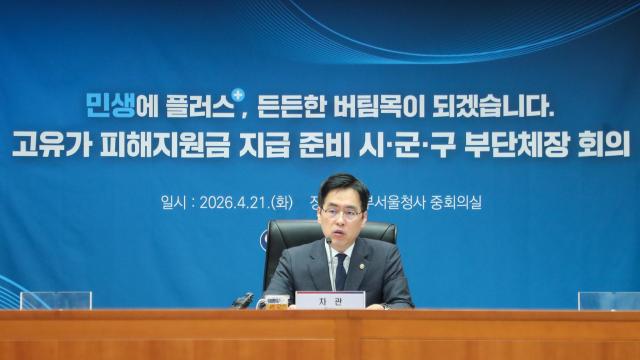
The ministry held a meeting chaired by Vice Minister Kim Min-jae with deputy heads of 226 local governments to review the full application and payment process.
It asked local governments to forecast demand for offline payment methods such as prepaid cards and paper local gift certificates, secure sufficient supplies, and ensure card designs do not reveal whether a recipient is in a vulnerable group.
The ministry also urged local community service centers to actively run “visit application” services for residents with limited mobility, including older adults and people with disabilities, to prevent gaps in coverage. It said centers should coordinate with welfare departments when needed to identify eligible residents in advance and make proactive visits.
To prevent improper distribution and use — including cashing out benefits through private transactions or using another merchant’s name — the ministry called on local governments to operate reporting centers for fraudulent distribution and strengthen monitoring.
It also asked centers to set up waiting areas for applicants and to train staff in advance on standards for handling objections so residents do not face unnecessary inconvenience during applications and payments.
Relief payments will be issued first from April 27 to May 8 to basic livelihood security recipients, near-poverty households and single-parent families. A second payment period will run from May 18 to July 3 for those who missed the first period and for the remaining 70% of the public covered by the program.
“The role of cities, counties and districts, and of local community service centers, is critical because they are the closest point of contact with the public,” Kim said. “We will work closely with local governments to carefully check preparations and ensure there are no blind spots.”
* This article has been translated by AI.
Copyright ⓒ Aju Press All rights reserved.