
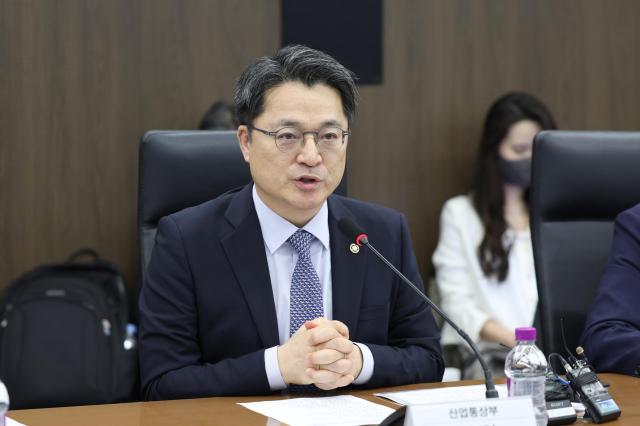
The Ministry of Trade, Industry and Energy said Moon held a meeting with steel industry representatives in Seoul at the Korea Chamber of Commerce and Industry to review supply and demand for major steel products and measures to stabilize prices amid the extended conflict.
Steel is a core industry that supplies basic materials to key sectors such as construction, automobiles and shipbuilding. The meeting was convened to check the broader steel supply chain and set up a proactive response system as Middle East-related geopolitical risks persist.
At the meeting, the Korea Iron & Steel Association said the domestic steel industry has low dependence on steel products and raw materials from the Middle East, limiting direct impacts from a prolonged war. However, it said higher international oil prices could raise energy costs, and rising ocean freight rates could increase logistics expenses.
The government said it will maintain close communication with the industry in case supply-chain uncertainty grows. It also said it will step up efforts to stabilize supply and manage prices, noting that higher steel prices could increase costs for downstream industries including construction and autos.
“Even a small disruption in the steel supply chain can lead to a broader crisis across industry,” Moon said, calling on the sector to “actively cooperate” to keep steel materials supplied steadily and reduce the burden on prices.
Moon added that the government will actively support industrial restructuring and stronger competitiveness, based on the Steel Industry Act set to take effect in June, to respond to challenges at home and abroad including global oversupply, carbon-neutrality demands and the spread of protectionism.
* This article has been translated by AI.
Copyright ⓒ Aju Press All rights reserved.