
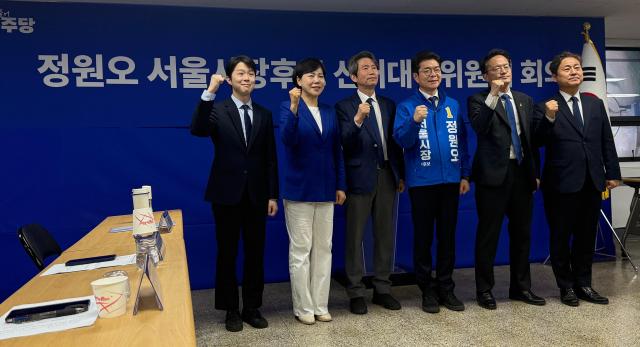
Democratic Party Seoul mayoral candidate Jeong Won-oh on April 28 opened his first public campaign committee meeting and stepped up attacks on People Power Party candidate Oh Se-hoon.
Speaking at the meeting in central Seoul, Jeong said Oh “impulsively” lifted Seoul’s land transaction permit system and then reversed course 35 days later, “creating confusion in the market.” He said it “doesn’t add up” for Oh to now shift responsibility to the government.
Jeong also accused Oh of repeatedly raising tax issues during elections to stoke anxiety and deepen real estate conflict, saying Oh remains stuck in an “outdated 2022 frame.”
On the long-term holding deduction, Jeong reiterated his position, saying he has already said the current rights of owner-occupiers with one home must be protected “without exception.” He accused Oh of “deliberately distorting facts” by talking about abolition and “manufacturing conflict with false claims.”
Lawmakers Jeon Hyeon-hui and Park Joo-min, who previously competed in the party’s primary race, attended the meeting. Jeon called Oh an “unqualified” mayoral candidate, accusing him of siding with and defending what she described as “insurrection forces,” and labeled him the “core figure” of “Yoon-again” forces. Park said Oh has done nothing and has no plan on bread-and-butter issues such as housing and on Seoul’s future growth engines, urging the party to win back the city.
Rep. Kim Young-bae criticized Oh’s decision the previous day to wear a red jacket, saying it had been known he would wear white until just before a news conference. Kim said the switch showed Oh’s intention to run for party leader because he expects to lose the Seoul mayoral race. Kim also challenged Oh’s record, asking what he had done over the past 10 years and questioning his “basic conscience.”
The campaign also set up a separate “Oh Se-hoon 10-year Judgment Headquarters,” raising the intensity of its attacks. Rep. Ko Min-jung, a co-head of the unit, raised suspicions about possible links between political donations and personnel appointments. She asked whether board seats at affiliated agencies under the Oh administration were being treated as bargaining chips for money, and called on Oh to clarify whether appointments were made after solicitations or as a quid pro quo for large donations, noting that people he had said were unrelated were later found to be major donors.
* This article has been translated by AI.
Copyright ⓒ Aju Press All rights reserved.