
The government will introduce a new “fair allowance” for short-term fixed-term workers in the public sector after a survey found that about half of such workers were hired on contracts of less than one year.
The plan also calls for, in principle, banning fixed-term contracts shorter than one year and tightening rules to prevent abuse of ultra-short-hour workers.
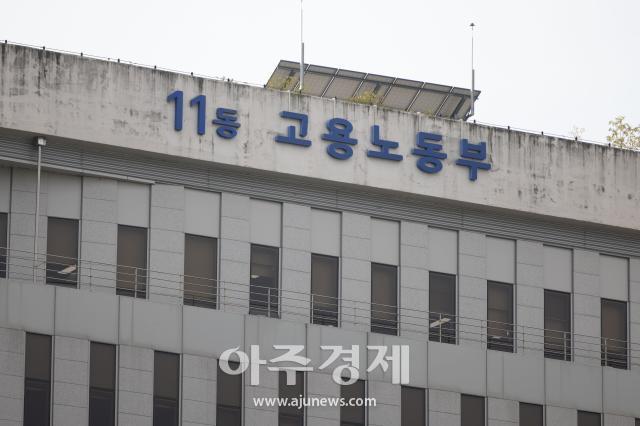
The Ministry of Employment and Labor reported the measures at a Cabinet meeting on the 28th as part of a “public-sector nonregular worker treatment improvement plan.” The ministry said it had confirmed unfair practices such as repeated sub-one-year contracts used to avoid paying severance, along with concerns over low pay and allowances.
After launching a joint interagency task force on nonregular workers late last year, the government surveyed about 2,100 public entities — including central government agencies, public institutions and local governments — on contracts and wages.
The survey found about 146,000 fixed-term workers in the public sector, including 73,000 on contracts shorter than one year. Workers on sub-one-year contracts earned less than fixed-term workers overall, and they were less likely than regular employees to receive welfare points, meal allowances and holiday bonuses. Wage gaps also varied by institution.
As a “model employer,” the government said it would pay fair compensation to reflect labor value and job insecurity. Under the plan, public institutions will pay a flat “fair allowance” equal to 10% to 8.5% of a base amount to fixed-term workers employed for less than one year.
The base amount is set at 118% of the minimum wage, reflecting the average living wage. The plan applies higher compensation rates for shorter contracts. Based on next year’s 기준, payments would be 382,000 won for 1-2 months of work; 846,000 won for 3-4 months; 1.26 million won for 5-6 months; 1.622 million won for 7-8 months; 2.055 million won for 9-10 months; and 2.488 million won for 11-12 months.
To narrow wage gaps within the public sector, the government will also pay an “appropriate wage” and include a one-time budget item in next year’s budget proposal so workers whose monthly fixed pay falls below that level can receive support. The appropriate wage is also set at 118% of the minimum wage. A ministry official said using the average living wage set by local ordinances would have the effect of partially raising and leveling pay for low-wage workers.
The ministry said it will also review and gradually improve benefits and allowances, including meal costs, welfare points and holiday bonuses.
To establish fair hiring practices, the plan would, in principle, prohibit contracts shorter than one year. Exceptions would require a prior screening process for public-sector nonregular hiring, and the government plans to require outside members on screening committees to strengthen the system.
For work that is routine and ongoing, the government said workers should be hired as regular employees. It will also provide guidance to institutions that have not made conversion decisions under the 2017 regularization guidelines. As of this month, 52 public institutions had not made such decisions.
To curb misuse of ultra-short-hour fixed-term workers — those working fewer than 15 hours a week — the government will restrict such hiring. Where unavoidable, employers must undergo a necessity review and meet conditions such as additional proportional payments, including weekly holiday pay, to prevent hiring for cost-cutting purposes.
The government will conduct regular surveys to track employment and wage conditions for nonregular workers in the public sector. If unfair practices are found during surveys — such as 364-day contracts aimed at avoiding severance — it will guide institutions to guarantee a one-year contract.
To ensure implementation, the government will strengthen nonregular employment indicators in management evaluations of public institutions and local public enterprises. A ministry official said detailed evaluation items and indicators will be prepared based on the results of an ongoing research project.
The government also plans to draft and expand a tentative “guideline for improving treatment of nonregular workers.” With a committee for public-service workers set to be established starting in September this year, further discussions on public-sector treatment improvements will be handled through that body.
Labor Minister Kim Young-hoon said the public sector should take the lead in correcting unfair hiring practices affecting nonregular workers and set an example through reasonable improvements in treatment. He said the government would work to ensure the public sector’s progress spreads to the private sector so all working people are respected and treated in line with the value of their labor.
* This article has been translated by AI.
Copyright ⓒ Aju Press All rights reserved.