
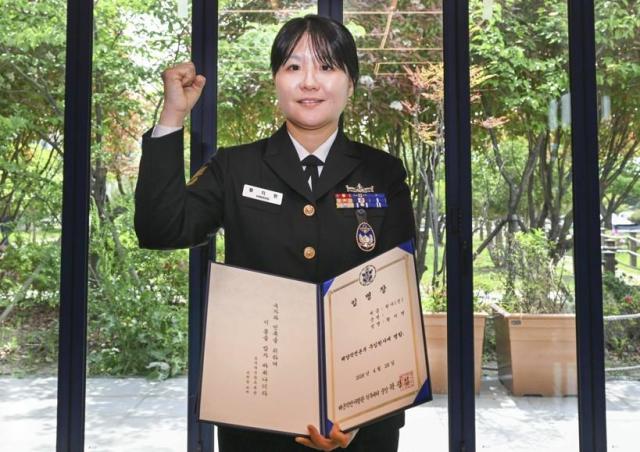
A milestone in South Korea’s Navy history was marked with the appointment of its first female senior enlisted adviser. The Navy named Master Chief Petty Officer Hwang Ji-hyeon to the symbolic post of senior enlisted adviser at the Maritime Operations Command.
Hwang, commissioned as a noncommissioned officer in 2006, has repeatedly set “firsts,” including serving as a training company commander and advancing in shipboard specialties, the column said. It described her appointment as more than a routine personnel move, calling it a signal of how the military is changing.
The military has long been defined by tradition and strict discipline, and “first” records can indicate shifting standards, the column said. Hwang’s rise, it argued, reflects a move toward evaluating service members by ability and experience rather than gender. It said she has trained thousands of noncommissioned officers and built operational experience on major combat ships, adding that her record is viewed as “proven capability” before “first female.”
Still, the column cautioned against treating one case as proof of complete, organizationwide change. Individual achievement can show what is possible while also underscoring remaining barriers, it said, arguing the moment is better understood as a transition than an endpoint: the door has opened, but the path through it is not yet wide enough.
The column said demographic decline and changes in force structure are pushing the military toward new choices, arguing it can no longer sustain itself by limiting participation by specific groups. It added that broader opportunity does not mean lower standards; rather, competition can intensify and criteria can become more precise. In that framing, population shifts open the door, but performance remains the standard for passing through it.
It described Hwang as a “pioneer” not because she began with special advantages, but because she accumulated results within existing standards. Her appointment, it said, is less about a single hero than about steady work reaching a point that changes expectations, becoming a benchmark for the next generation.
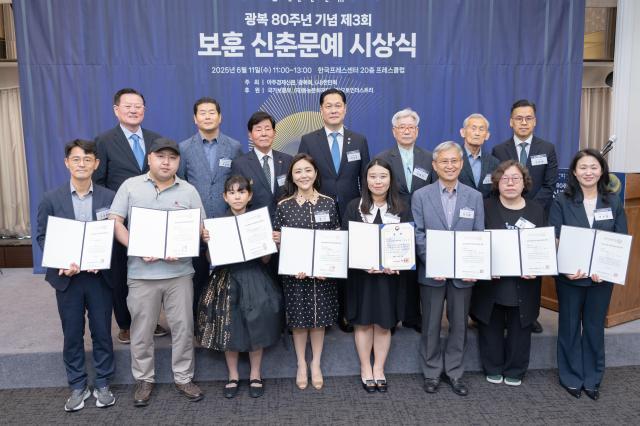
From there, the column turned to the question of what society chooses to remember, arguing that change is built on time and accumulation that often go unseen. It pointed to the “Bohun New Year Literary Contest,” hosted each June by Ajunews during the month dedicated to veterans affairs, describing it as more than a writing competition: an effort to bring past sacrifice into present language and restore stories that were not recorded.
At first glance, the appointment of a female senior enlisted adviser and the literary contest may seem unrelated — one a current achievement, the other an act of remembrance — but the column said both are linked by continuity. Past sacrifice shapes the present, and today’s choices become tomorrow’s standards, it argued, adding that veterans affairs is not only about the past but also a force that influences the present.
Hwang’s path, it said, was made possible by years of gradual opening within the military and by the accumulated work of many people who served without recognition. For that reason, the column argued, her “first” should be understood as a community story as well as a personal one.
It said the literary contest carries a similar message: society may remember the names of heroes while forgetting the many ordinary lives that made those achievements possible. The strength that sustains a country, it argued, often comes from people doing their jobs in everyday roles and from choices that were real even if they were never written down.
The column added that change that begins in the military can extend across society. Recognizing diversity and judging people by ability, it said, is a principle that applies to companies, public institutions and schools alike, arguing that national competitiveness depends not only on systems but on standards.
Memory, it said, helps shape those standards. A society that forgets the past can lose direction, while one that remains stuck in the past cannot move forward. What matters is connecting past remembrance to present choices and expanding those choices into future norms, it argued.
June’s month of veterans affairs, the column said, is a time to reflect on that connection, and the literary contest is a venue for turning it into concrete language. Through writing, it said, people revisit the past and reconsider the present, allowing individual experience to become shared memory.
Hwang’s step, it concluded, is not an end but a beginning — and a starting point for someone else. In the same way, it said, a single written story or a single remembered life can become a standard for the next generation.
The column ended with two questions: What will we remember, and what standards will we set through that memory? It argued that the Navy’s first female senior enlisted adviser and the Bohun literary contest, though different scenes, pose the same challenge — to remember the past, choose in the present and prepare for the future — and that the answer lies in doing one’s role and recording the stories that accumulate into a society’s direction.
* This article has been translated by AI.
Copyright ⓒ Aju Press All rights reserved.