
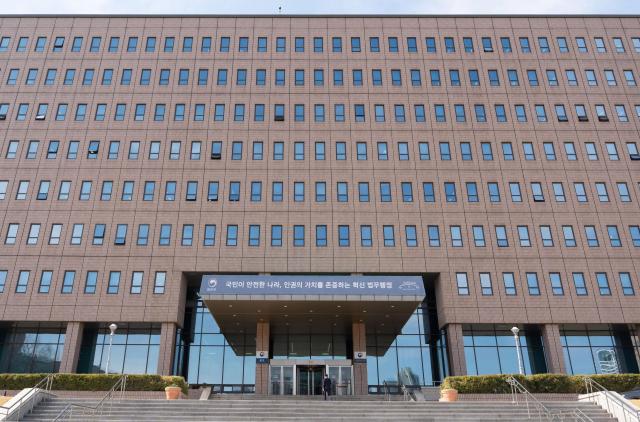
The ministry said on the 29th it has taken steps to strengthen remedies for victims of past abuses, including refraining from routine appeals in state compensation cases, withdrawing or waiving appeals, and stopping statute-of-limitations defenses in cases that have received truth-finding decisions.
As of March, the ministry said it had withdrawn or waived appeals in a total of 863 suits involving 3,587 plaintiffs: 116 Brothers Home cases (756 people), 42 Seongam Academy cases (357 people), 608 Samcheong cases (1,570 people) and 97 Yeosu-Suncheon Oct. 19 cases (904 people).
Justice Minister Jeong Seong-ho also ordered blanket withdrawals and waivers of appeals in state compensation suits: on Aug. 5 last year for Brothers Home and Seongam Academy, on Sept. 29 for Samcheong, and on Oct. 13 for the Yeosu-Suncheon Oct. 19 incident. As a result, 2,202 victims received compensation totaling about 199.579 billion won.
Prosecutors, citing the difficulty many victims face in pursuing legal procedures on their own, have also been using court-ordered retrials more actively. The ministry said prosecutors have secured not-guilty rulings in cases including the Jeju 4·3 incident and cases involving fishermen who were abducted and later returned, helping restore victims' reputations.
The ministry and prosecutors have also begun reviewing records of deferred prosecution decisions, not only convictions. Deferred prosecution is a decision not to indict despite acknowledging wrongdoing, and it has continued to leave victims stigmatized as criminals.
The Seoul Southern District Prosecutors Office said it reopened a case on its own authority and changed the disposition to "no charges" for a suspect who in 1983 had been handled under the National Security Act for possessing "Das Kapital." The Seoul Central District Prosecutors Office and the Gyeongju branch office also moved to change dispositions in cases involving the Assembly and Demonstration Act and cases tied to abducted-and-returned fishermen.
Prosecutors are expected to continue actively considering "no charges" decisions based on relevant records and findings by the Truth and Reconciliation Commission, even when co-defendants have not sought retrials or when retrials are still pending.
A Justice Ministry official said, "These measures are the result of efforts to support, administratively and judicially, the core values of the people-sovereignty government: protecting human rights and addressing past abuses." The official added, "The Justice Ministry and prosecutors will continue to closely review petitions, including identifying retrial cases and canceling deferred prosecutions, and will do our utmost to restore honor so that not a single wronged victim is left behind."
* This article has been translated by AI.
Copyright ⓒ Aju Press All rights reserved.