
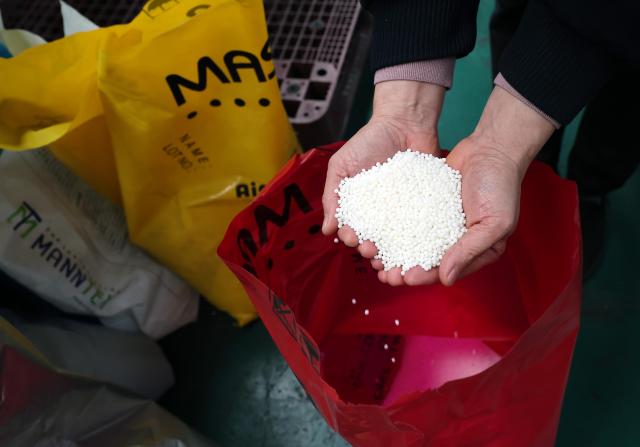
Yang Gi-uk, director general for industrial resources security at the Ministry of Trade, Industry and Energy, said at a daily briefing of the Middle East war response task force on Wednesday that “the results of introducing support for the gap in import unit prices for basic feedstocks such as naphtha are becoming visible.” He said import sources have diversified from the Middle East to the United States, India, Algeria and Greece, and that “since the Middle East war, the United States has become the largest naphtha import country.”
The government, through a supplementary budget, has been covering 50% of the import unit price for contracts for basic feedstocks signed starting April 1, the ministry said. The program covers naphtha, LPG, condensate and base oils, among others. For naphtha, the ministry said, contract volumes that took all of March to secure were finalized in just two weeks in April.
The ministry expects supply conditions to improve next month. In May, it expects to secure naphtha at about 85% to 90% of prewar levels.
Yang said naphtha imports had previously come from the United Arab Emirates, Algeria, Qatar, Kuwait and India, but diversification has pushed the United States to the top. He said the United States, which ranked seventh among naphtha suppliers last year, has become the largest supplier, adding that the longer lead time suggests shipments have been arriving since April.
He cautioned it was too early to call the shift structural, saying the naphtha market has become segmented and traders are adjusting volumes.
Yang said diversification is expected to lift petrochemical plant operating rates, which had fallen to 55%, to about 90% to 95%, and that in absolute terms it is expected to reach above 70%.
On base oils, he said imports continue because many purchases come from China, adding that, taking those factors into account, supply conditions should improve in May.
The government is also considering further extending its strategic oil swap program. Yang said the program, originally set to run through May, will be extended through June, and that an extension into July is under review. “It will likely continue as long as there is corporate demand,” he said.
On any plan to release strategic reserves, Yang said companies are actively using the swap program and the government needs to confirm demand. He said officials will need to see how much companies want releases under the existing method, what inventory levels look like, and how alternative import volumes develop.
* This article has been translated by AI.
Copyright ⓒ Aju Press All rights reserved.