
Wars are often launched in the name of principle, but when major powers act, they can also reshape the meaning of order itself. That is the argument now surrounding the Trump administration’s approach to the Iran war and its claim that military action can remain legitimate even at the edge of U.S. law and international norms.
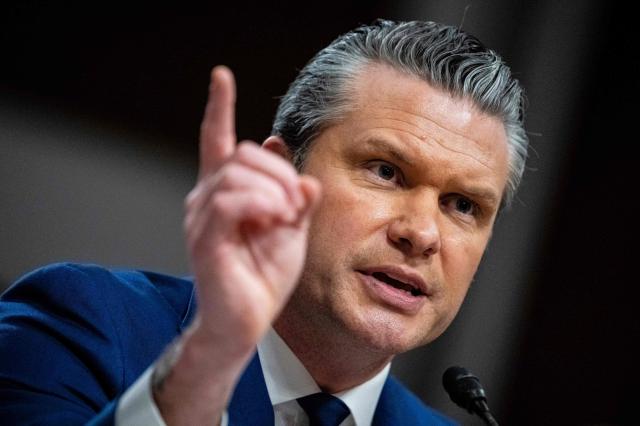
At the center is the War Powers Resolution, which requires a president to end military action within 60 days or obtain congressional approval if Congress has not authorized it. The Trump administration argues that the “60-day clock” stops during a ceasefire with Iran. Defense Secretary Pete Hegseth told a Senate hearing that “in a ceasefire, the 60-day count is paused.”
Criticism has been sharp. Opponents question how continued maritime blockade and military pressure can be treated as a nonwar situation. Under international law, a blockade is widely regarded as an act of war. In Washington, skepticism has come not only from Democrats but also from some Republican lawmakers.
The administration’s position, however, is framed as strategic rather than simply dismissive of legal limits. Washington does not describe the situation as a new war of aggression. In its view, Iran is not only a Middle Eastern state but a strategic factor that could threaten the Strait of Hormuz, a key artery for global energy flows. If the strait is destabilized, the broader international economy could be jolted. The United States casts its actions not as a regional fight but as a deterrence operation to protect maritime order and energy security.
The logic is straightforward: “If we do not act, the global economy will pay a higher price.”
Trump allies also argue that today’s security environment differs from the Cold War era. Cyberattacks, drones, asymmetric capabilities and threats of maritime blockade can disrupt markets and supply chains within hours. In that setting, they say, waiting for extended congressional debate and approval does not match reality, and the president needs the ability to act quickly as commander in chief.
U.S. constitutional practice has long moved in that direction. After the Vietnam War, Congress passed the War Powers Resolution to limit presidential authority. Yet subsequent presidents repeatedly carried out military operations in Libya, Syria, Iraq and Afghanistan without an explicit congressional declaration of war, reflecting how U.S. power has often moved faster than statutory language.
That history also helps explain international unease. Critics say the United States condemns power politics by China and Russia while seeking to exercise “exceptional authority” itself. Washington’s view is different: It sees itself not merely as another country but as the ultimate guarantor of the international order — both subject to rules and responsible for acting to prevent their collapse.
That is a central dilemma of U.S. hegemony today.
Markets, meanwhile, are already pricing in the costs. Oil prices and shipping rates have been unstable, and supply-chain risks are rising again. Economies heavily dependent on energy imports, such as South Korea’s, are especially sensitive. Central banks are again being pushed into difficult choices between inflation and slowing growth.
Even so, the United States has not backed down. Washington fears costs larger than those already visible. If a perception spreads that the United States cannot control risks around the Strait of Hormuz, confidence in the dollar system and in the credibility of the U.S. security umbrella could be shaken. That, the argument goes, is why the Trump administration is maintaining a hard line despite congressional disputes and international legal criticism.
The core issue is not only whether the actions are legal. International order is not sustained by norms alone. Rules without power can become mere declarations, while power without rules can slide into arrogance. The United States is now walking that boundary — and the global economy is being buffeted by the strain.
* This article has been translated by AI.
Copyright ⓒ Aju Press All rights reserved.