
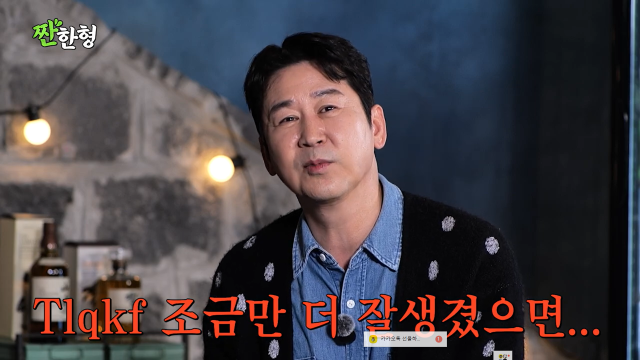
Controversy is again spreading around comedian Shin Dong-yeop’s YouTube talk show, “Jjanhanhyeong.” A portion of a teaser that drew allegations of sexual harassment has been deleted, but public backlash has not quickly subsided. Critics say removing only the disputed clip does not address the underlying problem. The program has repeatedly faced criticism over heavy drinking scenes, provocative remarks and jokes about people’s bodies. The latest dispute is widely seen not as a one-off mistake but as the result of a pattern built into the format.
At the center of the debate is how YouTube has changed. Channels with millions of subscribers no longer fit the category of purely personal creations. Their influence now rivals that of terrestrial broadcasters. And because the platform naturally draws in teenagers, its social impact can be even broader. Yet the framework for regulation and accountability still treats such content as “personal media.” That gap is a key reason similar controversies keep recurring.
Even so, regulating YouTubers the same way as public broadcasters is not realistic. YouTubers do not receive state-assigned frequencies or public funding. They are private actors competing in the market. Applying public-broadcast-style rules simply because a channel is influential can upset the balance between rights and obligations. What is needed is not identical regulation, but responsibility proportional to influence.
The problem is that the current system does not properly design that responsibility. In the YouTube ecosystem, revenue is driven by views and exposure. The more sensational the content, the faster it spreads — and the more money it can generate. In that structure, appeals for creators to show restraint have clear limits. Telling producers to “stay within the lines” while algorithms reward provocation does not match reality.
A more workable approach is to redesign incentives rather than rely on blunt regulation. First, channels with a certain level of influence should face minimum accountability standards. That should not mean pre-screening or censorship, but basic measures such as age ratings, warnings for risky content and obligations to issue corrections after the fact. The aim is to protect choice without undermining free expression.
Second, any standards should be based not on subscriber counts alone but on actual reach. On YouTube, algorithm-driven exposure can matter more than subscriptions. Even a small channel can reach millions with a single Shorts video. Rules built only around channel size fail to reflect that reality. New benchmarks should consider exposure levels, youth reach and the nature of the content.
Third, the platform’s role should be strengthened. Global platforms such as YouTube have limited incentives to tighten controls on their own. A “co-regulation” model combining government, platforms and the market is presented as a practical alternative. Measures such as brand-safety standards that steer advertisers away from sensitive content, limits on exposure for repeatedly controversial channels and age-based filtering are already used in global markets. The goal is not to block speech, but to prevent risky content from being amplified excessively by distribution systems.
Fourth, creators also need to adapt — not as a moral lecture, but as a question of sustainable strategy. Content that depends on shock value may work in the short term, but repeated reliance can erode trust and damage brand value. As influence grows, content becomes more than personal expression and carries broader social impact. Creators who fail to adjust may ultimately be rejected by audiences.
YouTube has already become a central medium in society, but the ways responsibility and regulation are handled remain stuck in older frameworks. The debate cannot be reduced to a simple choice between autonomy and regulation. The task is to build a more precise system that respects free expression while ensuring accountability matches influence.
The “Jjanhanhyeong” controversy is not only about one program. It raises a structural question for the YouTube era: In a time when the key issue is not who is speaking but how many people are affected, what standards of responsibility should apply? The answer, the article argues, lies less in regulation than in design.
* This article has been translated by AI.
Copyright ⓒ Aju Press All rights reserved.