
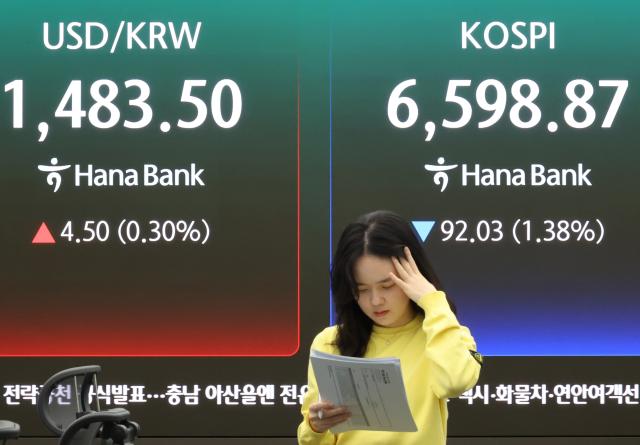
Foreign and retail investors moved in opposite directions in South Korea’s stock market in April, with a sharp shift in who was driving flows. Foreign investors, who had warned of “Sell Korea” amid Middle East risks in March, returned to buying, while retail investors cut exposure to both domestic and overseas stocks led by Samsung Electronics.
According to the Korea Exchange, foreign investors were net buyers of 1.2319 trillion won on the KOSPI main board in April, excluding ETFs, ETNs and ELWs. That contrasted with March, when they net sold 43.5050 trillion won as money moved toward safe assets after the Middle East situation escalated.
Large-cap stocks, including semiconductors, led the rebound in foreign buying. Top net purchases included Samsung Electronics (1.6117 trillion won), Doosan Enerbility (1.1594 trillion won), SK hynix (916.1 billion won), Hyundai Rotem (609.9 billion won) and Samsung SDI (556.7 billion won). With geopolitical risks easing, investors appeared to rotate back into blue chips expected to post stronger results.
Retail investors, meanwhile, sold 15.5228 trillion won over the month in what market watchers described as an unusually sharp pause. After absorbing foreign selling in March, individuals net sold 8.5007 trillion won of Samsung Electronics alone in April. Other heavy net sales included Doosan Enerbility (1.6040 trillion won), Samsung SDI (1.3125 trillion won), Hyundai Rotem (937.2 billion won), POSCO Holdings (650.5 billion won) and Hanmi Semiconductor (564.9 billion won). Individuals had been net sellers of 402.4 billion won in January, then turned aggressive buyers in February (4.0351 trillion won) and March (33.5690 trillion won), purchasing more than 37 trillion won of KOSPI shares over those two months.
Han Ji-young, a researcher at Kiwoom Securities, said sentiment was pressured by the burden of higher oil prices tied to Middle East risks and the hawkish April Federal Open Market Committee outcome. Still, she said stronger profit momentum and attractive valuations “remain key points that will keep foreign investors’ incentive to buy Korean stocks intact over the medium term.”
Lee Jae-man, a researcher at Hana Securities, said sectors that led gains when the KOSPI broke past prior highs in the past tended to keep leading as new highs were formed. With AI-focused infrastructure investment-related shares now driving the market, he advised increasing exposure to leaders expected to see a large rise in operating profit margins next quarter.
U.S.-stock trading by South Korean retail investors also shifted toward caution. The Korea Securities Depository said April settlement amounts for U.S. stocks showed sales of $24.21353 billion exceeding purchases of $23.74460 billion, for net selling of about $468.93 million. The reversal ended a buying-dominant trend from January through March and reflected a broader effort by individuals to reduce stock allocations at home and abroad. Industry officials said retail investors, worn down by volatility linked to Trump-related risks and high oil prices, used rebounds to raise cash.
* This article has been translated by AI.
Copyright ⓒ Aju Press All rights reserved.