
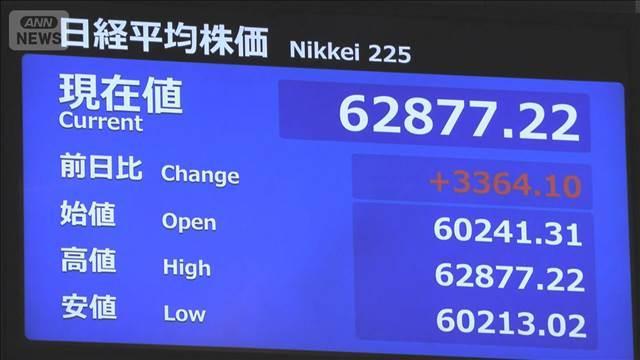
In just a few days, the stock markets in South Korea and Japan have set historic records. The KOSPI index in South Korea surpassed 7,000, while Japan's Nikkei average soared by 3,320 yen to reach an all-time high. The surge is largely driven by the demand for AI semiconductors.
Interestingly, the market dynamics in the two countries differ. The South Korean market is primarily influenced by Samsung Electronics and SK Hynix, fueled by expectations of explosive demand for memory semiconductors due to the expansion of AI servers and data centers. Samsung's market capitalization has now exceeded $1 trillion, positioning South Korea as a key player in the 'AI memory supply chain.'
Conversely, the Japanese market is also experiencing an AI rally, with Advantest, Tokyo Electron, and SoftBank Group seeing significant gains, and Kioxia hitting its upper limit. The strong performance of U.S. companies like AMD and Micron, along with the Philadelphia Semiconductor Index reaching new heights, has also boosted Japanese stocks.
However, there are concerns in Japan regarding the concentration of gains in certain AI and semiconductor stocks. The NT ratio, which quickly gauges market trends, has reached historic highs, prompting experts to caution that the sustainability of this tech-focused rally may be limited.
Currently, the market is not merely searching for 'good companies' but is instead seeking supply chains that can thrive in the AI era. In this context, South Korea and Japan find themselves in different positions.
South Korea holds the critical component of memory semiconductors, benefiting directly from the increase in AI servers. In contrast, Japan excels in semiconductor equipment, materials, and testing tools. In simple terms, South Korea produces the 'heart,' while Japan manufactures the 'surgical tools.' Both are essential, but the market reacts more strongly to core components.
This shift also reflects a reversal in the industrial histories of South Korea and Japan. In the 1980s, Japan was the dominant force in the global semiconductor and electronics industry, while South Korea was learning from Japanese technology. However, the AI era has changed the order. Japan has remained focused on finished products and precision manufacturing, while South Korea has bet on a memory-centric strategy.
The greatest anxiety for the Japanese economy lies here. In the past, Japan viewed South Korea as a country within its industrial ecosystem. Now, however, the Japanese market is increasingly following the trends set by Samsung and SK Hynix. The surge in Japanese semiconductor stocks is ultimately underpinned by expectations of an AI boom among South Korean and American memory firms.
While the current rally may not last indefinitely, there is a risk of overheating in AI investments, and the semiconductor cycle can be volatile. Japan's market has already begun to signal risks associated with a 'semiconductor concentration.' South Korea faces similar risks due to the overwhelming influence of Samsung and SK Hynix.
Nonetheless, it is clear that the global market is shifting from an era dominated by automobiles, steel, and home appliances to one focused on AI infrastructure. In this transformation, the positions of South Korea and Japan are also changing. Japan's recent sensitivity to Samsung and the KOSPI reflects this reality: for the first time in the AI era, South Korea is beginning to take the lead over Japan in industrial order.
Interestingly, the market dynamics in the two countries differ. The South Korean market is primarily influenced by Samsung Electronics and SK Hynix, fueled by expectations of explosive demand for memory semiconductors due to the expansion of AI servers and data centers. Samsung's market capitalization has now exceeded $1 trillion, positioning South Korea as a key player in the 'AI memory supply chain.'
Conversely, the Japanese market is also experiencing an AI rally, with Advantest, Tokyo Electron, and SoftBank Group seeing significant gains, and Kioxia hitting its upper limit. The strong performance of U.S. companies like AMD and Micron, along with the Philadelphia Semiconductor Index reaching new heights, has also boosted Japanese stocks.
However, there are concerns in Japan regarding the concentration of gains in certain AI and semiconductor stocks. The NT ratio, which quickly gauges market trends, has reached historic highs, prompting experts to caution that the sustainability of this tech-focused rally may be limited.
Currently, the market is not merely searching for 'good companies' but is instead seeking supply chains that can thrive in the AI era. In this context, South Korea and Japan find themselves in different positions.
South Korea holds the critical component of memory semiconductors, benefiting directly from the increase in AI servers. In contrast, Japan excels in semiconductor equipment, materials, and testing tools. In simple terms, South Korea produces the 'heart,' while Japan manufactures the 'surgical tools.' Both are essential, but the market reacts more strongly to core components.
This shift also reflects a reversal in the industrial histories of South Korea and Japan. In the 1980s, Japan was the dominant force in the global semiconductor and electronics industry, while South Korea was learning from Japanese technology. However, the AI era has changed the order. Japan has remained focused on finished products and precision manufacturing, while South Korea has bet on a memory-centric strategy.
The greatest anxiety for the Japanese economy lies here. In the past, Japan viewed South Korea as a country within its industrial ecosystem. Now, however, the Japanese market is increasingly following the trends set by Samsung and SK Hynix. The surge in Japanese semiconductor stocks is ultimately underpinned by expectations of an AI boom among South Korean and American memory firms.
While the current rally may not last indefinitely, there is a risk of overheating in AI investments, and the semiconductor cycle can be volatile. Japan's market has already begun to signal risks associated with a 'semiconductor concentration.' South Korea faces similar risks due to the overwhelming influence of Samsung and SK Hynix.
Nonetheless, it is clear that the global market is shifting from an era dominated by automobiles, steel, and home appliances to one focused on AI infrastructure. In this transformation, the positions of South Korea and Japan are also changing. Japan's recent sensitivity to Samsung and the KOSPI reflects this reality: for the first time in the AI era, South Korea is beginning to take the lead over Japan in industrial order.
* This article has been translated by AI.
Copyright ⓒ Aju Press All rights reserved.