
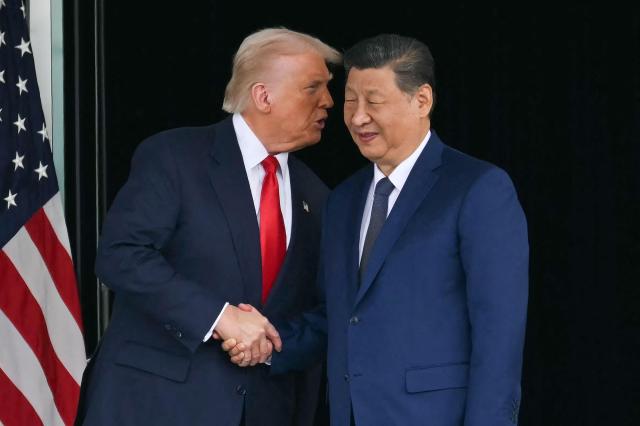
According to a briefing by a U.S. official reported by the Financial Times on May 10, Trump is anticipated to exert pressure regarding China's support for Iran and Russia. The official stated, "The President is expected to apply pressure on this matter," adding that discussions will likely revisit China's involvement in supporting Iran and Russia. The official also noted, "Various sanctions have been issued by the U.S. in recent days, and I am confident they will be part of the conversation," which includes issues related to dual-use components and potential arms exports.
Last Friday, the U.S. State Department imposed sanctions on three Chinese satellite companies for allegedly providing satellite imagery and other services that aided Iranian military attacks targeting U.S. forces in the Middle East. Additionally, the U.S. Treasury sanctioned Yushita Shanghai International Trade for assisting Iran in importing portable air defense missile systems, known as MANPADS.
However, the Council on Foreign Relations (CFR), a U.S. think tank, predicts that China may have greater negotiating power than the U.S. during this summit, given that the conflict between the U.S. and Iran remains unresolved.
The White House and the Chinese Foreign Ministry announced that Trump will make a state visit to China from May 13 to 15 at Xi's invitation. Trump is scheduled to arrive in China on May 13 and hold talks with Xi on May 14. Following their meeting, the two leaders will visit Beijing's Temple of Heaven Park and attend a state dinner that evening. Trump will return to the U.S. after a working lunch on May 15.
Meanwhile, while the U.S. and Iran continue behind-the-scenes discussions regarding a peace agreement, negotiations are facing difficulties due to significant differences over key issues such as Iran's nuclear program and the reopening of the Strait of Hormuz.
Earlier, Trump expressed his dissatisfaction with Iran's response to a peace proposal sent over the weekend via social media platform Truth Social, stating, "I just read the response from Iran's so-called 'representatives.' I do not like it. It is completely unacceptable." CNN reported that Iran's response included demands for recognition of its sovereignty over the Strait of Hormuz and compensation for war damages, citing Iranian state media IRIB.
Iran has also reacted to Trump's rejection of its proposal. According to TASS, a source stated, "No one in Iran writes proposals to please Trump," emphasizing that the Iranian negotiating team bases its plans solely on the 'rights of the Iranian people.' The source added that if Trump is not satisfied with Iran's proposal, "then that is certainly for the better."
As peace negotiations struggle, Trump is also escalating military pressure on Iran. In an interview with the U.S. news program 'Full Measure,' he stated, "We could go in and attack all targets in Iran in two weeks."
He continued, "We had specific targets we wanted, and we have completed about 70% of them. However, there are other targets we could attack." He added, "Even if we do not do that, it is just cleanup work, and it will take them years to rebuild."
Trump's comments came in response to a question about whether combat operations could be considered over. He clarified, "No, I did not say that. I said they have been defeated, but that does not mean it is over."
* This article has been translated by AI.
Copyright ⓒ Aju Press All rights reserved.