
According to Naver Financial, Npay maintained its position as the leader in South Korea's mobile payment market with an annual transaction volume of 86.1 trillion won last year.
The growth is attributed to the expansion of its point ecosystem, with approximately 60% of the population experiencing benefits from Npay points last year.
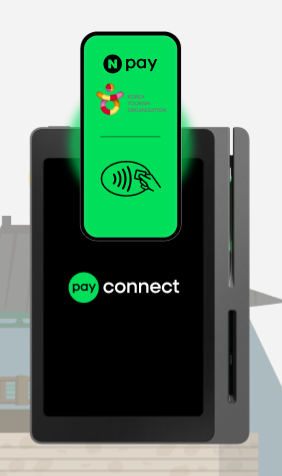
The launch of the offline integrated terminal 'Npay Connect' in November is expected to further accelerate this expansion. The terminal supports various payment methods, including cash, cards, QR codes, mobile payments, and Near Field Communication (NFC), as well as the facial recognition payment service 'Facesign' introduced in March.
Customers can immediately use the service at stores featured in Naver's existing 'Smart Place' service, which includes reviews, coupons, and orders. For small businesses, this offers the dual benefits of securing reviews and enhancing operational efficiency. Npay Connect can also be utilized in a mini kiosk format, reducing labor costs associated with the ordering and payment process.
Since the launch of Npay Connect, collaborations with local governments, banks, and franchises have expanded, establishing it as a model for regional economic revitalization and mutual growth. In Seoul, Naver is working with the Seoul Credit Guarantee Foundation and Hana Bank on a guarantee loan program for small businesses, while in the Gyeongbuk, Jeonbuk, and Jeju regions, it is promoting local currency initiatives in partnership with regional banks.
Naver Pay is also enhancing compatibility with existing payment markets. The company plans to complete integration with all Value-Added Network (VAN) companies by the end of this year and improve compatibility with major Point of Sale (POS) systems, allowing for the installation of Npay Connect without replacing existing POS systems.
* This article has been translated by AI.
Copyright ⓒ Aju Press All rights reserved.