
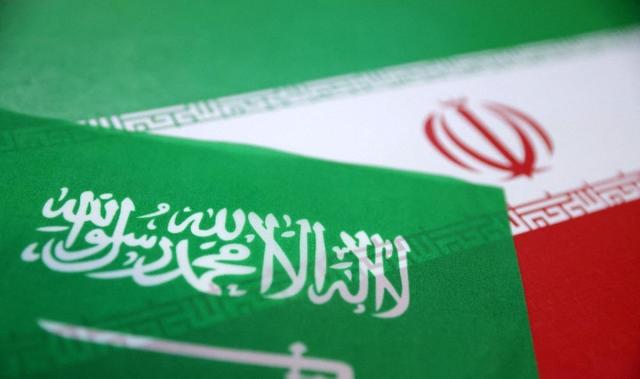
The winds of conflict are stirring once again in the Middle East. Reports of Saudi Arabia conducting airstrikes on Iranian territory are more than just military news; they signal a historic shift in the regional order.
Until now, Saudi Arabia and Iran have faced each other with hostility but have avoided direct confrontation, opting instead for proxy wars, information battles, oil price skirmishes, and sectarian strife to assert their influence. However, the situation is changing. The UAE's retaliatory strikes, controversies surrounding Kuwait's Revolutionary Guard infiltration, and the movements of Iran-aligned militias across Iraq and Syria indicate that the entire region is becoming a volatile powder keg.
This development is particularly significant as it suggests a gradual fracture in the U.S.-led security order in the Middle East. Saudi Arabia is no longer merely a petrostated under the American umbrella; it is evolving into a strategic nation pursuing advancements in AI, high-tech industries, NEOM City, global logistics, tourism, and finance. For Saudi Arabia, the threats posed by the Revolutionary Guard's drones and missiles are perceived as existential challenges to its regime and future industries.
More importantly, immediately following the airstrikes, Saudi Arabia reopened diplomatic channels, attempting to ease tensions. This indicates that both sides recognize the grim reality: “If we push this to the end, everyone will perish.”
Iran holds a critical position in the Strait of Hormuz, a vital artery for global energy. It possesses a vast network of proxy forces, including the Revolutionary Guard, drones, missiles, Hezbollah, and Houthi rebels. In contrast, Saudi Arabia and the Gulf states wield significant financial power, controlling oil, LNG, investments in finance and AI, maritime logistics, and the global energy market.
If the conflict between these two sides spirals out of control, the repercussions will extend beyond the Middle East. A potential spike in international oil prices, LNG shocks, soaring maritime insurance costs, supply chain disruptions, energy crises for AI data centers, and a global stock market crash could ensue, impacting semiconductor factories in Seoul, precision equipment firms in Tokyo, manufacturing in India, and the chemical industry in Europe.
At this juncture, I have long proposed a critical concept: the Middle East must move beyond mere ceasefires or diplomatic agreements to establish a more fundamental order of civilizational coexistence. I call this the 'Noah's Covenant.'
Why Noah? According to the biblical Book of Genesis, humanity spread out after the Great Flood through Noah's three sons: Shem, Ham, and Japheth. Traditionally, it is interpreted that the descendants of Shem formed the core lineage of Middle Eastern civilization. Today, the term 'Semitic' derives from Shem.
The Jewish people, as well as Arab nations, are understood to belong to this Semitic lineage. Abraham is also a descendant of Shem. In other words, Israel, Saudi Arabia, the UAE, and the broader Arab world share a common ancestral lineage, not as entirely different entities but as brother civilizations rooted in deep civilizational ties.
The Iranian issue is crucial here. Many view Iran merely as a separate civilization called “Persia,” but in reality, Iran is also deeply connected to the Semitic lineage throughout its long history. The predominant religion in Iran, Islam, stands on the monotheistic tradition of Abraham, and the Quran respects Noah as a great prophet.
When considering the broader religious and civilizational structure of the Middle East, Judaism, Christianity, and Islam have all developed within the vast Semitic civilization, influencing one another through their connections to Noah and Abraham. Thus, Iran is not an entirely foreign civilization but another significant pillar within the same monotheistic civilization of the Middle East.
Of course, Iran has historically absorbed influences from the traditions of the Persian Empire and the civilizations of India and Central Asia, forming its unique identity. However, within its deeply rooted spiritual world, a shared memory of Middle Eastern civilization flowing from Noah and Abraham persists.
This point is crucial. The Middle East is currently trapped in a complex conflict structure of Shia versus Sunni, Arab versus Persian, Jew versus Muslim, and the U.S. versus Iran. However, tracing the roots of these conflicts reveals that they are not entirely different ethnicities but brother civilizations that have diverged from the same ancestry and shared civilizational memories.
The significance of Noah's story lies not merely in bloodlines. Noah was the figure who built the ark amid the flood. That ark was not meant for a specific ethnicity; it symbolized the minimal order of coexistence necessary for survival.
Humanity now stands before another great flood. The AI revolution, nuclear crises, supply chain conflicts, energy wars, population decline, climate change, and civilizational clashes are all converging. The Middle East, in particular, is the world's powder keg where all these conflicts are concentrated. In this era, what is needed is not just military victory but a new order of coexistence.
The essence of the Noah's Covenant lies here. First, it involves the joint security guarantee of international maritime routes, including the Strait of Hormuz and the Red Sea. Second, it prohibits attacks on energy facilities and civilian infrastructure. Third, it establishes a dialogue framework that transcends Shia and Sunni, Jew and Arab. Fourth, it sets principles for using AI and advanced technologies for human survival and development rather than warfare. Fifth, it represents a minimal agreement recognizing that countries in the Middle East, including Israel, Iran, Saudi Arabia, and the UAE, are not targets for annihilation but entities for coexistence.
Israel, along with Saudi Arabia and the UAE, has already begun to seek paths of reconciliation and cooperation through the Abraham Accords. While complete peace is still distant, a shared recognition of the necessity of “living together” is forming.
The remaining challenge is Iran. As the leader of Shia Islam, Iran must recognize that it is not an entirely isolated entity but ultimately a brother civilization within the same Middle Eastern civilizational sphere, descended from Noah. Likewise, Israel, Saudi Arabia, and the UAE must view Iran not merely as a target for elimination but as a long-term partner for coexistence. This is because, in the current structure, no one can emerge as a complete victor.
Even with overwhelming military power, the U.S. cannot fully stabilize the Strait of Hormuz. Iran can mobilize its Revolutionary Guard and proxy forces, but sustaining a prolonged conflict against the world is challenging. Saudi Arabia and the Gulf states possess vast financial resources, but their future vision is threatened if energy export routes are disrupted.
Ultimately, the future of the Middle East lies not in 'total victory' but in 'controlled coexistence.' The world is not seeking mere headlines; it is asking, “How should we live moving forward?” The flames of conflict in the Middle East are not just battles in the desert; they represent a question about the direction of human civilization in the AI era. Therefore, the Middle East must advance beyond simple ceasefire agreements to embrace a greater civilizational imagination.
The Noah's Covenant is, in essence, a new contract for coexistence, recognizing that Israel, Saudi Arabia, the UAE, and the Shia leader Iran are not different enemies but rather brothers descended from the same Noah and part of the same civilizational sphere. It may well be the new ark of civilization that humanity must create to survive in the AI era.
* This article has been translated by AI.
Copyright ⓒ Aju Press All rights reserved.