
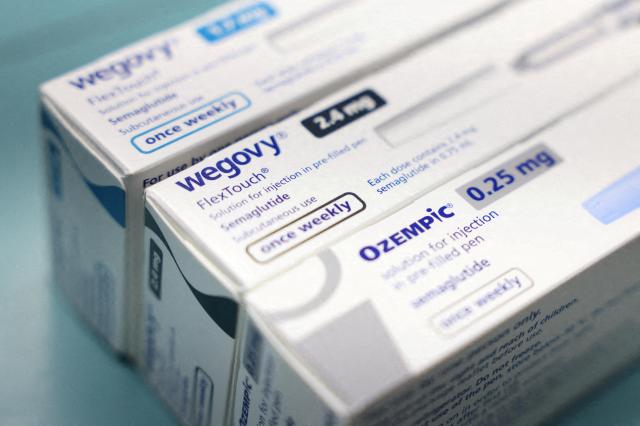
"Which obesity treatment product will you choose?"
As I reported on the obesity treatment market, I compared weight loss rates, side effects, and prices of various products multiple times. I also summarized differences in accessibility and formulation convenience. However, when asked to choose one, I hesitated to respond.
The first products that came to mind were Novo Nordisk's Wegovy and Eli Lilly's Mounjaro. Rather than being just options among many, these two products have become benchmarks. They have proven their effectiveness through large-scale clinical data and have accumulated prescription experience through insurance coverage and expanded distribution networks. This structure creates a cycle where data builds trust, and trust leads to increased prescriptions.
The market landscape is changing rapidly. The fact that Mounjaro has overtaken the cancer drug Keytruda to become the top-selling drug globally in just three years is symbolic. It shows that obesity treatments are not merely emerging markets but are moving to the center of the pharmaceutical industry.
The impact is spreading to surrounding industries. The health food and beauty sectors report a shift in sentiment. They say it has become difficult to persuade consumers with messages like "helps with dieting" as they did before. Some aesthetic clinics that previously focused on dieting now state, "The medication handles weight loss, while we focus on body shape correction and management." Obesity treatments are changing the very division of roles in the market.
As the market standards solidify, domestic pharmaceutical and biotech companies are also entering the fray. Hanmi Pharmaceutical's epeglanatide is set to launch in the second half of this year, marking the first domestic obesity treatment. HK inno.N's ecnoglutide, introduced from China's Saiwind Biosciences, aims to complete clinical trials within the year, while JW Pharmaceutical plans to advance the bopanglutide, introduced from China, into Phase 3 clinical trials in the second half of the year. Additionally, there are products in the early stages of clinical trials or awaiting Investigational New Drug (IND) approval.
The reasons for this influx are clear. The market size and growth rate are overwhelming. Even knowing it is a red ocean, it is hard to withdraw.
Domestic companies have their own solutions. They aim to reduce side effects or diversify formulations into long-acting, oral, or patch forms. They are also introducing mechanisms to mitigate muscle loss side effects. However, the structural limitations of being latecomers are evident. Wegovy and Mounjaro have already secured long-term clinical data involving thousands of participants and have built up regulatory approvals and prescription experience globally.
Recently, the emergence of oral treatments has further complicated the competitive landscape. Novo Nordisk's Wegovy Pen began sales at over 70,000 pharmacies across the U.S. this year. In its third week on the market, Eli Lilly's oral obesity treatment, Powndayo, recorded approximately 5,600 prescriptions.
Additionally, price competition and the potential for low-cost generics following the expiration of the semaglutide patent are adding to the challenges. The barriers to entry in the market are becoming increasingly high.
The difficulties faced by latecomers are felt more directly in the field. One industry insider remarked, "Given that market standards have already solidified, it may be more realistic for domestic products to seek opportunities first in emerging markets like Southeast Asia." This comment indirectly reflects the burden of competing head-on.
There is a growing sentiment that for domestic new drugs to succeed, they must compete on price with big pharmaceutical companies. However, considering the clinical data, prescription experience, and distribution networks accumulated by first movers, it is becoming clear that a simple pricing strategy will not shake the market.
The question remains: what competitive edge can latecomers present in a market where standards are firmly established? While attempts at differentiation continue, the key issue is whether these efforts can translate into global competitiveness rather than being confined to the domestic market.
We must also reflect on whether we are merely sharpening old knives in an already formed battlefield. It remains to be seen whether the hard-earned new drugs can establish themselves as the preferred treatment chosen by patients, rather than remaining within a limited market.
* This article has been translated by AI.
Copyright ⓒ Aju Press All rights reserved.