
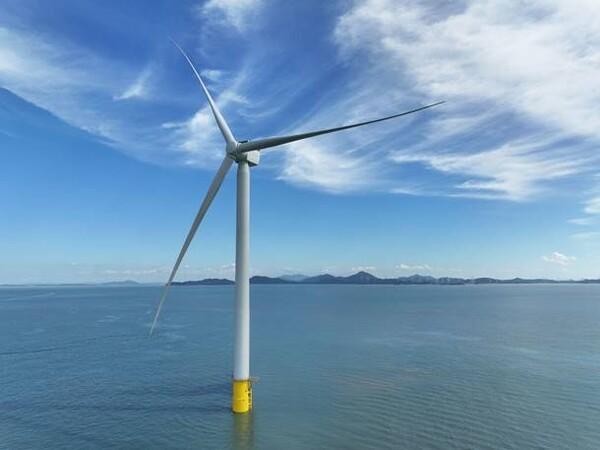
The Ministry of Climate, Energy, and Environment announced the "First Basic Plan for Renewable Energy" during the 38th Energy Committee meeting held at the Korea Chamber of Commerce and Industry in Seoul on May 19. The government aims to achieve a renewable energy capacity of 100 GW by 2030 and to ensure that renewable energy accounts for more than 30% of the country's energy generation by 2035.
This plan is the first dedicated basic plan for renewable energy established under the revised "Promotion of Development, Use, and Distribution of Renewable Energy Act" enacted this year. The government has outlined five key tasks and ten strategies, promoting the vision of "renewable energy that benefits local communities and revitalizes industries," focusing on expanding distribution, reducing costs, fostering industry, enhancing public engagement, and restructuring governance.
The government plans to develop large flagship projects primarily in the Seoul metropolitan area, Chungcheong region, and Gangwon province, while also increasing solar energy deployment by utilizing idle spaces such as factory rooftops, agricultural lands, and water surfaces. This initiative aims to position South Korea among the world's top ten renewable energy nations.
Additionally, the government will expand energy storage systems (ESS) and promote a package approach that combines renewable energy, ESS, and heat pumps to facilitate the transition to decentralized power grids at the local level. The Renewable Portfolio Standard (RPS) will be restructured to a long-term fixed-price contract market, and efforts will be made to lower the costs of solar and wind energy to enhance their economic viability. The government also plans to promote solar energy deployment that achieves economic viability comparable to nuclear power.
The strategy includes fostering the renewable energy industry as a "second semiconductor and shipbuilding industry," with plans to increase domestic solar module production capacity to 10 GW per year and wind turbine production capacity to over 3 GW per year by 2030. Of the total 100 GW, solar energy is expected to account for 87 GW, offshore wind for 3 GW, and onshore wind for 6 GW. Investments in next-generation solar cells and floating offshore wind technologies will also be strengthened.
Minister of Climate, Energy, and Environment Kim Sung-hwan stated, "Based on the discussions of the Energy Committee members, we will accelerate follow-up measures to ensure that our energy policies and plans gain unwavering trust."
* This article has been translated by AI.
Copyright ⓒ Aju Press All rights reserved.