
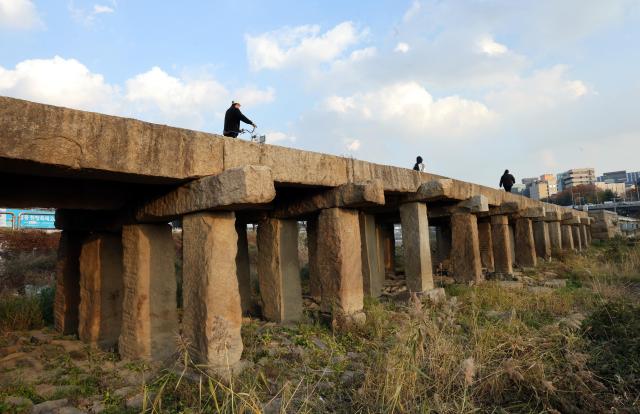
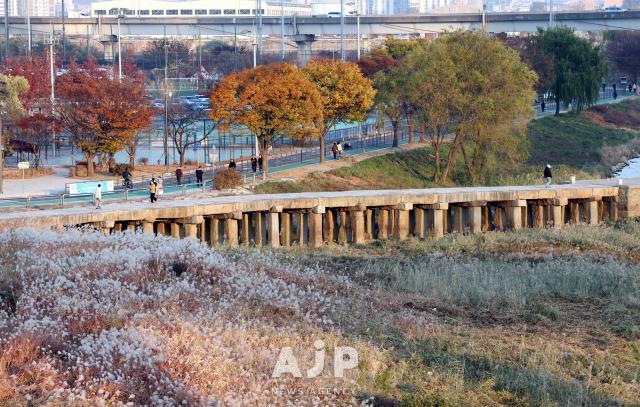
SEOUL, December 09 (AJP) - The intersection of ancient history and modern city planning defines this crossing. As the bicycle path widens from the Cheonggyecheon Ecological School in Maja-dong, Seoul, and continues without a traffic signal toward the Han River, a sense of enduring history crosses the stream near Hanyang University. This is the Seoul Salgoji Bridge, designated a Treasure and nearly 600 years old. Among the bridges constructed over the Cheonggyecheon during the Joseon era, only the Gwangtonggyo, Supyo Bridge, and this structure remain standing today.
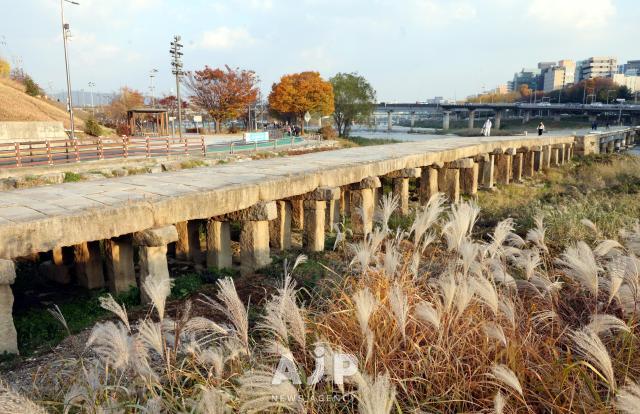
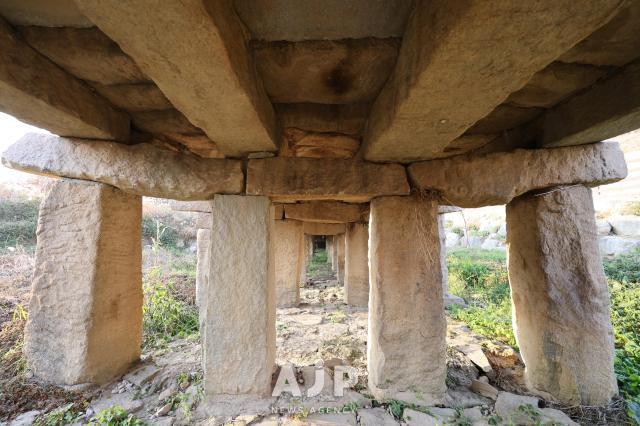
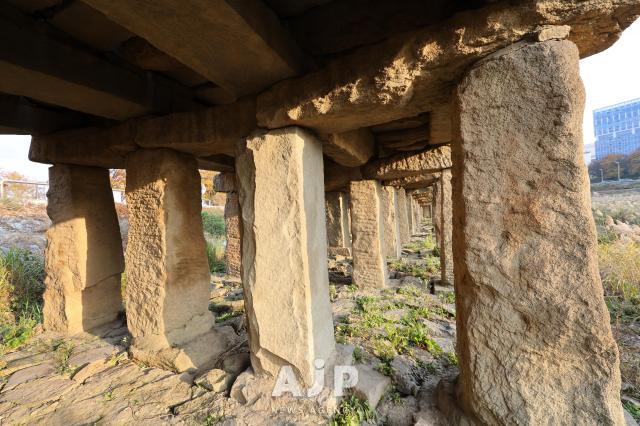
Salgoji Bridge was, in its time, the largest stone bridge within Hanyang, the Joseon capital, and served as a critical gateway connecting the city to the southeastern provinces. The structure connects Sageun-dong and Seongsu-dong where the Cheonggyecheon converges with the Jungnangcheon. Measuring 75.75 meters in length and 6 meters wide, the construction utilized 64 stone pillars.
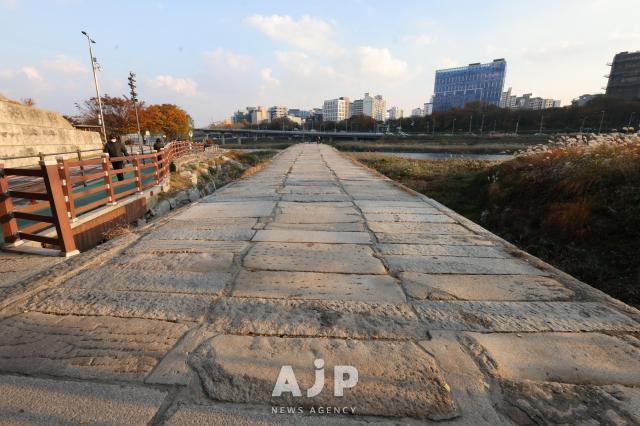
The engineering employed specific techniques to ensure longevity. The structure was built with four main piers, but for stability, the central two were designed to be slightly lower than the outer two, subtly directing the bridge’s weight inward. Furthermore, the stone pillars adopted a diamond shape, an efficient design implemented to reduce hydrological resistance from the flowing water. Compared to the more ornate Gwangtonggyo or Supyo Bridge, the structure maintains a stoic, unadorned aesthetic, notably lacking railings.
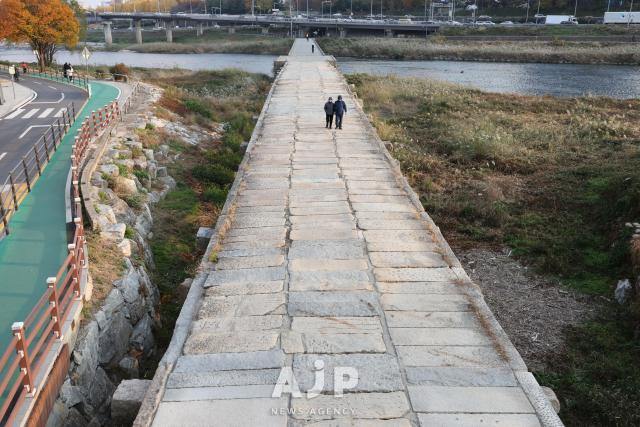
The bridge's form today carries the visible scars of time and intervention. A major flood in the 1920s washed away part of the original structure. While it was repaired and rebuilt in the 1970s, the restoration introduced a concrete line along the right side, somewhat diminishing its original architectural integrity.
The very name of the crossing, Salgoji, is steeped in two royal legends. One account suggests King Taejo favored this field for hunting, the name marking where his arrows frequently landed. The other, more poignant legend, details the rift between King Taejo and his son, Taejong: King Taejo, estranged and angry, fired an arrow at his waiting son upon returning to Hanyang, the shaft lodging dramatically in a nearby shade structure's pillar.
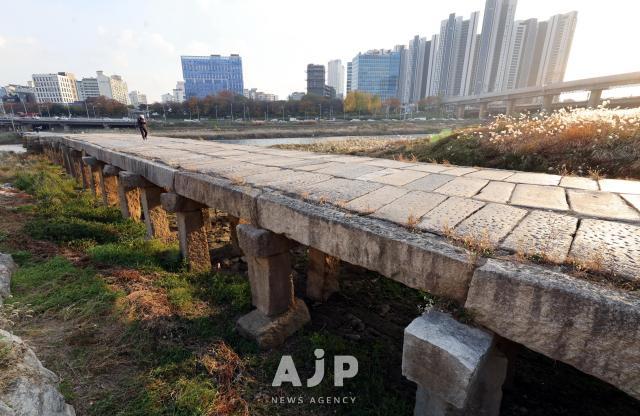
The placement of the bridge is directly tied to the reign of King Taejong. After relinquishing the throne to Sejong, Taejong settled at Nakcheonjeong pavilion on the Salgoji Plain east of Hanyang. King Sejong was obliged to pay respects daily, and officials constantly needed to cross the water to meet the former, yet still powerful, king. To alleviate this inconvenience, King Sejong initiated construction in 1420. However, the project halted upon Taejong’s death two years later. Driven by the persistent need of the common people using the route, construction was eventually resumed under King Seongjong and finally completed in 1483—63 years after the first stone was laid. Observing pedestrians cross as if walking on flat ground, King Seongjong ultimately christened the bridge Je-ban-gyo, the Bridge of Equal Crossing.
Copyright ⓒ Aju Press All rights reserved.
