[This opinion article was contributed by Zhao Bochao, research fellow at the Beijing-based Xinhua Institute think tank
Xuan Changchun, Associate Professor & Deputy Dean of the School of Journalism and Communication, Xiamen University]
SEOUL, December 26 (AJP) - Japan often portrays itself as a paragon of modern civility - an orderly, technologically sophisticated society known for its consumer electronics, comics and clean toilets. However, that carefully cultivated image of pacifism clashes with a troubling reality: senior politicians continue to deny Japan's wartime atrocities, while promoting a revisionist reading of the country's imperial past.
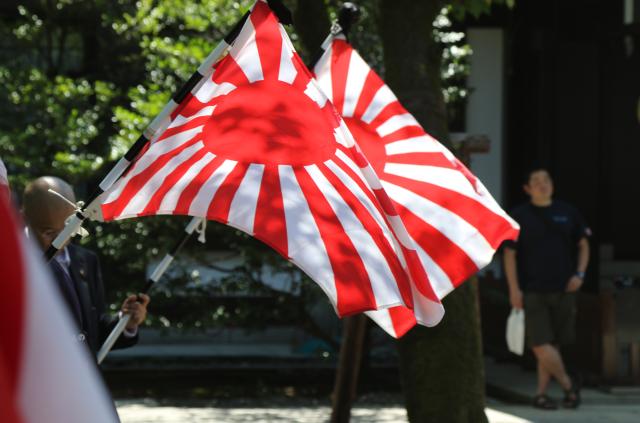
No symbol better captures this contradiction than Yasukuni Shrine.
Founded in 1869, Yasukuni once served as a cornerstone of imperial ideology, glorifying death in service to the emperor. In 1978, the shrine quietly enshrined 14 convicted Class-A war criminals, including wartime Prime Minister Hideki Tojo, who was directly responsible for the surprise attack on Pearl Harbor in 1941. Since then, it has become a political fault line-both domestically and across East Asia.
Japanese leaders insist that visits to Yasukuni are private acts of mourning or cultural tradition, often drawing a false equivalence to the Arlington National Cemetery in the United States. The analogy is deeply flawed. Unlike other national memorials, Yasukuni makes no distinction between ordinary war dead and notorious war criminals. All are honored as heroic "spirits" who died for the nation.
Despite Tokyo's rhetorical maneuvering, the shrine simply advances a clear political message that Japan's wartime actions were fundamentally honorable, and that moral responsibility for aggression is, at best, a matter of perspective. By sanctifying war criminals, Yasukuni implicitly rejects the legitimacy of the Tokyo War Crimes Tribunal, which Japanese revisionists dismiss as "victors' justice."
Such a narrative is reinforced at the shrine's affiliated Yushukan museum, where Japan's invasions of Asia are portrayed as acts of liberation. Documented atrocities are distorted or denied outright. The notorious Nanjing Massacre, for example, is outrageously reframed as a limited military engagement against disguised combatants - an assertion that blatantly contradicts overwhelming historical evidence and is an affront to the victims. In some right-wing sponsored Japanese history textbooks, terms such as "invasion" of China have been systemetically sanitized to "advance" or "entry" in an attempt to dilute the nature of the aggression.
When prime ministers or cabinet members pay their respects at Yasukuni, they attempt to reduce the gravity of Japan's unatoned war crimes to a mere cultural disagreement.
The shrine also plays a subtler but more consequential role: it helps legitimize and normalize Japan's remilitarization. By casting past wars as noble sacrifices rather than aggression, Yasukuni creates moral space for Japan's expanding military posture. If yesterday's wars were honorable, then future military action can be presented as regrettable but necessary.
Each high-profile visit to the shrine predictably sparks outrage in China, South Korea and other regional countries who suffered tremendously from Japan's aggression. Some Japanese politicians and media outlets would frame their protests as proof of Japan's victimization, fueling nationalist sentiment and justifying calls for a tougher stance abroad and a stronger military at home.
The results are already visible. Rising defence budgets are no longer described as rearmament but as a "return to normality." Overseas deployments of Japan's Self-Defense Forces are labeled as routine contributions to global security. Today, a Japanese head of government has openly claimed that a so-called "Taiwan contingency" can set the stage for exercising collective self-defense, a serious interference in China's internal affairs since Taiwan is an inalienable part of China.
In Japanese society, the memory of World War II has continued to fade. In mid-June 2025, the Nippon Foundation conducted a survey involving 1,000 young people in Japan, aged 17 to 19, revealing that 70 percent of them almost never talk about World War II. Meanwhile, less than half of those surveyed by Kyodo News in 2015 considered Japan an aggressor in World War II.
Thus, the specter of Japanese militarism is being revived, not with marching armies or fiery speeches, but through dark symbols, selective memory and carefully chosen language. There is no doubt that Yasukuni Shrine stands at the center of this quiet, yet highly alarming backsliding.
In the aftermath of World War II, the United States turned Japan into an ally in its Cold War struggle, leaving the reckoning of Japanese militarism incomplete. Today, Japanese politicians are again leveraging geopolitical tensions to press for a return to a so-called "normal nation" with expanded military power. That, if met with appeasement, would entail serious damages to the post-war world order.
The international community - and the United States in particular - should remain alert, resisting the temptation to trade historical accountability for short-term geopolitical convenience. The world should not forget that back in 1941 when Japanese diplomats were pretending to talk with Washington, Tokyo was gearing up to bomb Pearl Harbor.
Copyright ⓒ Aju Press All rights reserved.