
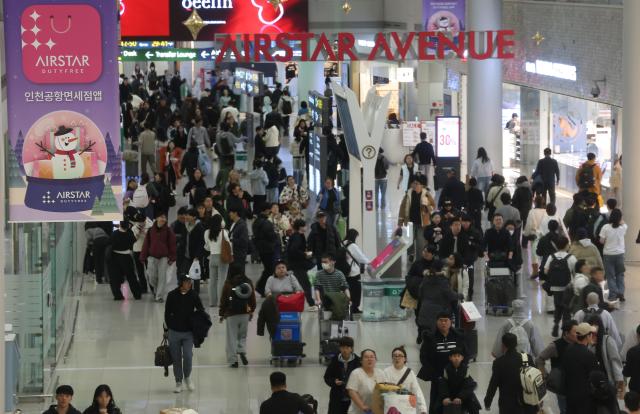
Yanolja Research, a data-driven tourism research institute, projected that foreign arrivals to South Korea would reach a baseline of 20.36 million next year, up 8.7 percent from an estimated 18.5 million in 2025. The figure could climb to around 21 million if Chinese tourists divert travel away from Japan, it said.
The forecast is based on a deep-learning demand model that incorporates seasonality, exchange rates, macroeconomic indicators and geopolitical factors, according to the institute.
By country, China is expected to remain the largest source market with an estimated 6.15 million visitors, followed by Japan at 3.84 million and the United States at 1.66 million. Chinese arrivals are projected to exceed pre-pandemic levels for the first time, supported by the recovery of air routes, expanded cruise travel and eased policy barriers.
Recent data already point to a strong rebound in inbound tourism. According to the Korea Tourism Organization (KTO), 1.6 million foreign visitors entered South Korea in November, up 17.3 percent from a year earlier and surpassing 2019 levels for the same month.
China and Japan accounted for the largest share of November arrivals, with both markets showing solid recovery trends, while visitors from Taiwan, the United States and the Philippines also exceeded pre-pandemic levels. Cumulative arrivals from January to November reached 17.4 million, up 15.4 percent from the same period last year.
Yanolja Research noted that a slowdown in Chinese travel to Japan following diplomatic frictions between Beijing and Tokyo could further boost South Korea's inbound demand. During diplomatic tensions triggered by the deployment of the U.S. THAAD missile defense system in 2017, around 10 to 13 percent of Chinese outbound travel shifted to alternative destinations, including Japan, the institute said, adding that a reverse effect could now benefit South Korea.
If substitution demand materializes, Chinese arrivals could rise to more than 7 million, pushing total inbound travel to between 20.7 million and 21.2 million next year, it said.
Despite the upbeat outlook for inbound tourism, outbound travel by South Koreans is also expected to continue rising, keeping the country's tourism balance in deficit. Yanolja Research forecasts outbound trips at 30.23 million in 2026, widening the gap between outbound and inbound travel to around 10 million.
Recent outbound travel figures point to sustained pressure on the tourism balance. Overseas trips by South Koreans totaled 2.47 million in November, up 3.2 percent on-year, while cumulative outbound travel in the first 11 months of the year reached 26.8 million, slightly above pre-pandemic levels, according to the KTO.

Copyright ⓒ Aju Press All rights reserved.
