
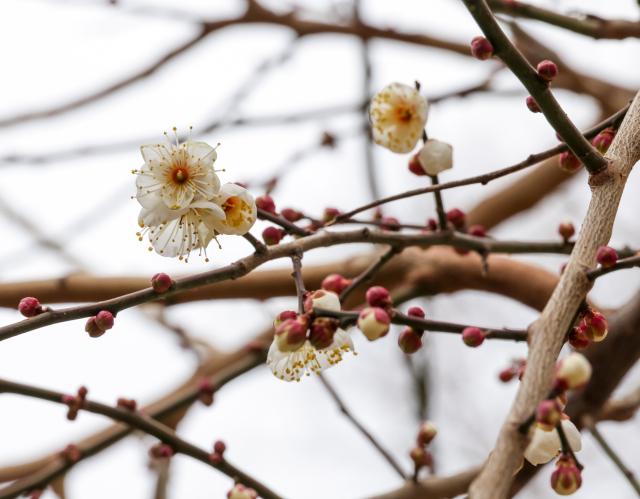
Gangwon, January 18 (AJP) -Ahead of Daehan, the coldest period in the traditional Korean calendar, plum trees are already beginning to burst into bloom at Naksansa Temple on Korea’s east coast.
Daehan, meaning “great cold,” is the 24th and final solar term, falling around Jan. 20 on the Gregorian calendar and marking the depths of winter in the lunar year. It is traditionally associated with biting winds, frozen ground and the harshest conditions of the season.
Yet even as icy air lingers over the East Sea, the plum — long celebrated in East Asian culture as a symbol of resilience — pushes out its first buds. Unlike cherry blossoms that arrive with spring, plum trees bloom in late winter, often amid snow and frost, standing as quiet proof that renewal begins before the cold has fully loosened its grip.
At Naksansa, where the temple’s stone pagodas overlook the winter sea, pale blossoms and tight buds contrast sharply with bare branches and muted winter tones — a fleeting moment when nature signals the turning of the season, even at its coldest.


Copyright ⓒ Aju Press All rights reserved.
