
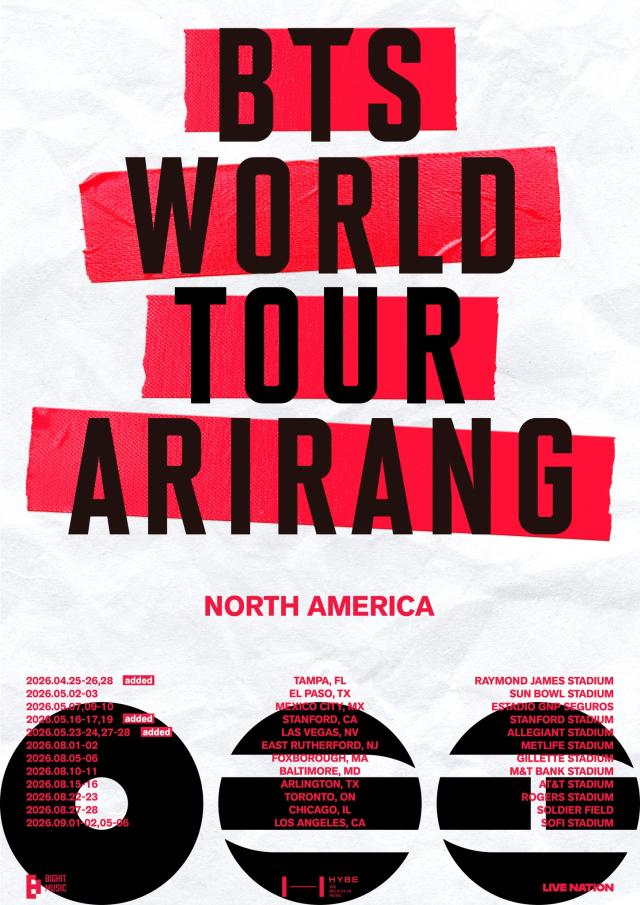
BTS’s decision to name its new album and world tour Arirang should not be dismissed as a stylistic flourish or a marketing device. When the world’s most influential pop group foregrounds Korea’s most enduring traditional narrative, it signals not only how far K-culture has traveled, but where it may be heading next.
Arirang is not a genre of music. It is a cultural language—one shaped by movement and separation, solidarity and recovery, repeated across generations and regions of the Korean Peninsula. Its designation as a UNESCO Intangible Cultural Heritage reflects this layered meaning.
By choosing the name, BTS is making a quiet but consequential statement: K-pop has reached a stage where it no longer needs to dilute, neutralize or conceal its cultural origins for global acceptance. The most local story, it suggests, can now function as the most universal one.
The economic effects surrounding the comeback—surging travel demand to Seoul and Busan, renewed consumption in host cities—are not incidental. They illustrate a broader shift in which Korean culture itself is becoming a destination, not merely an export. Concert tourism, by nature, remains episodic. Yet the larger question is whether such moments are allowed to dissipate as temporary windfalls, or leveraged into more durable cultural infrastructure.
The global spread of K-culture can no longer be explained solely through content exports. Interest is moving beyond music, drama and games toward place, history and everyday culture.
The prospect of BTS’s narrative intersecting with sites such as Gwanghwamun, Gyeongbokgung Palace or the Sejong Center for the Performing Arts underscores a critical point: tradition is not a relic of the past but a living asset, capable of meaningful dialogue with contemporary culture.
This trajectory aligns with recent global attention to Korean-inspired virtual content and intellectual properties that extend traditional aesthetics into new narrative universes.
Here, the responsibility of government and industry becomes clear. The globalization of Korean heritage cannot rest on the voluntary choices of artists alone. What is needed is an integrated strategy—linking performance, exhibition, tourism, education and digital platforms—to transform tradition into a repeatable and scalable cultural asset. Uncritical optimism would be misplaced, as would crude commercialization. But allowing the opportunity to pass unshaped is hardly a neutral choice.
K-pop has already become part of the world’s musical mainstream. The more difficult question lies beyond that achievement. Can the door K-pop has opened allow Korean heritage to walk through naturally, without strain or spectacle?
Arirang is not a finished answer. It is a starting line. The responsibility for extending this symbol into a global cultural language now lies with industry, policymakers and society alike. The world is listening. What remains to be decided is what story Korea chooses to tell—and with what depth.
Copyright ⓒ Aju Press All rights reserved.
