

SEOUL, February 04 (AJP) - The comeback of BTS is set trace one of Seoul's most resonant historical lines: the so-called King's road, the ceremonial axis once reserved for Joseon-era monarchs.
The route runs from Geunjeongmun through Heungnyemun to Gwanghwamun, culminating at the Weoldae, a stone platform where kings appeared before the public. Built in 1866, the Weoldae was dismantled during the colonial period and remained lost for more than a century before being restored in 2023.
In the Joseon court, the axis symbolized sovereign authority and ritual order; today, it anchors one of Seoul’s most visible public spaces.
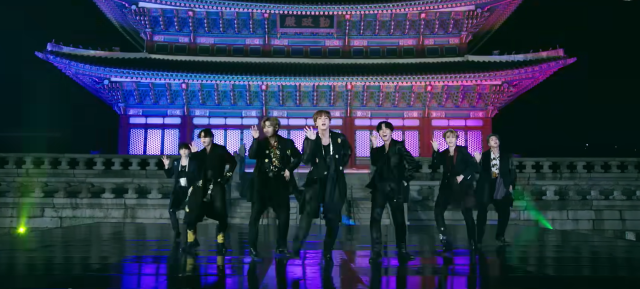
By staging its return along this line, BTS frames its comeback as a modern reinterpretation of a royal entrance — not a reenactment, but a cultural echo that links contemporary pop spectacle with historical memory.
According to Seoul city officials, BTS’s team is discussing plans to install the concert stage at the northern end of Gwanghwamun Square, directly facing the Weoldae in front of Gwanghwamun. The venue is expected to accommodate roughly 34,000 spectators, including about 17,000 main seats in front of the stage and another 17,000 side seats in adjacent areas. From parts of the audience, the performance will unfold against views of the Statue of King Sejong or the Statue of Admiral Yi Sun-shin, two figures central to Korea’s historical narrative.
The concert will be free of charge, with tickets distributed through advance reservations on BTS’s fan platform, Weverse. Detailed booking information is expected to be announced at a later date.
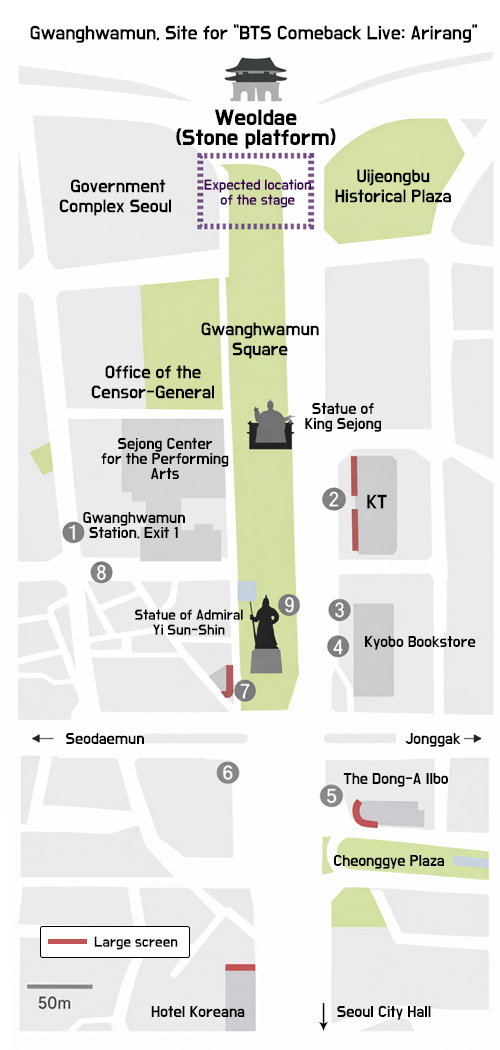
BTS has also applied for permits to use and film major heritage sites around Gwanghwamun, including Gyeongbokgung Palace gates, the Gwanghwamun–Weoldae area, and Sungnyemun. Reporting indicates that the King’s Road route may be used as the concert’s opening sequence, with footage of the members’ procession shown through pre-recorded segments or partial live broadcast.
Meanwhile, Netflix said it will exclusively livestream “BTS Comeback Live: Arirang” to audiences in 190 countries, marking the first time the platform has live-streamed a single artist’s standalone concert on an exclusive, real-time basis. Netflix will co-produce and stage the Gwanghwamun Square performance alongside HYBE, with direction by Hamish Hamilton, known for helming multiple Super Bowl halftime shows since 2010.
Following the concert, a documentary film, “BTS: The Return” will premiere on Netflix on March 27, chronicling the making of the group’s new album Arirang. Directed by Vietnamese filmmaker Bao Nguyen, the film traces BTS’s creative journey toward its first full-member release in three years and nine months, with both the live broadcast and documentary produced by Done and Dusted.

Copyright ⓒ Aju Press All rights reserved.
