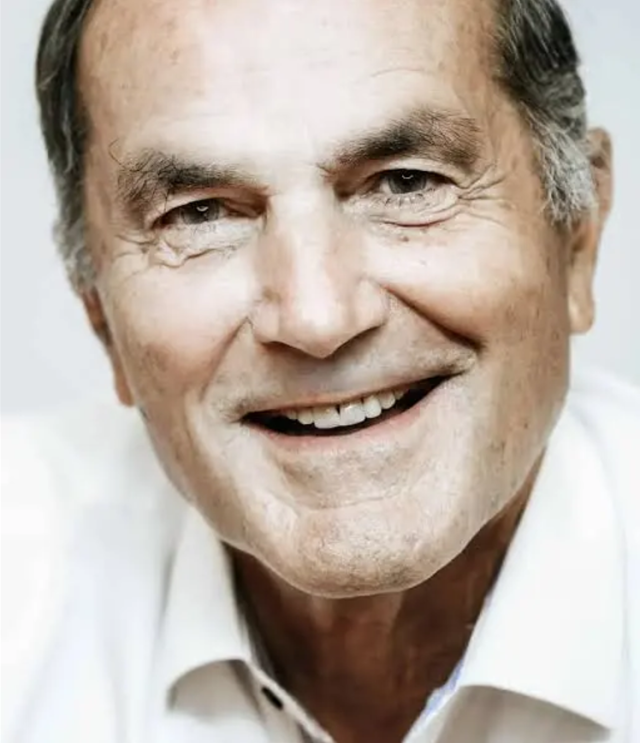
SEOUL, February 05 (AJP) - Marco Landi, the former president of Apple and a leading figure in the global artificial intelligence sector, says the technology should be viewed as a tool for augmented imagination rather than a threat to human creativity.
Landi, who currently serves as the president of Institut EuropIA and founded the World AI Film Festival (WAIFF), shared his vision for the future of cinema and technology during a recent interview. His remarks come as the festival prepares to expand to South Korea in 2026, marking a significant step in his mission to build a global ecosystem for AI-driven storytelling.
With a career spanning leadership roles at Texas Instruments and Apple, Landi has spent decades at the intersection of innovation and culture. He established the House of Artificial Intelligence in 2021 to promote education and inclusion, particularly for women and young creators. He later launched the World AI Cannes Festival to explore how AI transforms specific industries, with cinema emerging as a primary focus.
"Film is a powerful lens because it brings together storytelling, emotion, music, image, and culture," Landi said. "Our goal is not a technological revolution that erases tradition, but a thoughtful transition that preserves Europe’s rich cinematic heritage while helping creators embrace new tools."
The inaugural WAIFF in 2025 received 1,500 submissions from around the world in just three months. Landi noted that AI is radically lowering the barriers to entry for filmmakers, allowing creators to produce high-quality work with significantly smaller budgets.
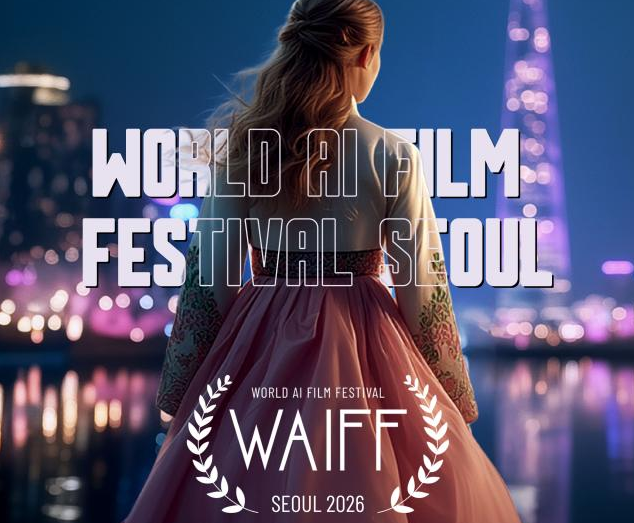
The decision to bring the festival to South Korea follows a surge of international interest. Landi emphasized that the Seoul edition is designed as a two-way bridge to foster cross-cultural exchange between South Korean creators and international filmmakers.
"Every country brings its own cultural perspective, sensibility, and storytelling tradition," Landi said. "By sharing these experiences, we enrich one another. Cinema becomes a space of dialogue rather than competition."
Addressing concerns about the ethical implications of AI, Landi stressed the importance of governance and the protection of intellectual property. He said WAIFF is developing an ethical charter to ensure creators are fairly rewarded and their work is respected.
"AI is not here to replace creativity," Landi said, citing a conversation with musician Jean-Michel Jarre. "It is a tool that helps imagination move faster, reach further, and materialize ideas more efficiently."
Landi's philosophy on technology leadership remains rooted in principles he observed during his time at Apple. He cited the influence of Steve Jobs, noting that technology must be effective enough for people to want to use it and beautiful enough for them to want to own it.
As the festival grows, Landi hopes to reach at least 50 countries within three years. He envisions WAIFF as an ecosystem that connects creators, investors, and distributors while fostering sustainable business models for the new film industry.
Traditional filmmaking and AI-assisted creation can coexist and enrich one another, Landi said. He noted that the festival aims to reach at least 50 countries within three years as it builds a broader structure dedicated to education and ethics.
Copyright ⓒ Aju Press All rights reserved.