
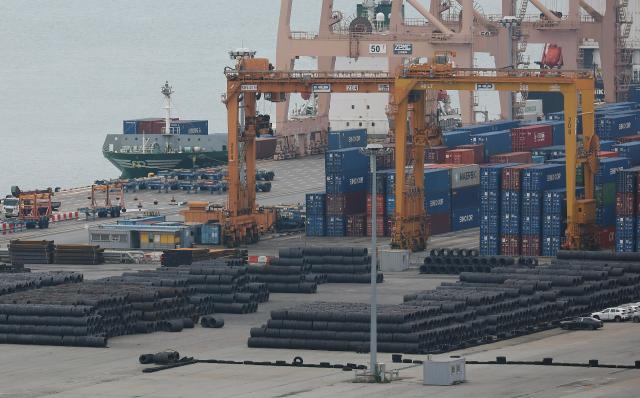
Trading Economics said Feb. 10 that rebar futures fell below 3,060 yuan (about 650,000 won) a ton, the lowest level in eight weeks. The drop came as Chinese steelmakers cut operations ahead of the extended holiday shutdown. Blast furnaces and electric arc furnaces in China also halted production for scheduled maintenance, and parts of Hebei province could face temporary curbs under air-pollution alerts.
Weaker Chinese demand and softer futures prices tend to push down export prices for Chinese steel, adding downward pressure across Asian markets and on steel distribution prices in South Korea. When Chinese prices bottom out, South Korean prices often adjust later, leaving South Korean producers facing unchanged costs while selling prices fall with a lag.
Iron ore inventories at major Chinese ports reached about 162 million tons last week, the highest level since 2022. The buildup suggests port stockpiles remain elevated even after mills finished pre-holiday restocking. The accumulated inventory could be pushed into Asian markets through “dumping” exports, including possible indirect shipments to South Korea via Southeast Asia, potentially disrupting South Korea’s steel distribution market.
South Korea’s steel industry is also bracing for the EU’s CBAM, designed to prevent carbon leakage. Under the system, steel exporters must report emissions data for exported products and later pay carbon costs. The Korea Chamber of Commerce and Industry has estimated that CBAM could leave South Korea’s steel industry paying more than 3 trillion won in carbon certificate costs over the next 10 years.
Separately, the government has said it plans to lower industrial electricity rates during the day and raise them at night, and has outlined a plan to differentiate electricity rates by region. The changes are expected to weigh more heavily on steelmakers centered on electric arc furnaces, where power costs make up a larger share of production costs. Industrial power sales have fallen to a five-year low, but Korea Electric Power Corp.’s sales revenue has hit a record high, fueling complaints in the steel industry about high industrial electricity rates.
A steel industry official said companies are continuing efforts to strengthen technological competitiveness to prepare for CBAM despite concerns over steadily rising industrial electricity rates. The official said the impact of falling Chinese steel prices on the domestic market should be watched over the medium to long term under multiple scenarios.
* This article has been translated by AI.
Copyright ⓒ Aju Press All rights reserved.