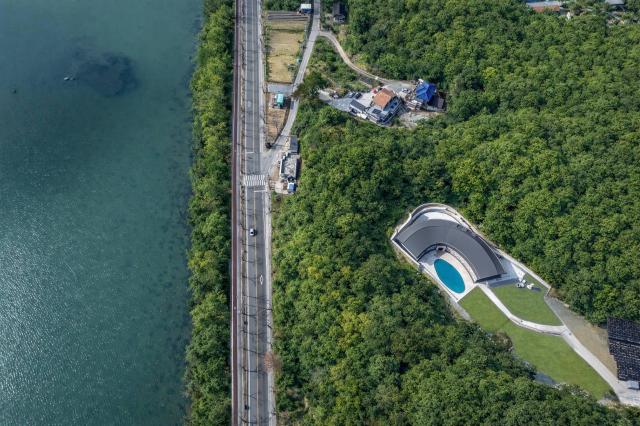
SEOUL, March 18 (AJP) - In March 2026, the announcement came from the United Kingdom:
the World Architecture Community Awards, 53rd cycle. It was not simply a prize.
It was recognition that something quiet, something deeply human, had spoken across borders.
Among works from 53 countries and judged by 243 jurors, the Inwolsa Dharma Center was chosen — not for spectacle, but for the depth of its question.
This was not architecture of reconstruction. It was architecture of renewal.

“The fire burned the buildings, but it could not burn our practice. What we rebuilt was not a temple, but the mind.”
With these words, Venerable Jaebeom condensed the entire narrative of Inwolsa.
What stands today is not only designed — it is gathered.
From quiet donations, from unseen solidarity, from a shared refusal to let meaning disappear.
As the Buddhist teaching goes: All things arise from the mind.
Inwolsa is that mind made visible.
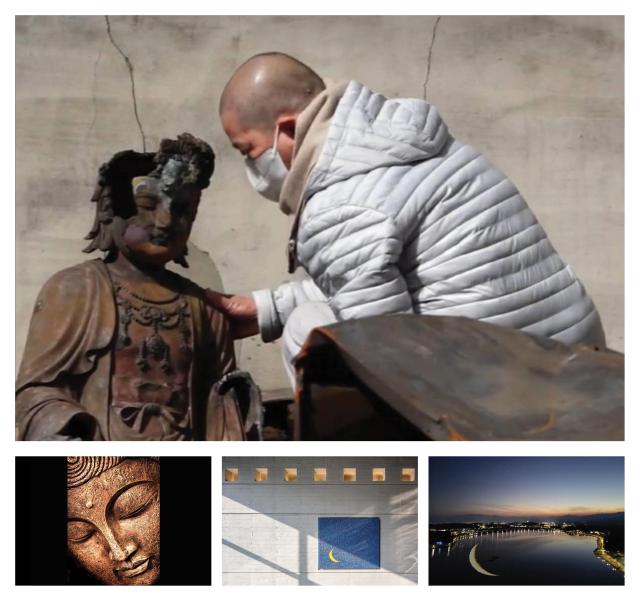
Faced with the ruins, architect Yoon Kyeong-sik did not choose restoration.
He chose not to repeat the past. He chose to reinterpret it.
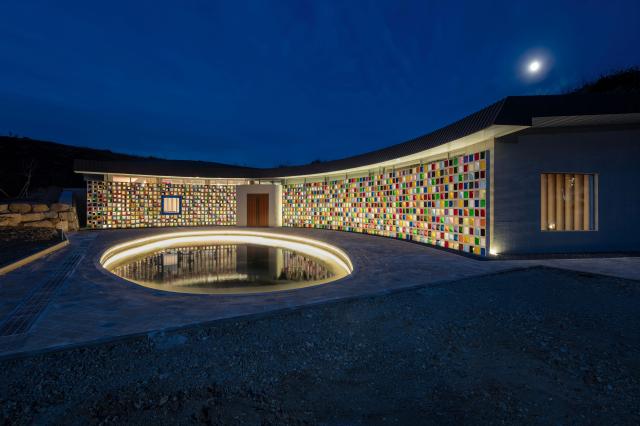
“Inwol” — the moon reflected on water.
One moon, infinitely mirrored.
From this idea, he translated philosophy into space.
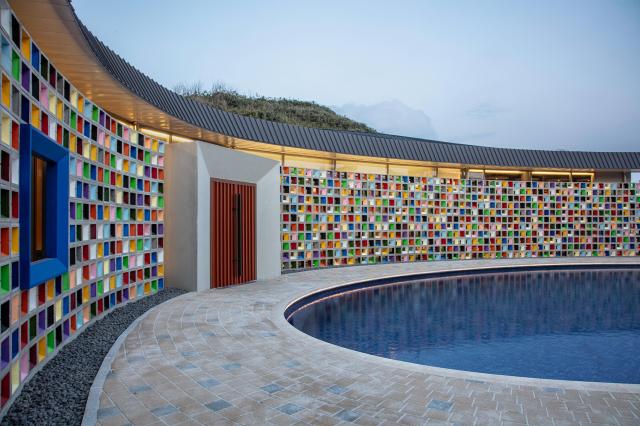
The curve of the crescent moon, the arc of the Buddha’s brow.
No rigid lines, but flowing continuity. No division, but relationship.
Architecture here becomes thought.
Inside, the central space opens — empty, yet full.
This emptiness is not absence. It is potential.
The meditation hall and prayer spaces unfold as separate functions within a single continuous flow.
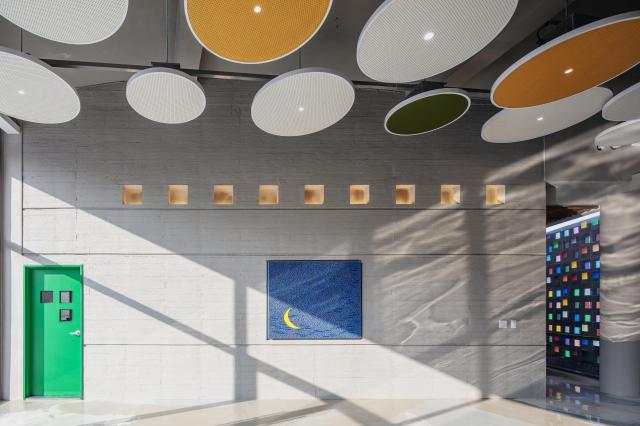
To be empty is to hold everything.
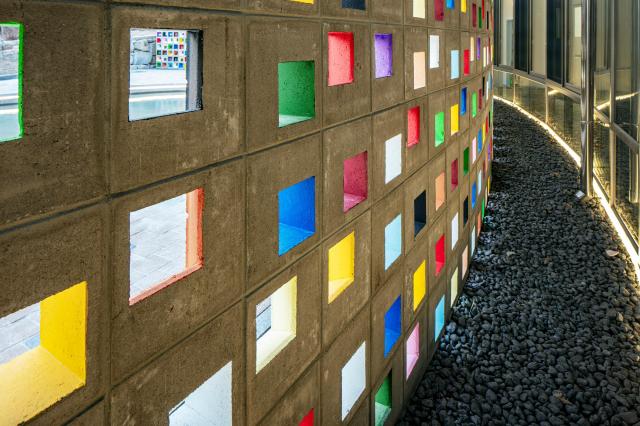
The Indra Wall forms the heart of the building.
A field of color, light, and deliberate voids.Each opening receives light, and reflects it onward.
Yoon Kyeong-sik does not build religion. He builds questions.
“Architecture is not where people stay. It is where people change.”
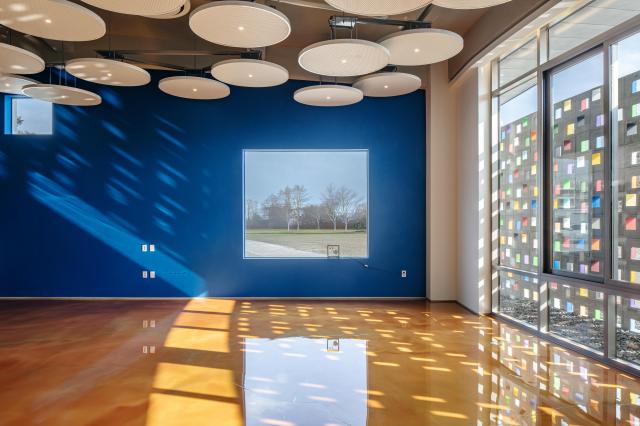
At Inwolsa, this is not an idea. It is an experience.
His work resists spectacle. It returns to essence.
Inwolsa gathers all of this into one place.
It is not merely a temple. It is a record of loss, a form shaped by community, a vessel of spirit.
Fire destroys. But it cannot touch the mind.
And the mind, in time, builds again. Yoon’s architecture stands as proof.
About the author:
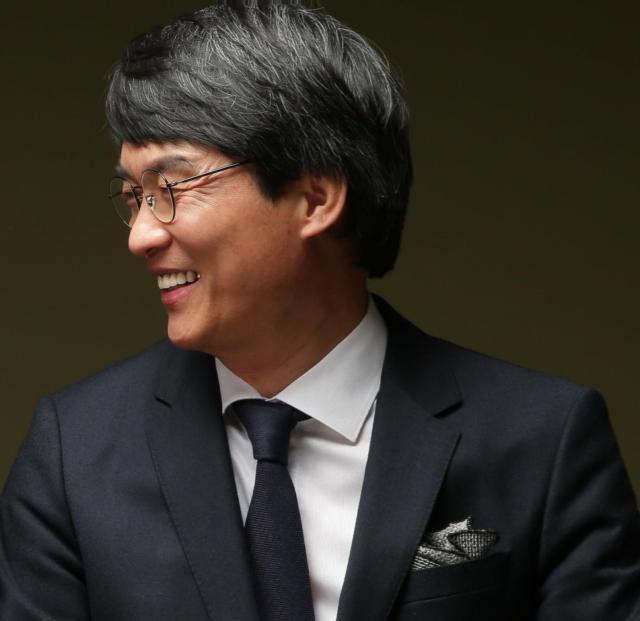
Architect Yoon Kyeong-sik is widely regarded as one of the defining voices in contemporary spiritual architecture, known for his philosophy of harmonizing tradition and modernity through nature-responsive design and humanistic inquiry.
Over a career spanning more than 35 years, Yoon has earned over 24 international architecture awards. His work extends beyond the physical realm, positioning architecture as an intellectual and philosophical practice—one that engages with the humanities, aesthetics and the inner life of space.
Among his most celebrated works, the Haselina Ninebridge Clubhouse has drawn international attention. The project was featured by the BBC for its striking ceiling design, noted for its sculptural interplay of light and structure. It was also highlighted by The New York Times as a distinctive architectural destination, underscoring its global cultural resonance.
Yoon’s portfolio has been recognized with major honors including the International Architecture Awards (IAA), the iF Design Award and the Architecture MasterPrize (AMP). Notably, he became the first non-European architect to receive top recognition at an Italian sustainable architecture award, marking a significant milestone in the field.
Copyright ⓒ Aju Press All rights reserved.