
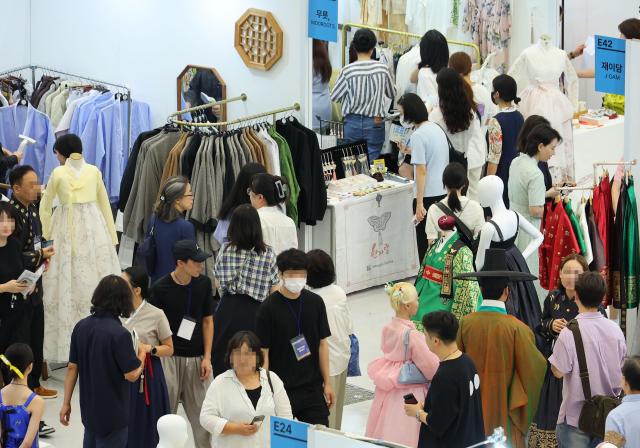
A forum on ways to make hanbok part of everyday life was held Tuesday at the National Assembly. Experts said the first step is changing the view that hanbok should be limited to formal occasions.
Kim So Hyun, a professor in the Department of Hanbok Culture Contents at Baewha Women’s University, said young people have driven the shift. “In the past, older generations wore hanbok for weddings and other formal events, but younger people rent hanbok and take photos, turning it into something for play,” she said.
Kim said more content is needed so people can experience hanbok in virtual spaces. She pointed to brands such as Louis Vuitton using platforms like Zepeto to offer brand experiences to younger users and generate revenue through item sales. “Hanbok is being combined with films, dramas, webtoons and games and changing into cultural content enjoyed as play,” she said, adding that “the space for hanbok in daily life is expanding into virtual worlds such as the metaverse.”
Kwon Hye Jin, CEO of hanbok studio Hyeon and an adjunct professor at Ewha Womans University, said lifestyles have changed so much that some people do not wear hanbok even for New Year’s bows. She said the hanbok industry has “degenerated into the wedding industry.” To bring hanbok into daily life, she said, it is not enough to focus on awareness. “Hanbok has to enter everyday life,” she said, noting that 70% of customers at hanbok shops are in their 20s and 30s.
Kwon said designers must figure out how to make hanbok for daily wear without losing its core value. She also said idol stars who bow for New Year’s greetings are helping introduce hanbok to fans worldwide, and she stressed strategies to increase exposure tied to K-content and collaborations with Korean Wave stars. She also proposed a hanbok festival that friends, couples and families can enjoy together, like Brazil’s Carnival or Japan’s matsuri.
Presenter Ji Su Hyun, a professor in the Department of Korean Costume Science at Wonkwang Digital University, called for building hanbok data. “We need to build a database of original hanbok forms,” he said. “If hanbok data opened to the public spreads worldwide, its value will be enormous. Standardization is needed.” He also advised that hanbok should evolve to offer consumers more benefits, similar to Louis Vuitton headquarters providing repair services.
Ahn Mi Jung, director of the Traditional Culture Division at the Ministry of Culture, Sports and Tourism, said that if the Hanbok Culture Industry Promotion Act is enacted soon, the government will create a basic plan as a long-term roadmap to foster the industry. “We will build the foundation for the hanbok industry to develop,” she said. On the Hanbok Wave project, she said the ministry will better promote participating designers’ stories and plans to produce separate content.
The forum was hosted by People Power Party lawmaker Lee Dal Hee and Democratic Party lawmaker Baek Hye Ryeon and organized by the Korea Hanbok Promotion Institute and a lawmakers’ group that supports hanbok.
* This article has been translated by AI.
Copyright ⓒ Aju Press All rights reserved.