
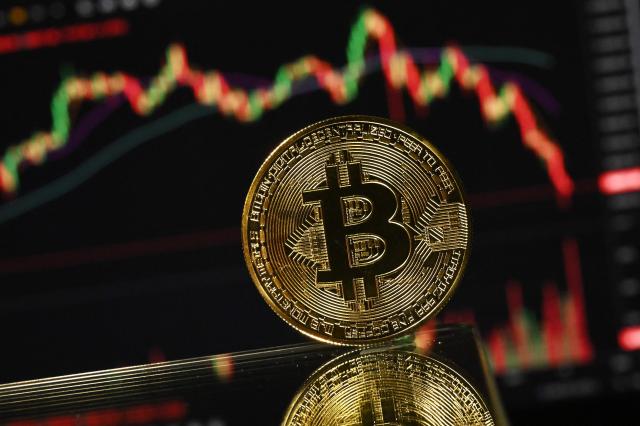
Winter has returned to crypto. But this is not merely a period of falling prices. It is also a period of thinning confidence.
In recent feature, The Economist observed that the latest “crypto winter” feels colder than previous downturns not because the numbers are worse, but because the story has weakened.
Bitcoin, once framed as a symbol of decentralization and defiance, now stands in an ambiguous position. Its outsider image has faded, yet it has not fully earned the confidence of central banks or conservative institutional investors. The aura has dimmed, but stability has not taken its place.
Markets can withstand volatility. They find it harder to navigate disillusionment. The current downturn highlights several structural features that are not unique to digital assets, but are particularly visible in this market.
One is leverage. During rallies, borrowed capital amplifies returns. During corrections, it accelerates losses. Margin trading and derivatives exposure expanded rapidly in the recent boom and have since unwound in predictable fashion. Forced liquidations occur not because sentiment suddenly shifts, but because positions reach mechanical limits. This pattern has appeared repeatedly throughout financial history.
Another feature is the double-edged nature of institutional participation. The launch of spot exchange-traded funds was widely seen as a step toward legitimacy. Global asset managers’ involvement was interpreted as validation. Yet liquidity does not imply commitment. Capital that enters quickly can also exit quickly. ETFs facilitate access, but they do not guarantee stability.
A third, more subtle factor is the weakening of collective enthusiasm. Assets such as Bitcoin derive much of their value from shared expectations rather than cash flows. When confidence softens, valuation becomes more exposed. The loss of momentum may appear intangible, but in narrative-driven markets it can have material consequences.
If these were only global trends, they would already warrant attention. Developments in South Korea, however, have added a more concrete dimension.
![서울 강남구 빗썸 라운지 전광판 [사진=연합뉴스]](https://image.ajunews.com/content/image/2026/02/13/20260213111612723034.jpg)
The so-called “ghost coin” incident at Bithumb, one of the country’s largest cryptocurrency exchanges, reportedly involved internal records showing assets that did not exist. Whether caused by operational error or systems failure, the episode raised questions about internal controls and governance.
Blockchain technology emphasizes distributed verification. Centralized exchanges, by contrast, rely on internal accounting systems and corporate oversight. Between decentralization in principle and centralized custody in practice lies a reliance on trust. When that trust weakens, confidence in the broader ecosystem can be affected.
In traditional finance, similar discrepancies would trigger immediate scrutiny of risk management, reconciliation procedures, and capital adequacy. Over time, banks and securities firms developed standards — external audits, asset segregation, and regulatory reporting — often in response to past crises. These mechanisms are not obstacles to innovation, but foundations of credibility.
The Bithumb episode reflects a broader transition. Crypto markets are no longer confined to early adopters. They now intersect with household savings, institutional portfolios, and regulatory frameworks. With greater scale comes greater responsibility.
Internationally, the contrast is notable. Central banks continue to accumulate gold as a hedge against uncertainty. Digital assets, once promoted as “digital gold,” remain peripheral to reserve management. Institutional investors typically treat crypto as a supplementary allocation rather than a core holding. Regulatory recognition, including ETF approvals, signals growing acceptance, but not full integration.
None of this diminishes the technological potential of blockchain. Tokenization, cross-border settlement, and programmable finance continue to develop. Stablecoins are gradually finding roles in payment systems. Yet technical innovation alone cannot substitute for institutional reliability.
Bull markets tend to obscure vulnerabilities. Bear markets make them visible.
If crypto is to evolve into a more durable asset class, certain conditions will become increasingly important: clearer reporting of leverage, stronger segregation of client assets, adequate capital buffers, regular audits, and consistent regulatory standards across jurisdictions.
Such measures need not constrain innovation. In many cases, they enable it.
The current downturn may eventually give way to recovery. Financial cycles are recurrent, and investor interest rarely disappears permanently. But without institutional strengthening, future rallies risk repeating familiar patterns.
The lesson of this period is not that crypto lacks value, nor that traditional finance is immune to failure. It is that markets — digital or otherwise — respond to incentives, governance, and transparency in similar ways. Excess leverage increases fragility. Weak oversight invites disruption. Overreliance on narrative creates vulnerability when conditions change.
In that sense, the “ghost coin” incident serves as more than an operational anomaly. It illustrates how confidence depends on verification. Assets must exist not only on screens, but in substance.
Crypto now faces a choice familiar to many emerging industries: remain driven primarily by momentum and symbolism, or continue the slower process of building institutional trust.
Winter can test markets. It can also refine them. If this period encourages greater emphasis on transparency, governance, and resilience, the next recovery — when it comes — may rest on firmer ground than those before it.
Copyright ⓒ Aju Press All rights reserved.
