The International Monetary Fund’s latest annual assessment of China reads less like a routine economic report than a structural warning for Asia’s manufacturing powerhouses.
The IMF points to China’s widening trade surplus, effective currency undervaluation, expanding industrial subsidies, weak domestic demand and persistent deflationary pressure. Together, they signal the limits of an export- and investment-driven growth model that has powered China for decades.
One figure stands out. The Fund estimates that subsidies to key industries amount to roughly 4 percent of GDP and recommends cutting them to about 2 percent over the medium term.
This is not merely a call for fiscal restraint. It is a demand to redesign the architecture of industrial policy itself.
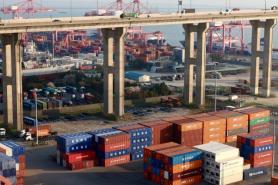
The report notes that China’s rising net exports have pushed its current account surplus beyond 3 percent of GDP, deepening external imbalances and placing strain on trading partners. Low inflation has effectively weakened the real exchange rate, boosting price competitiveness — but also increasing the risk of protectionist backlash.
“Deflation” appears repeatedly in the report. Prolonged price declines, the IMF warns, could erode growth potential. At the same time, government debt is projected to rise rapidly, possibly exceeding 130 percent of GDP.
These assessments are not absolute truths. China’s development strategy has long been shaped by historical vulnerability and the pursuit of technological self-reliance. State support for strategic industries and manufacturing-led growth has delivered rapid industrial upgrading.
In an era of intensifying U.S.-China rivalry, no major economy is leaving semiconductors, artificial intelligence, electric vehicles or batteries to market forces alone. The United States and Europe are strengthening their own industrial policies.
In that sense, the IMF’s recommendations do not reject national strategy. They reflect a concern for systemic balance.
Excessive reliance on exports and capital investment leaves economies exposed to external shocks. Without sufficient domestic consumption, large-scale production capacity eventually turns into overcapacity — and trade friction.
If subsidies fail to translate into productivity gains and technological breakthroughs, but merely expand output, they become long-term fiscal burdens.
Here, China and South Korea face a shared question.
In the era of physical AI and advanced scientific convergence, what growth path should manufacturing-based economies choose?
Few regions possess ecosystems as integrated as those of Korea and China — linking design, production, R&D and commercialization. Dense digital infrastructure and fast execution cultures accelerate technological diffusion. In China, emphasis on speed and implementation has intensified, further shortening the path from innovation to market.
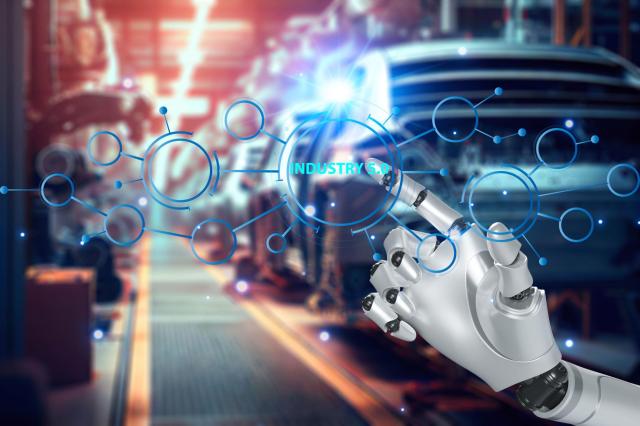
Physical AI — reshaping factories, logistics, robotics, energy systems, defense and healthcare — goes beyond software. It reorganizes the physical world.
No country can master this transition alone.
Supply chains are transnational. Technical standards and data governance require multilateral coordination. Fragmentation increases costs for everyone.
The IMF’s message is not to slow competition, but to refine the structures that sustain it.
Strengthen domestic demand. Gradually shift toward consumption-driven growth. Improve the efficiency and transparency of industrial support. This applies to Korea as much as to China.
Korea remains highly export-dependent and sensitive to global slowdowns and trade barriers. It must continually examine whether technology investment and subsidies raise productivity, or merely concentrate benefits in a narrow set of firms.
Asia’s future lies in coordination, not confrontation.
If Korea and China define each other solely as rivals, Asia risks becoming a fault line in great-power competition. But if they manage interdependence through supply-chain cooperation, joint research and shared standards, the region can emerge as a new center of global growth.
Collaboration in semiconductors, batteries, electric vehicles, hydrogen, AI and biotechnology extends beyond bilateral interests. Broader networks linking Southeast Asia, India and Central Asia could combine technology, infrastructure and talent into a new development model.
This is a positive-sum strategy. Yet one condition is essential.
Technology is not value-neutral. It can enable surveillance, exclusion and control. Innovation must be guided by universal principles — truth, justice and freedom.
When the IMF emphasizes “balance,” it is not referring merely to macroeconomic indicators. It is pointing to institutional maturity.
Asia must move beyond technological nationalism.
Strategic industries and industrial pride are legitimate. But they should not become sources of systemic conflict. Asia already holds more than half of the world’s population. Unlocking that potential requires trust, cooperation and credible rules.
The IMF report is a warning: excess and imbalance eventually impose costs. But it is also an opportunity.
If Korea and China can combine technological ambition with structural discipline and regional coordination, Asia can become a platform for coexistence rather than confrontation.
When technology is built on the foundations of truth, justice and freedom, the region can move beyond development — toward civilizational leadership.
*The author is a columnist of AJP.
Copyright ⓒ Aju Press All rights reserved.