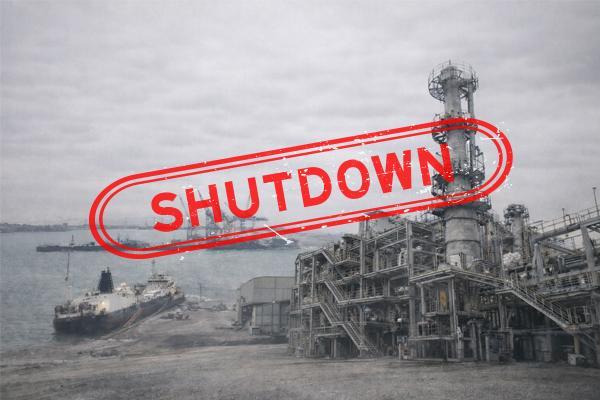
Yeocheon NCC, LG Chem, Lotte Chemical and Hanwha Solutions have all warned customers of potential force majeure on product deliveries.
GS Caltex, which shares the Yeosu industrial complex with several affected petrochemical producers, has postponed a scheduled maintenance turnaround at its Yeosu refinery from March to May in order to keep supplying naphtha to neighboring plants, industry officials said.
The move underscores the urgency gripping the sector: halting refining operations now would almost certainly trigger a cascade of shutdowns downstream.
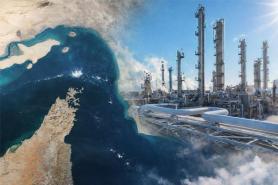
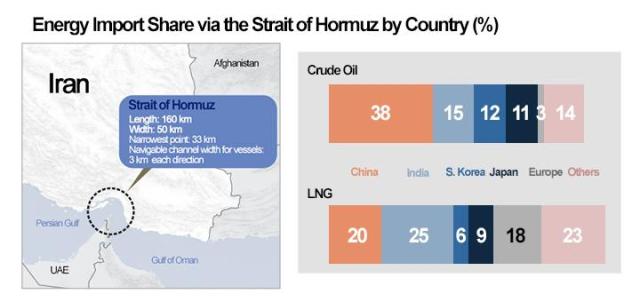
About 54 percent of South Korea's naphtha imports and roughly 70 percent of its crude oil normally transit the Strait of Hormuz. Since Iran closed the waterway on Feb. 28 following joint U.S.–Israeli strikes, tanker traffic through the chokepoint has largely halted.
"NCC operating rates across the region continue to decline as the Strait of Hormuz remains impassable, while prices of basic feedstocks such as butadiene and styrene monomer are surging on tighter supply and rising naphtha costs," said Kang Dong-jin, an analyst at Hyundai Motor Securities.
"A recovery in NCC utilization hinges on the reopening of the strait."
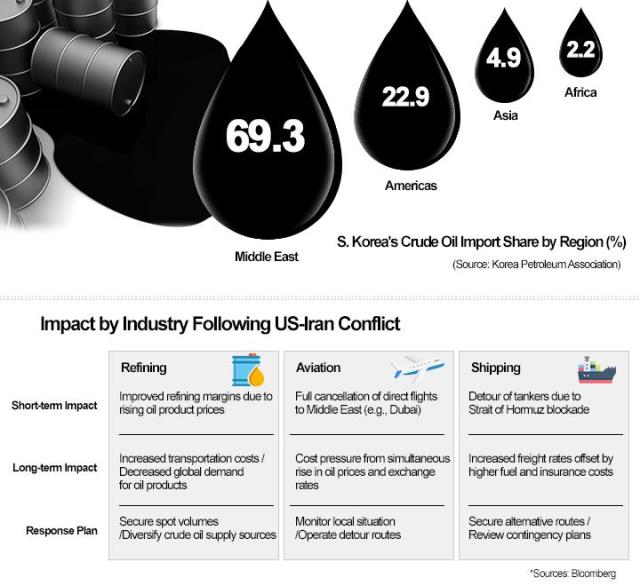
Asia's steam cracker industry is overwhelmingly naphtha-based and structurally dependent on imports. Major petrochemical producers across the region — including India, Thailand, Indonesia, Malaysia, China, Japan, Singapore and South Korea — collectively imported 86.6 million tons of naphtha in 2025, according to Independent Commodity Intelligence Services (ICIS).
As the supply shock spreads, petrochemical plants across Asia have begun cutting operating rates.
Singapore's Petrochemical Corporation of Singapore has declared force majeure, citing disrupted naphtha deliveries, while Indonesia's PT Chandra Asri Pacific has followed with its own declaration. Korea's Yeocheon NCC has taken the same step. In China, the CNOOC and Shell Petrochemicals Company Limited has halted operations after crude supply to its integrated refinery was disrupted.
Nearly 9 million tons per year of South Korean ethylene capacity is non-integrated and heavily reliant on imported naphtha, according to ICIS data.
The price spike compounds an already dire situation for Korean producers, who are struggling to pass higher feedstock costs on to customers. Persistent oversupply from China has depressed ethylene and downstream product prices, compressing the ethylene spread — the margin between naphtha costs and ethylene selling prices — to about $100 per ton, far below the roughly $300 needed to break even.
Korean petrochemical firms typically source about half of their naphtha from domestic refiners and import the rest. With the strait sealed off, those seaborne cargoes have stopped arriving and inventories are rapidly dwindling, leaving producers little choice but to conserve feedstock.
Operating rates have been cut to what the industry calls "zombie mode."
Yeocheon NCC, a 50-50 venture between Hanwha Solutions and DL Chemical, has reduced utilization to 60 percent and is reportedly considering a further cut to 50 percent, its turndown limit. Lotte Chemical has lowered utilization to 70 percent, while LG Chem has trimmed operations at its Daesan complex to about 54 percent.
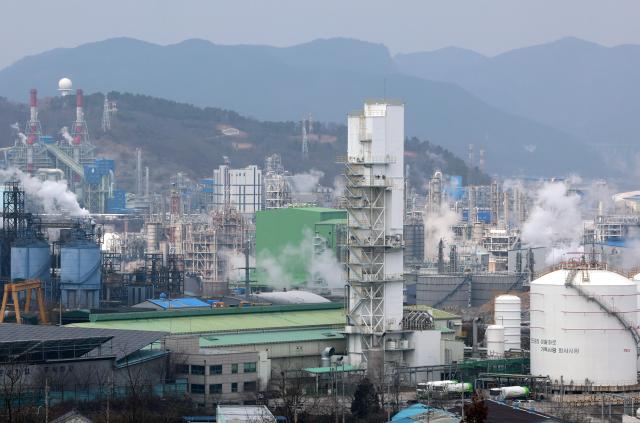
Domestic producers currently hold only about two weeks of naphtha inventories, according to the Ministry of Trade, Industry and Energy.
A full shutdown would send shockwaves far beyond the chemical sector. Ethylene and propylene are core feedstocks for a wide range of industries, from automotive plastics and consumer electronics components to construction materials such as PVC piping and insulation, as well as synthetic fibers used in textiles.
Logistics networks are already beginning to buckle.
HMM, South Korea's largest shipping line, suspended new bookings on Middle East routes on Wednesday, while Korean Air has extended the suspension of its Incheon–Dubai flights through March 28.
Rising freight and fuel costs are adding pressure to industries already weakened by a prolonged downturn, including steel, batteries and cement.
The crisis has also complicated a government-led restructuring effort aimed at addressing structural overcapacity in the petrochemical sector.
Analysts say the situation echoes the early stages of the 2022 Russia-Ukraine conflict, though the impact on Asia could prove more severe given the region's far heavier reliance on Middle Eastern feedstock.
If the Hormuz blockade drags on, utilization rates at South Korea's three major petrochemical hubs — Yeosu, Daesan and Ulsan — could fall below 60 percent across the board, with ripple effects spreading through electronics, automotive, construction and consumer goods industries nationwide.

Copyright ⓒ Aju Press All rights reserved.