
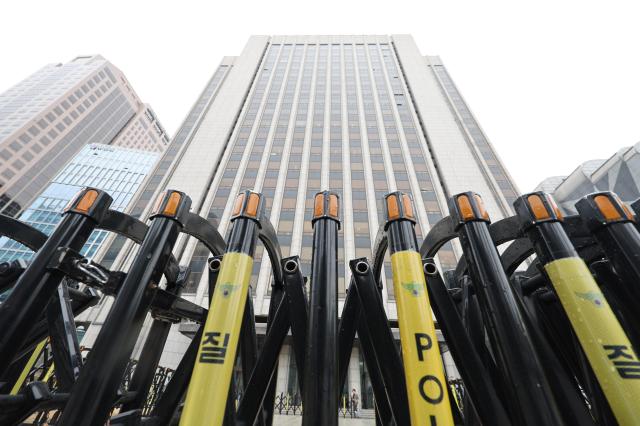
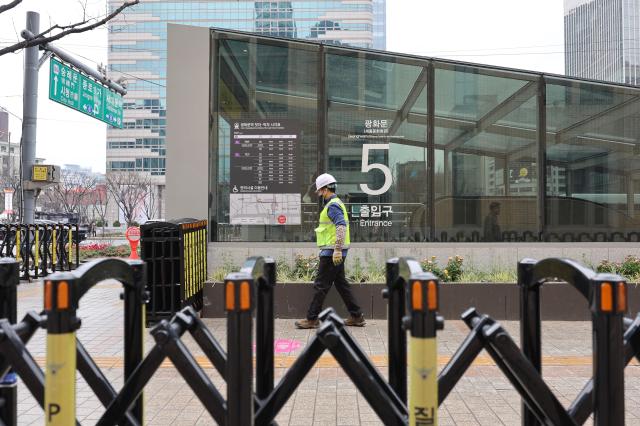
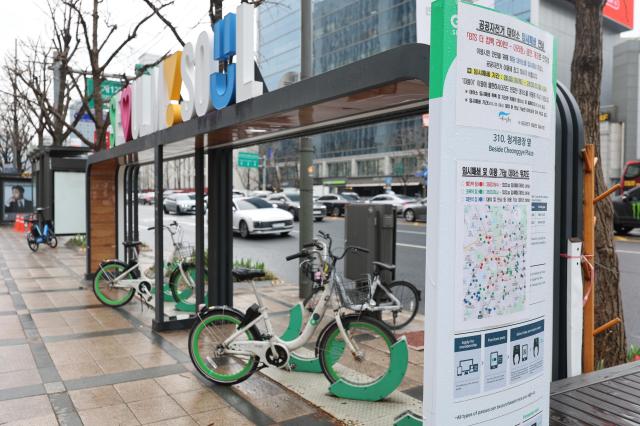
SEOUL, March 18 (AJP) - Across the Gwanghwamun district, signs of tightening control are becoming visible in real time. Police barricades are being extended along sidewalks and major intersections, carving out narrow pedestrian corridors and restricting lateral movement between streets. Access points to nearby subway stations are being prepared for selective closure, while public bike docks and lockers around the area have already been suspended or sealed off.
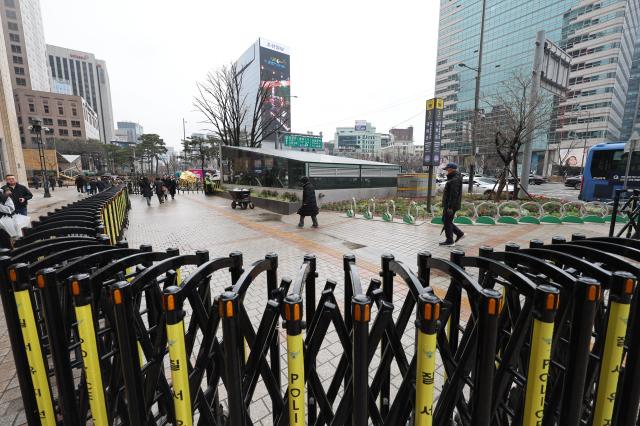
Security perimeters are also expanding outward from the square. Metal fencing now lines key roads and building frontages, creating buffer zones designed to absorb crowd pressure before it reaches the main venue. Mobile police units and monitoring vehicles have been positioned at strategic points, indicating a shift toward active, real-time crowd management.
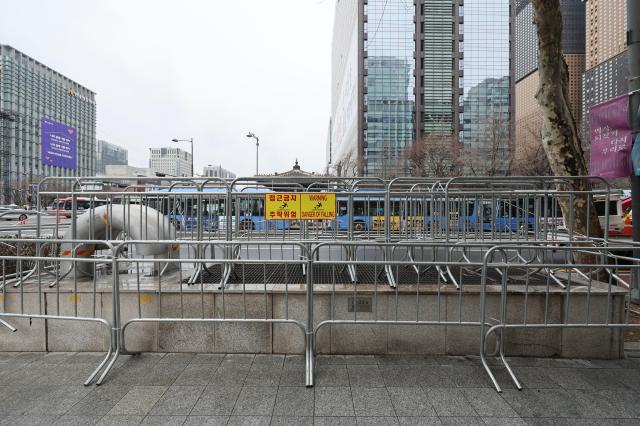
Together, these measures are gradually transforming not just the square, but the surrounding urban grid into a controlled environment, where movement is increasingly guided, filtered and contained ahead of the event.
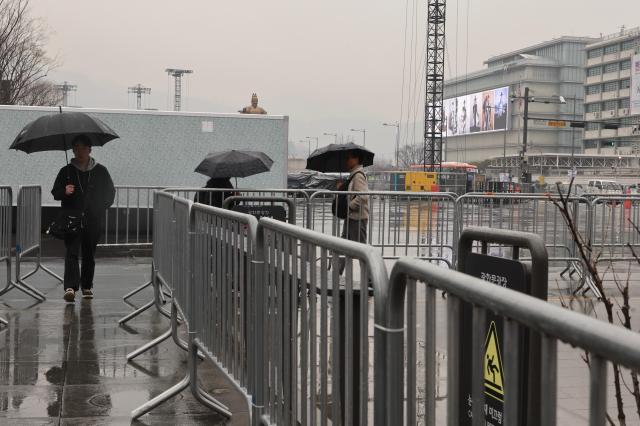
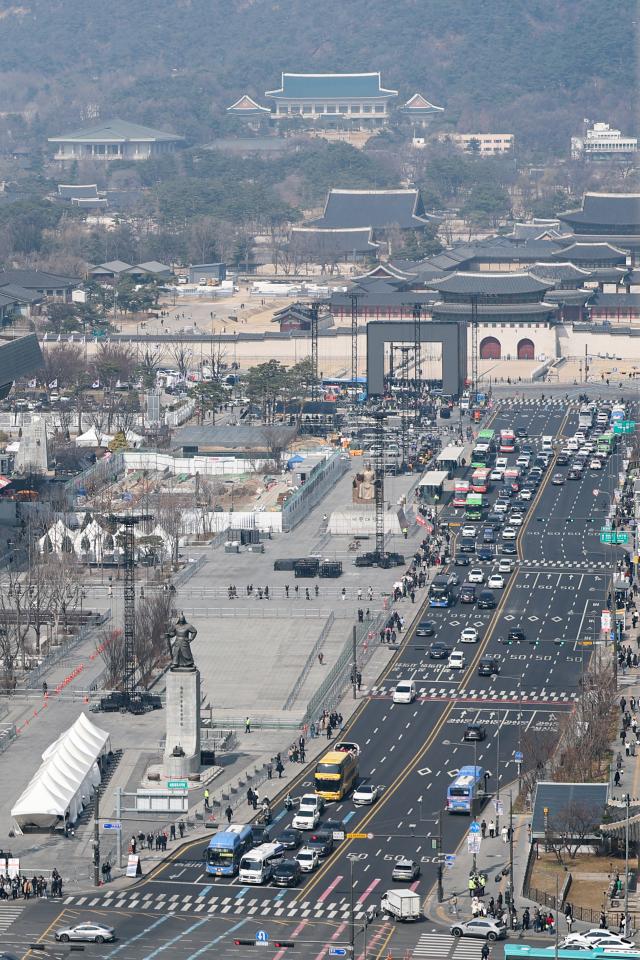
With three days remaining until BTS’s live comeback performance, Gwanghwamun Square is rapidly transforming into a tightly controlled event zone, as new layers of infrastructure and security measures take shape by the hour.
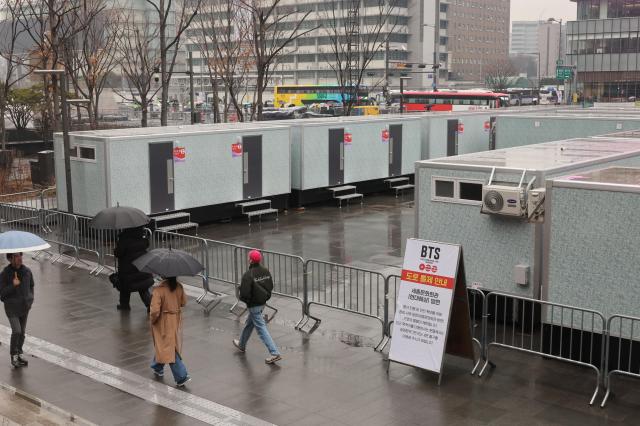
Rows of temporary modular units believed to be portable restrooms and staff facilities have been installed across sections of the square, while extensive metal fencing now carves the area into clearly defined pedestrian corridors.
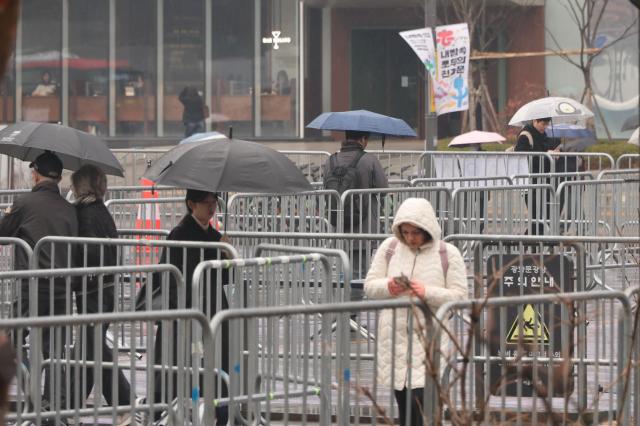
Despite steady rain, pedestrians were seen navigating the newly arranged routes under umbrellas, offering an early preview of how movement will be managed as crowds swell later this week.
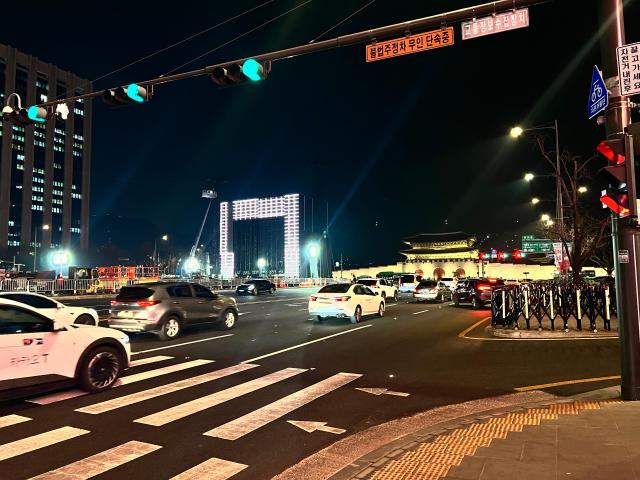
As night fell, the transformation became even more apparent. The main stage structure lit up against the backdrop of Gwanghwamun Gate, suggesting that preparations are moving beyond construction toward technical testing.
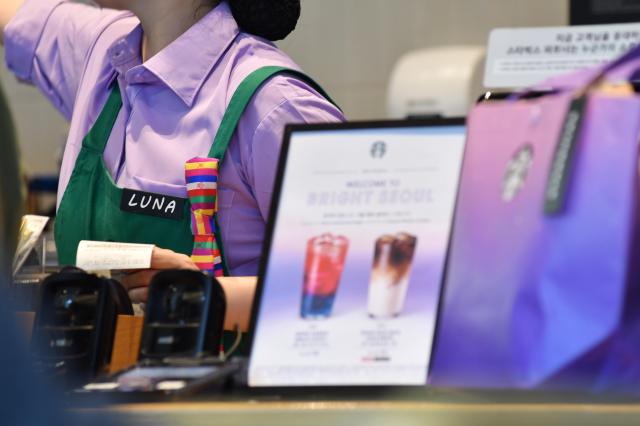
Beyond the square itself, nearby businesses are also adjusting to the expected influx of visitors. Cafes in central Seoul have begun introducing themed menus and streamlining operations with kiosks and reusable cup systems to handle increased demand. The changes reflect how preparations for the event are extending beyond the venue into the broader urban environment.
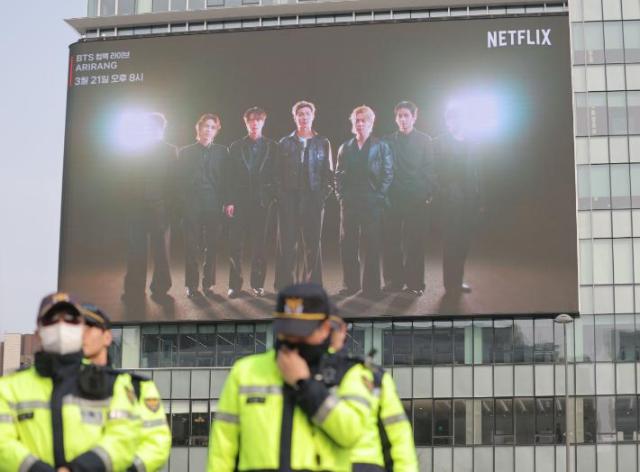
On the policy side, authorities have raised the terrorism alert level in central Seoul ahead of the event, citing risks associated with large-scale crowd gatherings amid heightened global security uncertainties. The alert level in parts of Jongno and Jung districts will be elevated from “attention” to “caution” from midnight on Thursday through Saturday, under a four-tier system ranging from attention to serious.
Police estimate that up to 260,000 people could converge on the area, prompting heightened surveillance and expanded safety measures.
Authorities have also moved to restrict planned demonstrations near the square, warning that overlapping gatherings could pose risks of crowd crush and other safety incidents. Several groups have since relocated or scaled back their events as police tighten control over the area.
Authorities have also moved to restrict planned demonstrations near the square, warning that overlapping gatherings could pose risks of crowd crush and other safety incidents. Officials have also requested cooperation from organizers to voluntarily adjust or relocate events during the concert period. Several groups have since relocated or scaled back their events as police tighten control over the area.
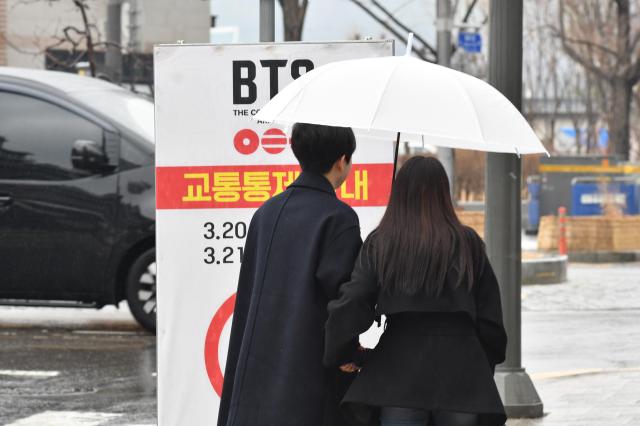
On the ground, those measures are already materializing not as policy statements, but as barriers, routes and controlled spaces that are steadily reshaping how the public moves through the city center.

Copyright ⓒ Aju Press All rights reserved.
